Proposal to establish industrial and educational centers in Khiva, with participation from Germany and Central Asian countries
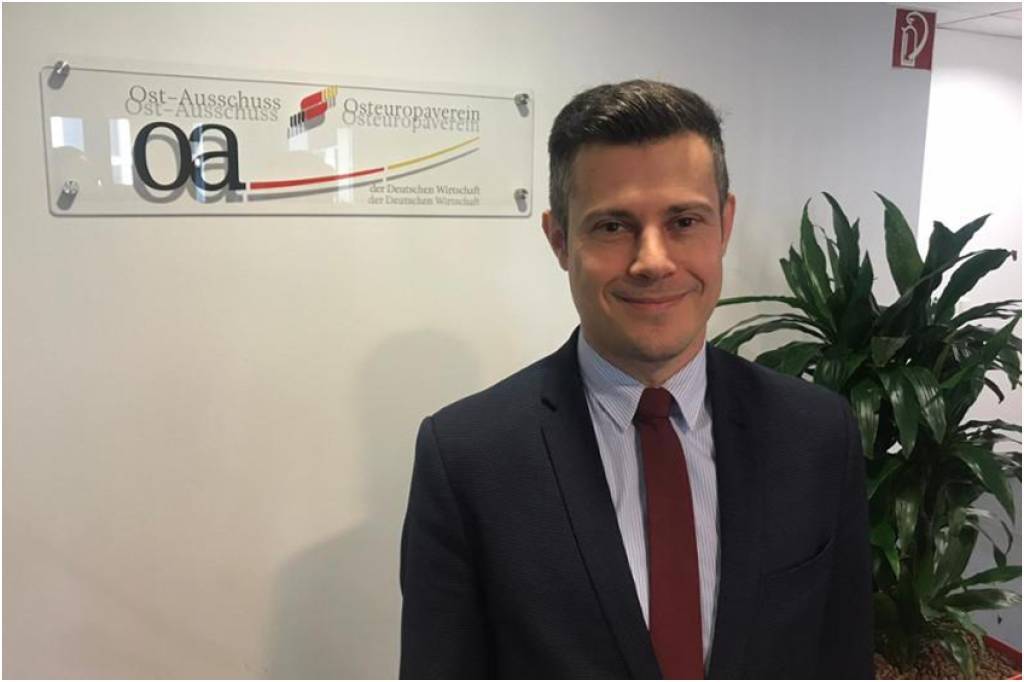
This assessment was presented by Eduard Kinsbruner, the Delegate of German Industry and Commerce for Central Asia, at the Central Asia – Germany Experts Forum in Khiva. He stated that Central Asia is now perceived as a region of opportunity, dynamic and advantageously located between major economic centers.
The expert paid particular attention to Uzbekistan, describing it as one of the region's key economic centers. He noted that the country is open to reforms and to developing cooperation. According to him, improvements in the business climate and the simplification of regulations create important conditions for attracting foreign investment and ensuring the long-term presence of German business.
The German economist highlighted the region’s potential as a manufacturing hub, particularly in the textile industry, mechanical engineering, and automotive component production. At the same time, Eduard Kinsbruner emphasized the importance of integrating local companies into international supply chains through technology and quality standards.
He also highlighted transportation and logistics. In his view, the region can become an important transit corridor between Europe and Asia, and the modernization of infrastructure and the digitalization of customs procedures will accelerate deliveries and enhance the reliability of supply chains.
In the digital sphere, the expert noted the region's rapid growth and its potential for the development of fintech, e-government services, and industrial automation. He also highlighted the strengthening economic integration of Central Asian countries as an additional factor that expands the overall market for investors.
As practical proposals to expand cooperation between Central Asia and Germany, Eduard Kinsbruner outlined the creation of industrial and educational centers based on the dual education model, the development of energy projects through public-private partnerships, and the promotion of the “Middle Corridor Plus” transport route, with logistics digitalization.
In conclusion, he stated that a new architecture for economic partnership between Europe and Central Asia is emerging, and that its success will depend on the transition from individual projects to systematic cooperation.
UzA