
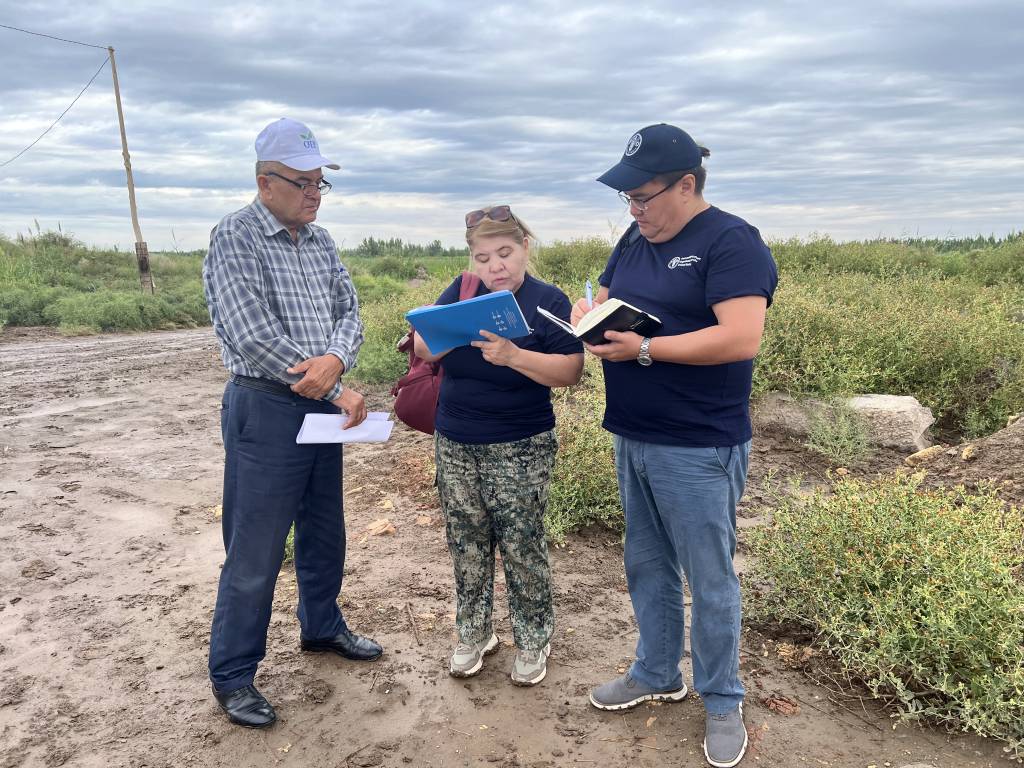
Within the framework of the joint project between the Food and Agriculture Organization of the United Nations (FAO) and the Ministry of Ecology, Environmental Protection, and Climate Change, with the support of the European Union, 'Technical Assistance for the Rational Management of Hazardous Chemicals', specialists from the Center for Specialized Analytical Control in the Field of Environmental Protection under the Ministry of Ecology, along with FAO experts, visited Khorezm region.
During the visit, former agricultural airfields, previously used for processing fields with pesticides, were examined to create a national register of obsolete pesticides and contaminated areas. The project pays excellent attention to introducing technologies for extracting these harmful substances from water and soil and their processing.
“The first inventory of former agricultural airfields in Khorezm region was carried out in the early 2000s, resulting in the reclamation of these lands. It is crucial to study the current situation related to the condition of such airfields, of which there are 27 in the region. Based on the results of the primary inventory, sampling and analytical laboratory studies will be carried out to determine the contamination of the soils of these territories for the content of obsolete pesticides”, says Masharif Navruzov, head of the analytical laboratory of the Khorezm Regional Department of the Ministry of Ecology.
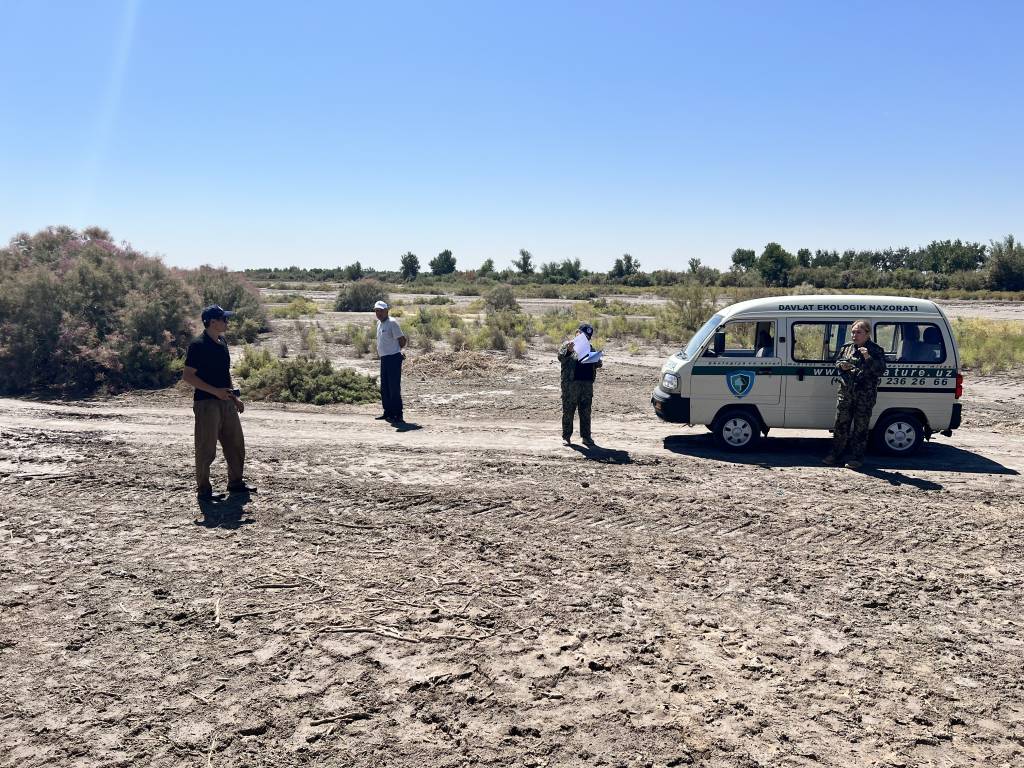
In the past, Khorezm region has used many pesticides in agriculture, which has led to the accumulation of significant stocks of obsolete and banned substances. These pesticides pose a threat to human health and the environment, making their inventory and safe disposal necessary. The inclusion of these data in the national register will make it possible to manage risks more effectively and develop measures to eliminate the consequences of pollution.
“The inventory of these facilities will allow us to determine the number of contaminated sites, assess risks, and set priorities for further work. The collected data will be used to develop a national plan for managing hazardous agricultural waste and create a map of contaminated areas throughout the country”, said Elmurod Nazarov, national coordinator of the project.
It is worth noting that this project is part of a long-term strategy of FAO and the Ministry of Ecology aimed at improving the environmental situation in Uzbekistan and ensuring sustainable management of hazardous chemicals.
Implementing this project is a significant step towards enhancing environmental safety in Uzbekistan. The creation of a national register of obsolete pesticides will not only help reduce the risks associated with environmental pollution but will also serve as the foundation for more effective management of hazardous waste in the future.
UzA