
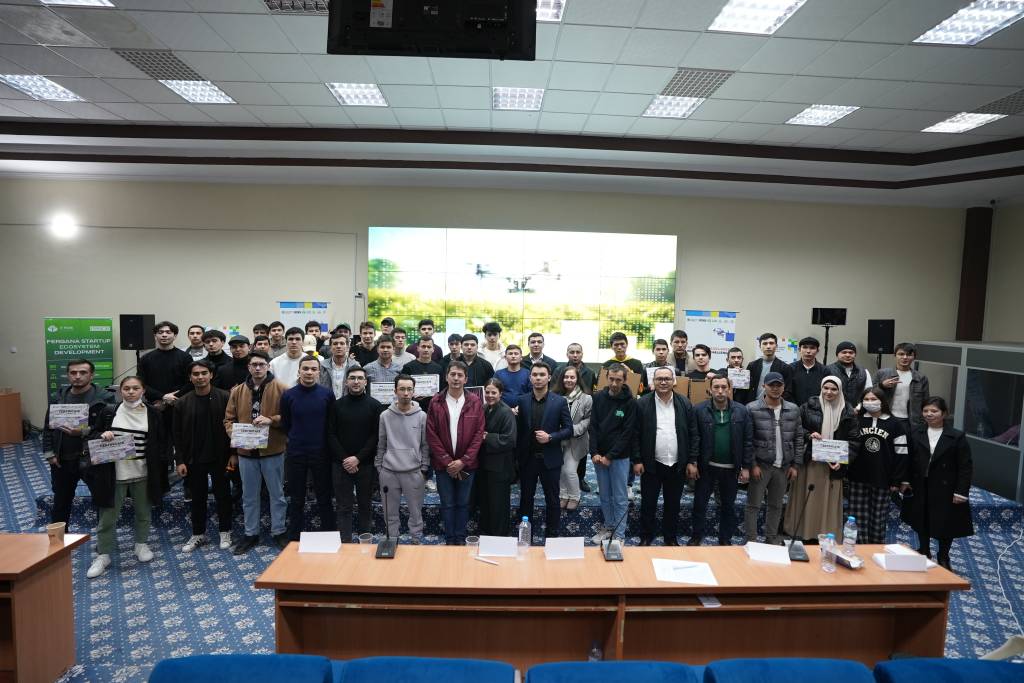
The “Hack4DigitalVillagesʼʼ regional innovation challenge was held this weekend from November 24 to 26 at the Fergana branch of the Tashkent University of Information Technologies.
The event was organized by the Food and Agriculture Organization of the United Nations (FAO UN) in collaboration with the Project Coordinator of the OSCE in Uzbekistan and with the support of IT Park and the CGIAR Accelerate for Impact Platform.
The innovation challenge was open to participants from all regions of the country. Applications were submitted by 244 people, from which 103 selected people formed 36 teams. Each team worked on its project in the following areas:
Greenhouse Management;
Efficient water use and irrigation;
Pesticide management and control;
Education for agribusiness development.
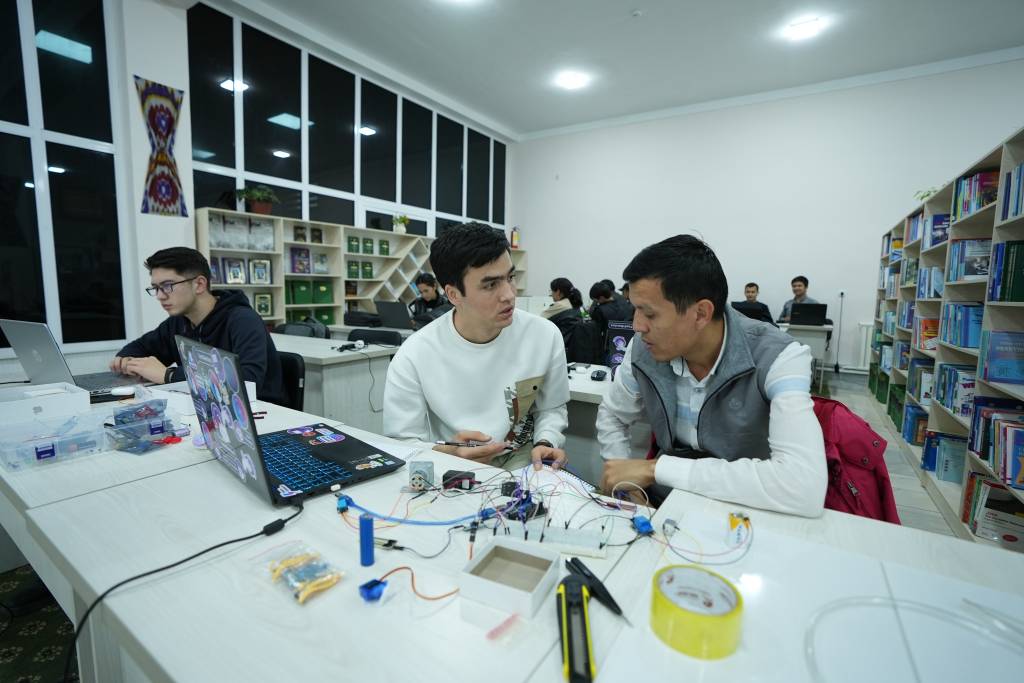
Out of 36 teams, 16 made it to the final presentation on Demo Day, demonstrating the contestantsʼ exceptional preparedness and expertise.
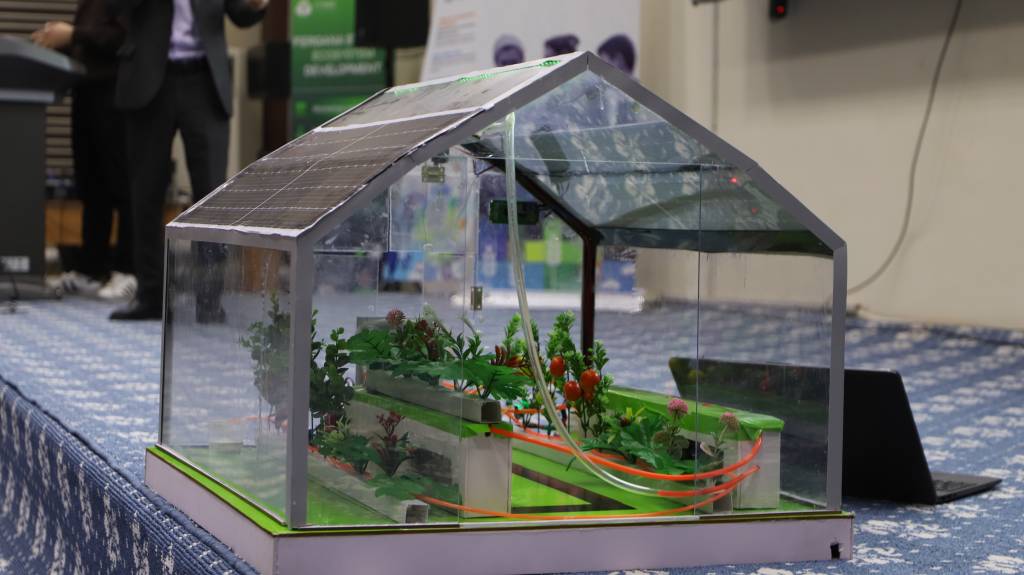
According to the juryʼs evaluations, 5 teams became the hackathon winners. The 1st place went to Team Everest with the project Smart Greenhouse – automating greenhouses through automatic ventilation, watering, and heating via remote control on a smartphone, with further integration of a smart system for additional greenhouse insulation. The system allows users to monitor daily statistics remotely.
Team GreenSpring took 2nd place with a project for remote control of gardens, greenhouses, and fields through phone applications, measuring soil conditions, and monitoring all parameters remotely.
The 3rd place went to Team Curved with project Green Guardia – a data management system on planting and harvesting, incorporating telemetric IoT data and allowing photographing of plants for diagnostics, helping ease the entry threshold into farming for beginners.
Team RoboGroup took the 4th place with a project for remote control of temperature and humidity in greenhouses, which also automatically adjusts and maintains the temperature, thereby reducing heating costs.
5th place went to Team Upgrade with project Smart Farm – artificial intelligence with soil sensor installation, capable of conducting complex soil condition and readiness analyses in a few clicks.
On November 22, experts from FAO and IT Park conducted a webinar for the hackathon participants. Participants were introduced to information about the hackathon and received preliminary data on farmersʼ issues. A significant benefit was the opportunity for participants to interact with farmers and mentors directly. During the first and second days of the hackathon, farmers were present on-site, providing feedback on the proposed ideas and guiding participants toward developing more efficient and practical solutions. In the future, participants will be invited to the incubation program by the OSCE and the acceleration program by CGIAR. Further details on these initiatives will be announced later.
To recap, FAOʻs Digital Villages Initiative (DVI) in Uzbekistan aims to improve agricultural productivity, enhance farmersʼ access to digital services, and uplift rural livelihoods in Fergana Valley. DVI was launched in Uzbekistan in 2023 to shepherd the communities of Novkent and Yuksalish into a digitally driven future. This initiative is shaped by a participatory approach to empower rural people, especially youth, to co-identify and develop solutions to rural communities’ challenges.
The DVI project in Uzbekistan encompasses several key elements, including assembling open-source IoT devices for greenhouses. Additionally, the project involves piloting these devices among smallholders under the Digital Villages Camp. Furthermore, the initiative consists of integrating digital literacy and entrepreneurship training programs in target communities and establishing a Digital Villages Hub — a digital platform for knowledge exchange among communities and a digital repository of agricultural know-how on Telegram and YouTube.
UzA