
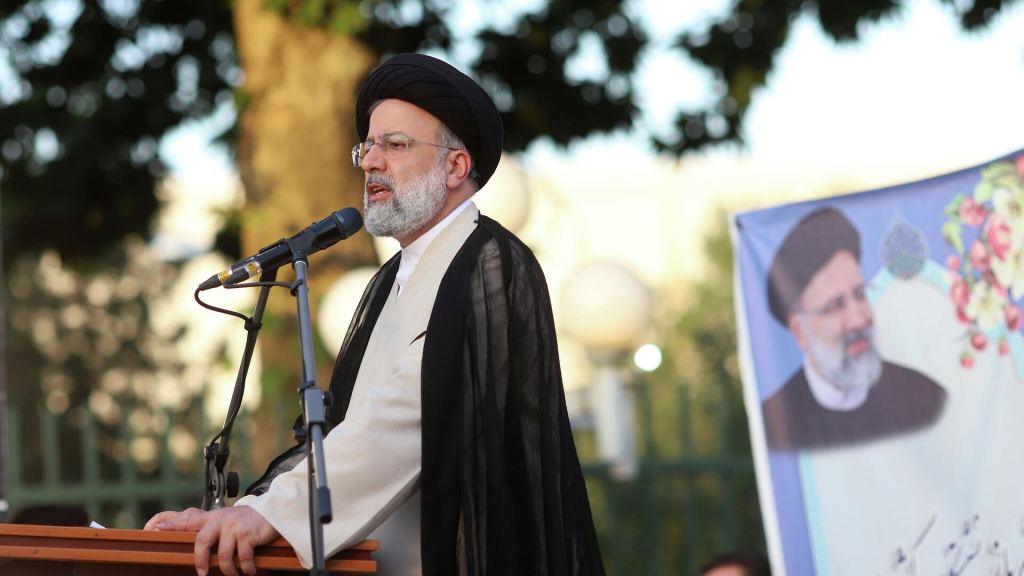
Today, Iran will host a funeral ceremony for the late President Ebrahim Raisi, who died in a helicopter crash.
The Uzbekistan delegation, led by the Speaker of the Legislative Chamber of the Oliy Majlis Nurdinjon Ismoilov, will be present at the funeral ceremony in Tehran.
Ebrahim Raisi, a leader who placed great importance on the development of relations with Uzbekistan, emphasized the shared cultural values and the crucial role of human capital in fostering these ties:
“Being in beautiful Samarkand, I realized that the common values between our countries and peoples have deep roots. The great people of Uzbekistan are the main investment of this country. They are kind and hardworking people who tirelessly strive for development and achieving high goals”.
The Iranian leader attached particular importance to cooperation on the Afghan issue, considering the unstable situation in the region, prone to worsening radicalism:
“The partnership between the two countries includes the exchange of delegations at various levels in politics and security, regular consultations on the peace process in Afghanistan, neighboring both countries, interaction between security agencies and the fight against organized crime, extremism, terrorism and drugs”.
Tehran’s keen interest in Uzbekistan is not without reason, as the country’s advantageous transit position plays a crucial role in fostering robust trade and economic relations. President Raisi’s words underscore this strategic importance:
“From the first days of independence of the Republic of Uzbekistan, we noted that the network of railways, roads, and sea routes of our country, in particular the ports of Bandar Abbas and Chabahar, can be used by Uzbek entrepreneurs to transport goods from Uzbekistan and other countries. In this regard, within the framework of the Ashgabat Agreement, a trilateral agreement between Iran, Uzbekistan, and Afghanistan, and several other agreements, attempts have been made to create legal, consular, and customs conditions for cooperation in this direction”.
Relations between the states of Central Asia and Iran are developing in conditions of transition from a unipolar world to a multipolar one. This means intensifying various formats and mechanisms aimed at sovereignizing the foreign and foreign economic policies of Eurasian countries. Sovereignization presupposes the search by states for a worthy place and role in international relations and the global economy, which dictates the need to search for promising areas for dialogue and mutually beneficial multilateral cooperation.
A well-known expert on the Middle East, Associate Professor of the Department of International Relations and Foreign Policy of Russia at MGIMO, Igor Matveev, noted that Ebrahim Raisi consistently supported developing cooperative ties with Central Asian countries and the Russian Federation. In his opinion, thanks to the personal efforts of the Iranian leader, interaction between the states of Central Asia, Russia, and Iran will continue to expand, and new exciting and promising projects will appear.
Abduaziz Khidirov, UzA