
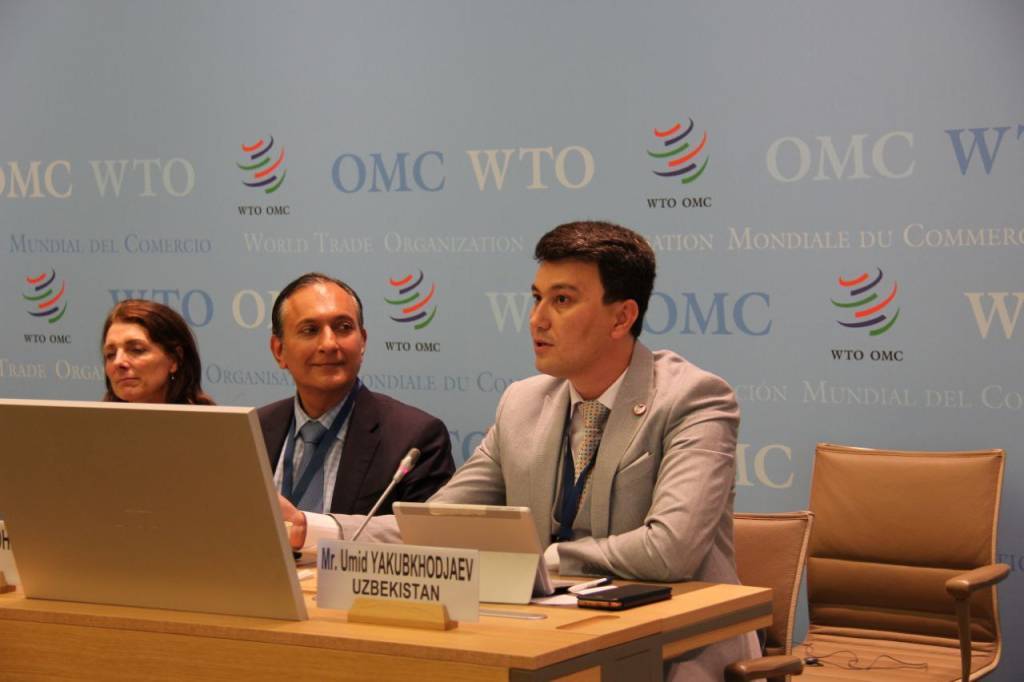
Accession to the WTO is a priority for Uzbekistan.
Systemic work is being carried out to ensure the implementation of Presidential resolutions and thorough preparation for this process. What are the requirements for agriculture when joining the WTO? Dean of the International Law Faculty of the University of World Economy and Diplomacy Umid Yokubkhojayev shared his views on this:
– Uzbekistan’s accession to the WTO will become an essential step for further developing the country, – says U. Yokubkhojayev. – WTO member states inform each other and the WTO Commission about all programs planned for state support of agriculture in the country and the resources necessary for this.
The University of World Economy and Diplomacy has created a WTO Department, organizes events and meetings, and studies international experience. International experts participated in one of the workshops on “Uzbekistan’s accession to the WTO: Special and differentiated treatment in agriculture” and gave the necessary recommendations.
Parties to the Agreement on Agriculture are developing and developed countries – members of the WTO. Developing countries have special conditions and different deadlines for fulfilling obligations.
It is necessary to study the issue of the regime in countries joining the WTO from the point of view of negotiations and creating opportunities for ourselves. We are studying Kazakhstan’s experience, as it resolved such issues when joining the WTO.
It is advisable to comprehensively study the specific benefits and consequences of Uzbekistan’s accession to the WTO, while considering the WTO’s special and differential treatment disciplines that may be applied to our country’s agriculture, as well as trade regulations, market access, and policy changes. The impact of WTO accession on Uzbekistan’s national goals regarding economic growth, employment, and modernization of key sectors is considered. The special and differential treatment mechanisms provided by WTO agreements for developing countries can benefit Uzbekistan with the flexibility and support needed to integrate into the global trading system.
Liberalization of innovative growth sectors such as telecommunications, financial, and professional services are critical to transforming the industry into digital smart agriculture. These will address many challenges, including climate change, land degradation, and water resource depletion.
Nasiba Ziyodullayeva, UzA