
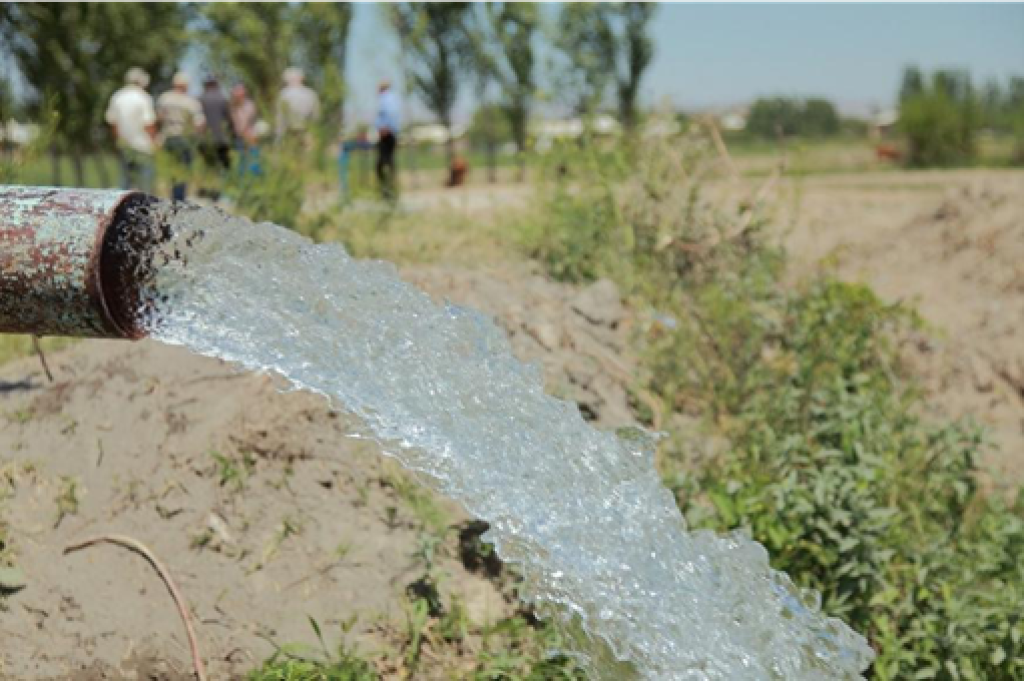
Amid a growing water shortage, the demand for this vital resource in the country continues to rise each year. In line with the objectives set by the Head of State, measures are being taken to address this issue through the modernization of irrigation and water supply systems, the introduction of modern technologies, and resource conservation. The attraction of investment and technical assistance from reliable international partners also plays a crucial role.

Today, we will focus on the Japanese Johkasou technology, which has been successfully implemented at several sites in the Republic of Karakalpakstan through a partnership between the Ministry of Agriculture of the Republic of Uzbekistan, the Government of Japan, and the UNDP Office in Uzbekistan.
The Johkasou technology, developed in Japan in the mid-20th century, has been widely used in rural areas. The system efficiently treats wastewater, making it safe for reuse, such as in agriculture.
Since March 2025, three such Johkasou systems in Karakalpakstan have already treated more than 16,400 cubic meters of wastewater, enough to irrigate 12-13 hectares of land per year. In addition to health benefits, the technology also leads to financial savings for families and institutions, as it eliminates the need to build expensive wells.

Today, vegetables and fruits are being grown at a rehabilitation center in Nukus district of Karakalpakstan using treated water, a place that, not long ago, struggled daily with water shortages. Tomatoes and pumpkins are now included in patients’ diets. These changes became possible thanks to the installation of a compact Japanese Johkasou wastewater treatment system, funded by the Government of Japan and implemented with the support of the United Nations Development Programme and the Ministry of Agriculture of the Republic of Uzbekistan.
As the center’s Director, Jenispay Tursynbekov, notes, irrigation is no longer a problem. There is more greenery around, which improves the microclimate and creates a comfortable atmosphere for patients, and there’s no more worry about the harvest.

The Johkasou technology is also being used at Kindergarten No. 13 and a specialized school in Khodjayli. These institutions now benefit from safe sanitation conditions, particularly important for children and adolescents with special needs.
“Beyond improving hygiene, the system has also become an educational tool”, says preschool teacher Tursinay Ilyasova. “The children water the garden beds and, by observing how the water is treated, learn why it must be conserved. It’s an important step toward raising an environmentally conscious generation”.
According to the UNDP Resident Representative in Uzbekistan, Ms. Akiko Fujii, modern technologies like Johkasou offer hope to residents of arid regions that, even with limited resources, it is possible to build a sustainable, safe, and green living environment.
The partnership between Uzbekistan, Japan, and UNDP opens the door to large-scale application of such solutions across the country, especially in regions where every drop of water counts.

UzA