
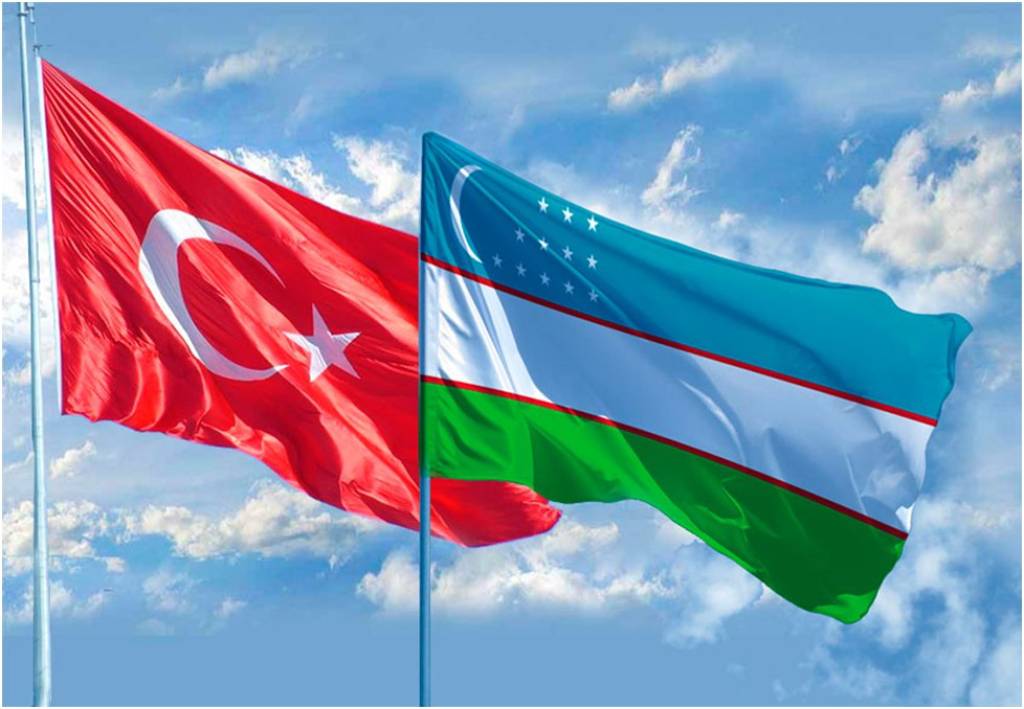
Diplomatic relations between Uzbekistan and Türkiye have been developing for many years. Both countries have rich history, cultural traditions and cooperate in various fields. Uzbekistan and Türkiye are celebrating the 32nd anniversary of the establishment of diplomatic relations.
On December 16, 1991, Türkiye was the first country to recognize the independence of Uzbekistan. Diplomatic relations between Türkiye and Uzbekistan were established on March 4, 1992. The Turkish Embassy in Tashkent began its activities in April 1992, and the Embassy of Uzbekistan in Ankara started its activities in January 1993.
Thanks to the political will of the President of Uzbekistan Shavkat Mirziyoyev and the President of Türkiye Recep Tayyip Erdogan, ties were brought to the level of strategic partnership in 2017.
Meetings of the Intergovernmental Commission on Trade and Economic Cooperation, which have not been possible for many years, have been held. In 2018, a High-Level Strategic Cooperation Council was established at the initiative of the Leaders of the two countries. In 2020, the first meeting of this council was held in Ankara.
In recent years, the dynamics of trade-economic cooperation have increased. Türkiye is one of Uzbekistan’s main trading partners (4th place after Russia, China, and Kazakhstan). This suggests potential and, most importantly, high interest in increasing indicators. Plans have been outlined to bring bilateral trade volume to $5 billion in the coming years.
Cooperation with Türkiye in the investment sector is enhancing. The volume of Turkish investments in Uzbekistan has increased 70 times. The number of Uzbekistan – Türkiye joint ventures in Uzbekistan has increased five times. Since the beginning of 2023, more than $ 500 million in direct capital investments have been attracted, and over 200 new enterprises have been created.
The participation of the Turkish side in the construction deserves special attention. With the involvement of Cengiz Holding, two projects have been implemented – thermal power plants in Tashkent and Syrdarya regions of Uzbekistan with a total capacity of 460 MW have been commissioned. In addition, last year, the President launched the construction of another power plant in Jizzakh region with a capacity of 520 MW. The Turkish side plans to implement projects for the modernization and construction of highways and tunnels, exploration and development of promising mineral deposits, and energy infrastructure management on the terms of public-private partnership.
The tourism sector, considered in Tashkent and Ankara to be a reliable driver for ensuring stable growth of the two economies, is one of the incentives for strengthening foreign economic, cultural, and humanitarian ties. Thus, Turkish specialists are involved in developing pilgrimage tourism in Uzbekistan. Turkish citizens are most interested in Uzbekistan’s cultural and historical sites and attractions. The total number of Turkish tourists who visited Uzbekistan in 2023 exceeded 38 thousand.
At the same time, there is an increase in fruitful cooperation through international institutions, especially within the framework of the Organization of Turkic States (OTS), which has recently turned into a practical structure with a solid agenda and strategic multilateral projects.
Uzbekistan and Türkiye cooperate fruitfully within the framework of such international structures as the United Nations, SCO, CIS, and the Organization of Islamic Cooperation. The positions of the parties on issues of regional and international importance are similar or close.
Today, Türkiye is one of the industrially developed countries. It holds leading positions in automotive and shipbuilding, in the energy, metallurgical, electronic, chemical, pharmaceutical, textile, food, and leather industries, and the production of building materials. The close and friendly relations between the two countries create additional opportunities to attract the potential of Türkiye to implement Uzbekistan's socio-economic programs and projects.
In general, Uzbekistan and Türkiye have common interests in Central Asia and the Middle East, which contribute to strengthening their partnership. The development of diplomatic relations between the two countries plays a key role in ensuring the region’s peace, stability, and prosperity.
Aziza Alimova, UzA