
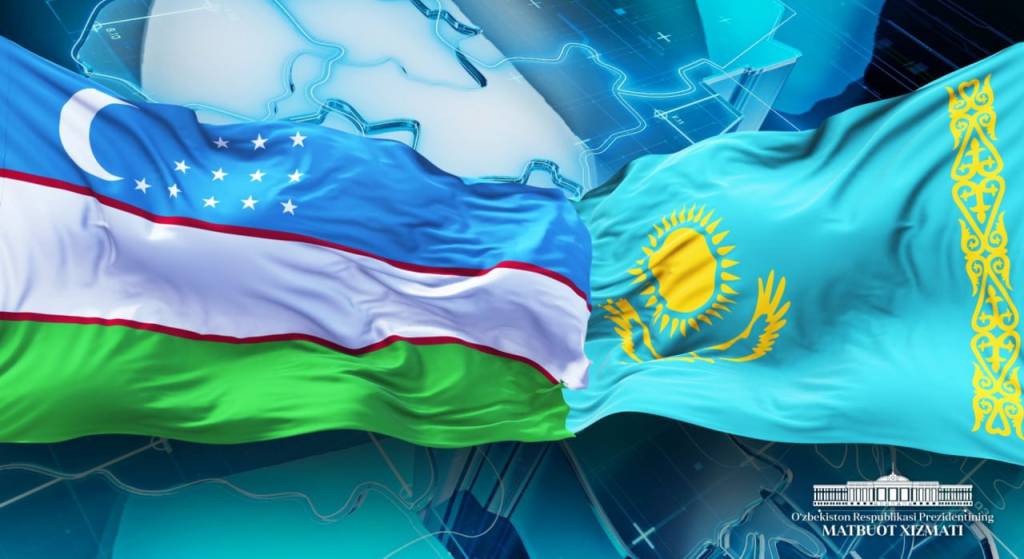
Kazakhstan is geographically located downstream of Uzbekistan along the Syrdarya River. The two countries are linked not only by this river but also by several other shared water sources. For instance, the Dostlik Canal, which draws water from the Syrdarya and passes through Tashkent and Syrdarya regions of Uzbekistan, supplies irrigation water to the farmlands of Yettisoy and Maktaaral districts in Kazakhstan’s Turkistan region.
Similarly, through the Zakh, Khonum, and Katta Keles canals originating from the Chirchiq River basin, water is provided to the Saryagash and Kazygurt districts of Kazakhstan’s Turkistan region.
Kazakhstan’s Chardara Reservoir also allows for the withdrawal of water into Uzbekistan’s Arnasay Reservoir.
At present, the issues of joint use of transboundary water resources between Uzbekistan and Kazakhstan are being addressed constructively.
The legal foundation of cooperation is based on the multilateral agreement of 1992 and the activities of the joint working group established in 2016. The purpose of this working group is to develop proposals to deepen cooperation across all areas of water management. Over the past period, 12 meetings of the joint working group have been held.
Another essential dimension of Uzbekistan – Kazakhstan cooperation is the practice of coordinating the summer operational regime of the Bahri Tojik Reservoir through annual tripartite protocols signed jointly with Tajikistan. This mechanism has contributed to improving water supply during the vegetation period in both Uzbekistan and Kazakhstan, ensuring the successful completion of the agricultural season.
In addition, Uzbekistan and Kazakhstan provide Tajikistan with gratuitous material assistance, including machinery, equipment, and fuel and lubricants, to support irrigation and bank-protection works.
For example, on May 30, 2025, the following tripartite protocol on the operational regime of the Bahri Tojik Reservoir for the June-August 2025 period was signed.
During this year’s irrigation season, water shortages were observed in the Syrdarya basin. The heads of the ministries of energy and water resources of Uzbekistan, Kyrgyzstan, Tajikistan, and Kazakhstan worked together to resolve the challenges, ensuring the successful completion of the agricultural season for all participating countries.
In addition, within the framework of bilateral relations with Kazakhstan, the sides are discussing the efficient management of shared interstate water management facilities, the prompt coordination of operational schedules, and the establishment of mechanisms for regular information exchange.
To further strengthen bilateral cooperation, the Governments of the Republic of Uzbekistan and the Republic of Kazakhstan have reached an agreement on the draft Treaty on Joint Management and Rational Use of Transboundary Water Facilities, which is planned to be signed in the near future.
Furthermore, in collaboration with Kazakhstan, a draft document titled “Regional Strategy for the Rational Use of Transboundary River Water Resources” has been developed to improve the management of water resources in the region. The document is currently under discussion with the remaining countries of the region.
Practical cooperation has also been established between the specialists of both countries in the water management sector. In March 2025, training seminars were organized at the “School of Water Specialists” in Tashkent for ten employees of the Ministry of Water Resources and Irrigation of the Republic of Kazakhstan.
As part of this exchange of experience, in October of the same year, two specialists from Uzbekistan’s Ministry of Water Resources participated in a regional training event held in Astana, Kazakhstan. At the same time, five Kazakh experts visited Uzbekistan to study the national experience in the rational use of water resources, including the introduction of water-saving technologies and canal concrete lining practices.
The value and significance of water in our region are steadily increasing. In these conditions, all neighboring countries, particularly Uzbekistan and Kazakhstan, are making full use of available opportunities to jointly and efficiently utilize transboundary water resources, thereby contributing to the prosperity of their peoples.
Zokir Ishpulatov,
First Deputy Minister of Water Resources
UzA