
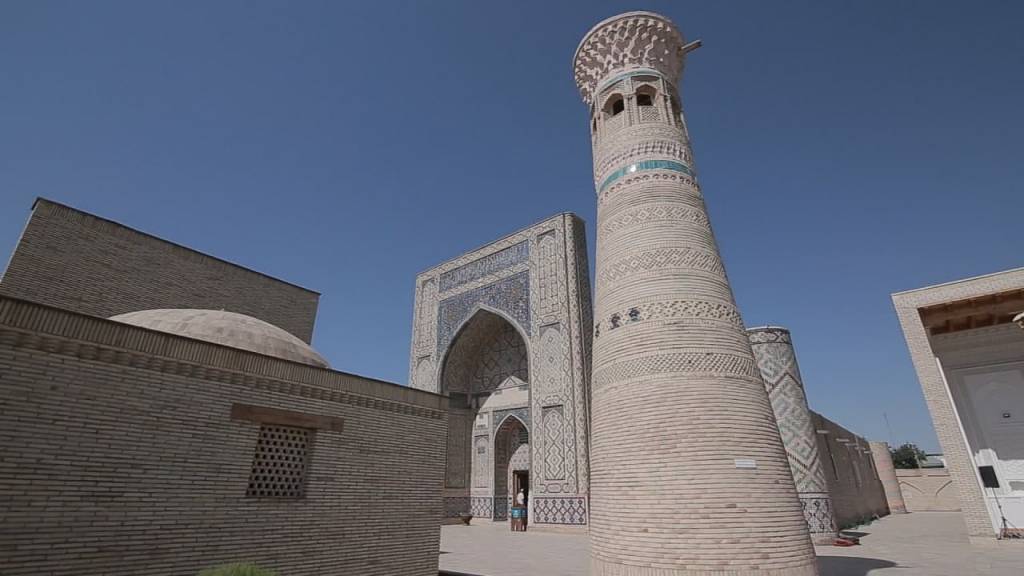
Gijduvan district has a rich and ancient history. The territory of this area was settled several centuries ago before the arrival of Arab tribes in these lands. At one time, the area was part of the Samanid state. In the Middle Ages, the cities of Gijduvan and Tavavis were formed on this territory. For a long time, the two settlements vied with each other for the right to be called the best city, but over time, Tavavis lost its influence, and Gijduvan, in turn, turned into an urban center.
According to the National PR-Centre, in written sources, Gijduvan began to be mentioned in the X century. At that time, the city had great influence and was one of the leading shopping centers. The famous representative of Sufism, spiritual mentor Abdulkhalik Gijduvani, brought special fame to Gijduvan. Murshid is the tenth spiritual link in the golden chain of succession of the sheikhs of the Naqshbandi tariqa. He lived during the Karakhanid dynasty, received spiritual initiation from Yusuf Hamadani, and advanced the eleven principles of the tariqa.
<iframe width="1090" height="480" src="https://www.youtube.com/embed/ALFjnwoI8PQ" title="YouTube video player" frameborder="0" allow="accelerometer; autoplay; clipboard-write; encrypted-media; gyroscope; picture-in-picture" allowfullscreen></iframe>In the XVI century, with the arrival of the Sheibanid dynasty, the city turned into a powerful fortress, which served as a place of defense. In 1512, there was a powerful battle in the war of the Shaibanids of Transoxiana on the one hand and a contingent from the Kyzylbash Safavid state on the other. This battle was called the “Battle of Gijdavan”. During the time of the Emirate of Bukhara, Gijduvan continued to be a trading city. Local artisans won the hearts of customers with their outlandish products.
Since ancient times, the Gijduvan district has been famous for handicraft centers and products of folk and applied art. Merchants from Asia and Europe came here to buy beautiful ceramics, gold embroidery and silk carpets. To this day, artisan centers flourish in the area, where skilled craftsmen demonstrate their unusual products.
Traveling through the Gijduvan district, you can get acquainted with ancient traditions and customs, see unique technologies for the production of souvenirs, ceramics, clothing, silk and yarn products, dolls, flower arrangements, sweets The very process of production captures its antiquity, originality, because, as a rule, the skill of manufacturing passed from generation to generation and carefully preserved for centuries.