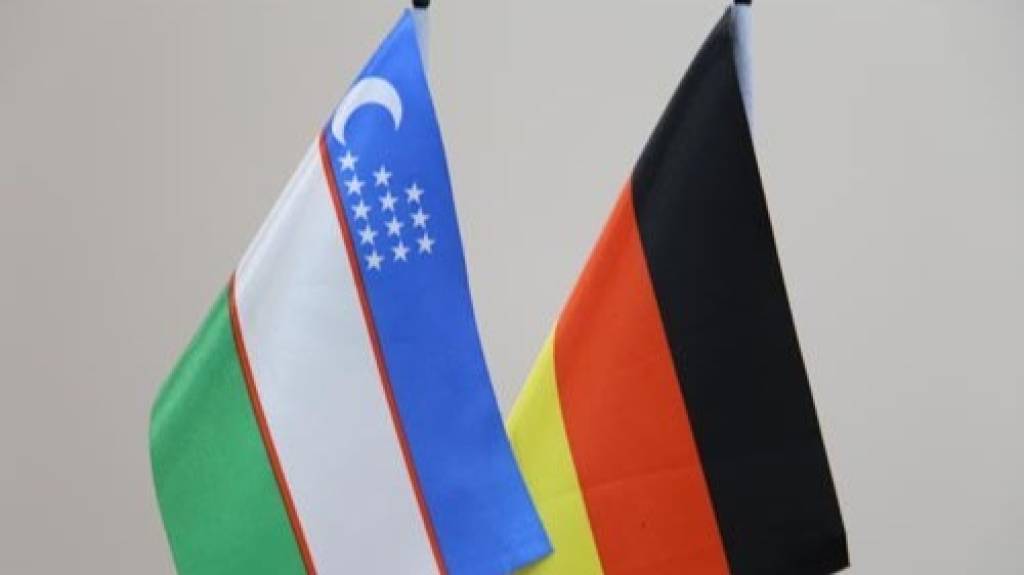
This point of view was expressed by the expert of the Institute for Strategic and Regional Studies under the President of the Republic of Uzbekistan Shakhnoza Qodirova, assessing the results of the last visit of the President of the Republic of Uzbekistan Shavkat Mirziyoyev to Germany.
According to her, along with other areas of cooperation, developing constructive collaboration in education and training qualified personnel is of no minor importance for Uzbekistan and Germany.
During the talks, the two countries' leaders confirmed that the parties have great potential and are of mutual interest in developing a partnership in the scientific and educational direction and agreed to give a new impetus to its development.
In particular, an agreement was reached on preparing a comprehensive program for studying the German language in Uzbekistan, including expanding the Goethe-Institut’s activities in our country’s regions. It is gratifying to note that this further stimulates the interest of Uzbekistan youth in learning the German language, which has been gaining popularity in recent years.
According to the data, about 500,000 Uzbekistan students study German, which puts Uzbekistan in first place in Asia in this indicator. Moreover, the number of general educational and secondary specialized institutions where the youth of Uzbekistan study German has increased from 950 to 1.3 thousand. Accordingly, the demand for the language courses of the Goethe-Institut in the country is growing yearly. In 2022 alone, more than 4 thousand people studied German, and 8 thousand people applied to pass the exam to obtain a language diploma.
Moreover, academic exchange between our countries is intensively developing: cooperation has been established with more than 30 German universities, and about 1 thousand Uzbekistan students, graduate students, and doctoral students are studying in various German universities and research centers.
A significant role in this is played by the successful activities of the representative office of the Goethe-Institut, the German Academic Exchange Service, the DVV International, and the representative office of the Central Agency for Schools Abroad in Uzbekistan.
The desire to build international cooperation in this direction is not accidental since Uzbekistan pays great attention to improving the educational segment. Getting a quality education is enshrined in the renewed Constitution. Over the past seven years alone, higher education coverage has increased from 9% to 38%, universities have grown from 70 to more than 200, and foreign universities are opening.
It should be emphasized that the expansion of interaction in the direction of qualitative study and teaching the German language opens up significant opportunities in the organized labor migration between Uzbekistan and Germany. A country where 60% of the population is under 30 needs to diversify its labor flows. This will allow the German side to make up for the shortage of skilled labor the German economy is experiencing.
During the recent talks in Berlin, work has already been launched in this direction. In particular, the signed Intergovernmental Declaration of Intent to deepen multifaceted cooperation indicates an agreement to start negotiations on agreeing on labor migration, as well as on facilitating the issuance of work and student visas.
Today, work is underway to establish cooperation between Uzbekistan and Germany in labor migration. For 2021-2022 agreements were concluded with 9 German companies on employing Uzbekistan citizens in medicine, construction, production, logistics, and information technology.
In 2022, a pre-departure training center was established in Tashkent to teach the language and profession to Uzbekistan citizens for further employment in Germany. Currently, 446 people are studying at the center. According to the Agency for External Labor Migration, about 250 citizens of Uzbekistan are presently working in Germany.
In general, the agreements reached during the fruitful negotiations again testify that expanding cooperation in education and training qualified personnel is one of the key areas for further building up the Uzbekistan – Germany dialogue. This deepens the partnership in human capital development and serves as a solid foundation for strengthening the spirit of friendship and mutual respect between the two peoples.
Shakhnoza Qodirova,
Chief Researcher at ISRS