
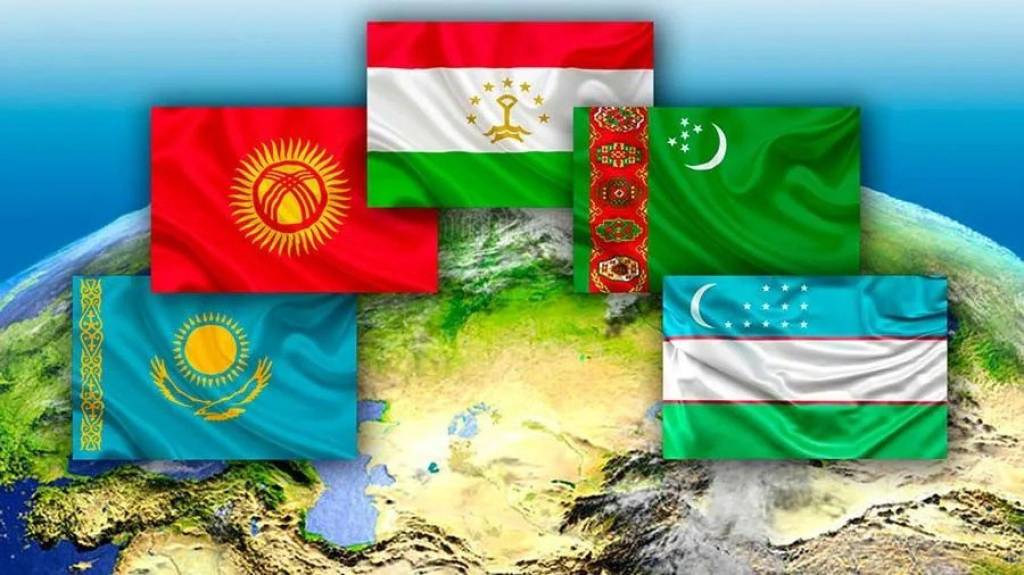
As one of the main priorities of his activities within the framework of the already past election campaign, the President of Uzbekistan set the task of forming stable and constructive relations with all the countries of Central Asia. Therefore, according to the Director of the Center for European-Asian Studies Andrey Rusakov, the recent visit of Shavkat Mirziyoyev to Ashgabat and the Trilateral Summit – Uzbekistan, Turkmenistan, Tajikistan – fully fit into the mainstream of Uzbekistan’s political priorities.
The previous success achieved within the “zero problems with neighbors” approach has already allowed Tashkent, through negotiations and mutual compromises, to solve the delimitation and demarcation of borders practically. Now the level of complexity is higher – this is the use of water resources, in particular the Amudarya, and problems in the formation of policy concerning the eternally turbulent Afghanistan, and, of course, the creation of cross-border multimodal transport corridors:
– The agenda for discussing the positions of the three countries – Uzbekistan, Tajikistan, and Turkmenistan – on many issues on the agenda is long overdue. The inconsistency of actions in using the region’s water resources has already led to the most significant environmental disaster on the continent – the drying up of the Aral Sea. And this is not the only topic.
The turbulence of world politics and newly emerging challenges force us to form common approaches in the already new realities. It is gratifying that Shavkat Mirziyoyev’s calls for dialogue have received a response from Tajikistan and Turkmenistan, which previously gravitated toward closeness and is in a situation of power transit.
The particular need for a joint dialogue is not only to develop a common point of view on interaction with Afghanistan, but also to involve Tajikistan, which takes an uncompromising position, demanding the formation of an inclusive government with the participation of the Tajik population of the Islamic emirate.
The situation with the distribution of water resources in the region may radically worsen due to the possible launch of the Kush-Tepa canal by the Taliban government, resulting in the Amudarya losing 15-20 percent of water. Moreover, according to some expert estimates, the canal is being built in violation of land reclamation standards without the necessary concreting, eventually leading to the departure of a significant part of the water “in the sand”. At the same time, implementing the concept of a “welfare state” adopted under the new version of the Constitution of Uzbekistan requires a significant increase in economic activity in the region and the creation of new value chains.
That is why, as expected, one of the main issues at the trilateral forum was creating and operating cross-border multimodal transport corridors with access to the Caspian Sea and the Persian Gulf.
Judging by the fact that Uzbekistan, Tajikistan, and Turkmenistan have agreed to support each other in their work within the framework of international organizations, including the UN, the format of the past trilateral forum has every sign of becoming permanent.
Such associations against common challenges are a tenfold effective way of solving the region’s most critical problems at the highest political level.
UzA