
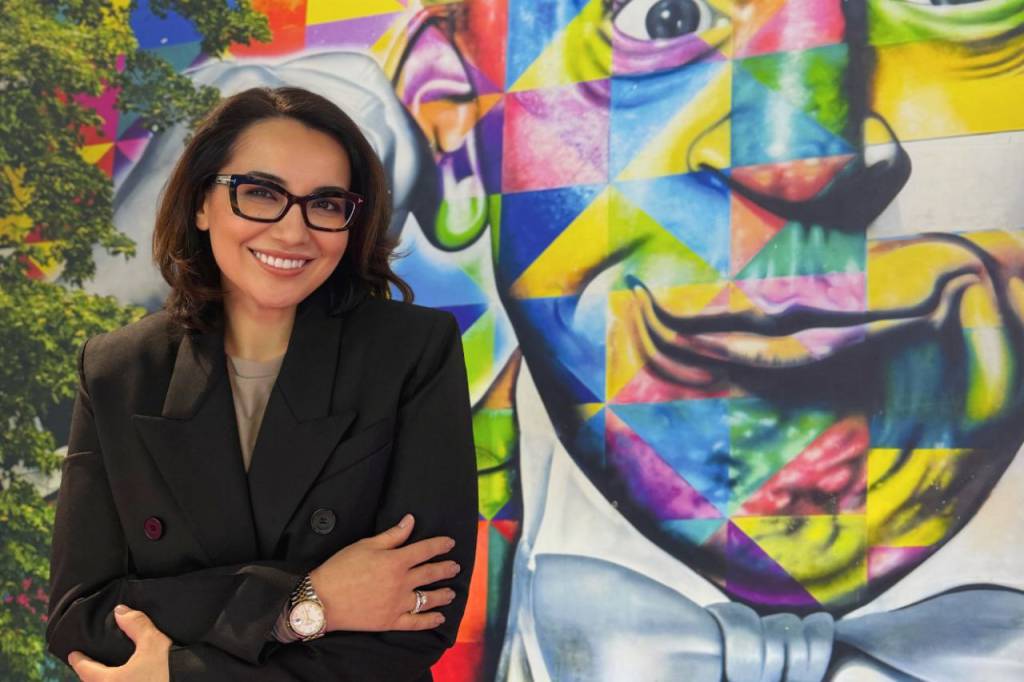
Today, Uzbekistan attracts the attention of the global community not only because of its ancient monuments, unique architectural sites, and centuries-old cultural heritage, but also because it is a center of a modern creative environment, innovative solutions, and international cultural exchange.
UzA correspondent spoke with Negina Mukhtarova, Director General of the tourism company Rovet DMC, about the tourism potential of Uzbekistan, the reforms being implemented in the sector, and the significance of the creative economy.
– Recently, much has been said about the new tourism image of Uzbekistan. What is the essence and meaning of this term?
– As an expert, I consider this topic highly relevant. Uzbekistan demonstrates a commitment to renewal through new initiatives, cultural projects, and greater openness to the world. It is important to develop this trend in the tourism sector.
It is necessary to preserve and promote rich historical heritage, while also actively engaging with the international community through art, music, architecture, design, and gastronomy. This makes it possible to preserve cultural values and traditions while demonstrating a modern, creative approach.
Modern tourists are interested not only in visiting historical landmarks but also in immersing themselves in a country’s atmosphere and exploring its unique aspects.
History serves as the foundation for shaping the future, which in turn is defined by cultural events, festivals, artistic venues, and new public spaces.
In this context, the Biennale organized by the Art and Culture Development Foundation in Bukhara plays a significant role. This event demonstrated that historical heritage can interact with art, creating new cultural content and contributing to the formation of a modern image of the country.
Recently, many countries have been actively working on rethinking their image. For example, Spain, having overcome a period of isolation, focused on implementing architectural projects. The United Arab Emirates fostered a sense of national identity through large-scale cultural initiatives and the creation of world-class museum spaces. South Korea emphasized the cultural and creative sectors, integrating contemporary music and cinema into its national brand. In all these cases, the key factor is not the rejection of traditions but their reinterpretation.
The country’s new tourism image represents a comprehensive approach to shaping a national identity based on a profound reinterpretation of Uzbekistan’s cultural and historical heritage. The unique advantage of our country lies in its rich historical legacy, which must be integrated into the modern cultural agenda. This requires rethinking craftsmanship as a design product, moving national music beyond the framework of folklore, and integrating it into the global cultural dialogue.
Such an approach will enable the creation of a vivid, memorable image of Uzbekistan that respects its past while confidently looking toward the future. The first steps in this direction have already been taken, and it is necessary to consistently develop a cultural strategy that harmoniously complements tradition and modernity.
– What is the role of the creative economy in tourism development?
– Of particular importance in this context is the Presidential resolution on the development of the creative economy. This document emphasizes that the creative industry is regarded as a full-fledged strategic resource of the state rather than merely a supporting sector.
The creative economy is not limited to art alone. It contributes to the creation of new jobs, increases investment attractiveness, and helps shape a competitive national brand.
Today, tourism and the creative industry are becoming inseparable elements. They represent a new tool for tourism companies that helps shape a country’s image, one that impresses tourists and influences their destination choices. Design, fashion, cinema, music, architecture, and digital technologies play a key role in creating this image.
– What else should be given attention for the tourism sector to reach a new level?
– It is necessary to intensify international cooperation and expand the format of participation in tourism exhibitions.
Uzbekistan is ready to act as a full-fledged partner at international tourism forums and exhibitions, and to become a principal sponsor of major events. This will enable the country to showcase its tourism potential.
It is also important to strengthen the country’s digital presence. Tourists choose destinations based on social media, visual content, and influencer recommendations.
– What are the main problems in this sphere, and what measures are proposed to address them?
– Several systemic issues remain in the sector, requiring a comprehensive approach. First of all, there is a noticeable lack of high-quality, systematized information about our country in the global market. Despite active efforts, Uzbekistan is still insufficiently represented in the global media space.
At the same time, important steps are being taken: cooperation is being established with leading international television channels and media platforms. They highlight our country’s cultural heritage, modern development, and tourism potential.
To smooth out seasonality, the MICE tourism segment (business events, conferences, and film screenings) is being actively developed, enabling stable demand for services throughout the year.
The service sector needs specialists who meet international service standards and possess foreign language skills. Efforts are underway to train and enhance the qualifications of tourism-sector employees.
It is worth noting that the process of addressing these tasks has entered an active phase. The tourism sector is demonstrating readiness for transformation, and the measures being taken are laying a solid foundation for sustainable, high-quality development.
– What are the results of the reforms in this sector?
– In 2025, Uzbekistan was visited by more than 11.7 million foreign tourists. This success is the result of implementing a set of measures to increase tourism attractiveness and develop the tourism sector.
Measures such as infrastructure expansion and the development of air connectivity, visa regime liberalization, and the active promotion of the country on the international stage have yielded results.
The achieved outcomes demonstrate Uzbekistan’s significant potential as a tourism center with a rich historical and cultural heritage and modern cultural and creative capacity.
Interviewed by Nasiba Ziyodullayeva, UzA