
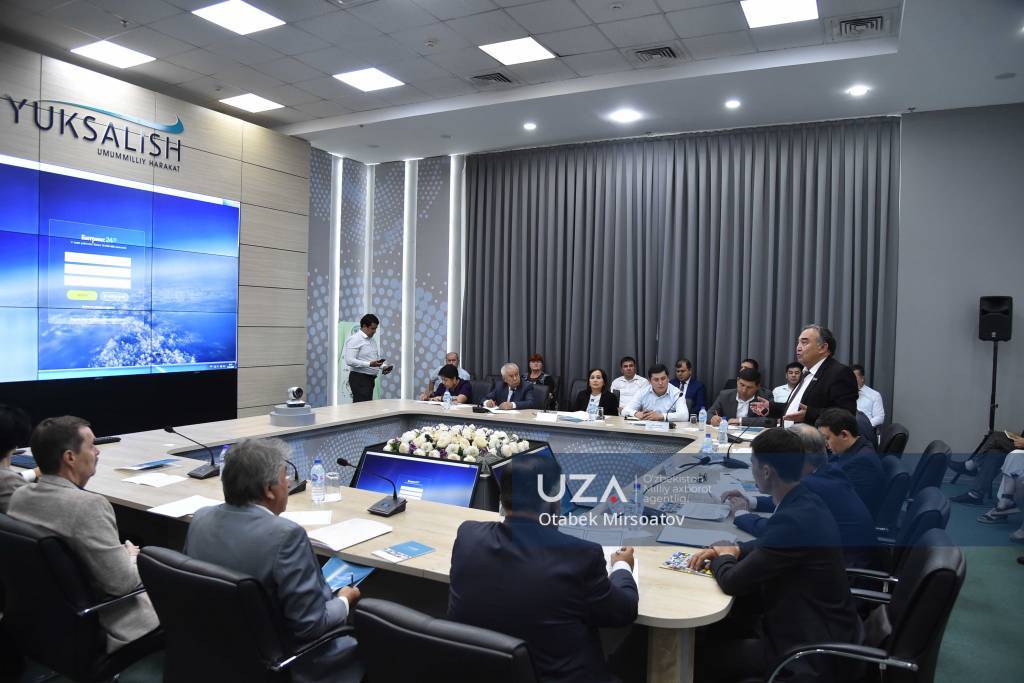
A roundtable discussion was held on “The results of the Samarkand SCO Summit and current issues of environmental diplomacy”.
The event, organized at the initiative of the Committee of the Senate of the Oliy Majlis on Development of the Aral Sea Region and Ecology in cooperation with the Ecological Movement of Uzbekistan, the Yuksalish Nationwide Movement, was attended by senators, scientists, representatives of non-governmental non-profit organizations working in ecology sector, environmental activists and journalists.
It was noted that the Samarkand Summit has become an important historical event calling for the solution of the problems facing humanity, mutual dialogue, vigilance on a global scale and cooperation.
At the summit, special attention was paid to the environmental problem. The Head of the state, noting the growing environmental threats, proposed to establish the SCO Climate Council.
This mechanism contributes to strengthening cooperation in green development, combating desertification and land degradation, attracting innovative solutions and financial resources for the implementation of projects, including in the Aral Sea zone.
It was noted that uniting political scientists, public figures, scientists, environmental experts, business representatives in the SCO Climate Council will contribute to a deep scientific substantiation of projects and ensure their implementation.
It was noted that Uzbekistan serves as an example to the entire world community in environmental protection and ensuring environmental stability. During the presidency of the SCO, Uzbekistan demonstrated the implementation of the Paris Agreement by committing to reduce greenhouse gas emissions by 2030 through the introduction of green technologies, the implementation of projects in green energy and the use of solar stations with a capacity of 100 megawatts in Nurata and Nurabad.
An important step was the adoption in October 2019 of the Strategy for the transition of the Republic of Uzbekistan to a green economy for 2019-2030.
By 2026, ensuring the use of renewable energy sources in Uzbekistan will reach 25 percent by bringing the total capacity of solar and wind power plants to 8,000 megawatts. This will save more than 7 billion cubic meters of natural gas annually and prevent the release of more than 12 million tons of greenhouse gases into the atmosphere.
[gallery-8958]
Norgul Abduraimova, UzA