
The Organization of Turkic States, formerly called the Turkic Council or the Cooperation Council of Turkic Speaking States, is entering a new stage of development. Not only its name, composition and structure are changing, but also the perception of this organization in the international arena, the level of visibility and attractiveness of the OTS in the vast region is growing.
This trend is due to several factors, among which are the following.
First, thanks to the open, good-neighborly policy of Uzbekistan, an atmosphere of the commonwealth has been formed among the Turkic states, especially among the Central Asian countries, as well as in their relations with Türkiye. This circumstance has created unprecedentedly favorable conditions for the active development of OTS activities. The entry of Uzbekistan into the Turkic Council in 2019 and the active participation of the country in the activities of the Organization gave it a new international significance and significantly increased its authority.
Second, the conditions for the activities of the OTS in the countries of Eurasia have improved due to the strengthening of relations between Türkiye and Russia in recent years, the transition of the two countries from geopolitical tensions to a fairly constructive political dialogue at the highest level. This, for example, can be evidenced by the fact that President Recep Tayyip Erdogan was invited to the SCO Summit and announced the possibility of a second meeting of the leaders of Russia and Türkiye in Samarkand on the sidelines of the OTS Summit. The President of Russia was not invited to participate in the OTS Summit as a guest, but the possibility of his presence at the meetings of the Turkic states is now considered an acceptable scenario at the suggestion of the Turkish Leader.
Third, Hungary's active participation in the OTS activities gives this Organization a European dimension. This demonstrates that the OTS is not only focused on the Caucasus and Central Asia, but acts as a link between East and West, Christians and Muslims. Despite the status of an observer in the OTS, Hungary acts on an equal footing with other Member States and participates not only in all summits, but also in all projects and programs of the Organization. Since 2019, the Hungarian Government has been funding the European office of the Turkic Council in Budapest and also expresses its readiness to contribute to the Pan-Turkic Investment Fund, the decision to establish which is included in the agenda of the Samarkand Summit.
Fourth, the economic component of the Organization is being strengthened. The total GDP of the member states exceeds $1.2 trillion. The total volume of foreign trade turnover of the OTS countries is about $1 trillion. They account for 1.5% of world trade. OTS potentially represents a huge domestic market with a total population of 170 million people, in 25 years this figure will exceed 200 million people. These figures testify to the serious economic potential of the Organization. Within the framework of the OTS, a whole range of agreements in trade, transport, energy and tourism is in force and adopted. Several decisions adopted following the Summit in Samarkand will give a new, more visible economic dimension to the activities of the Organization.
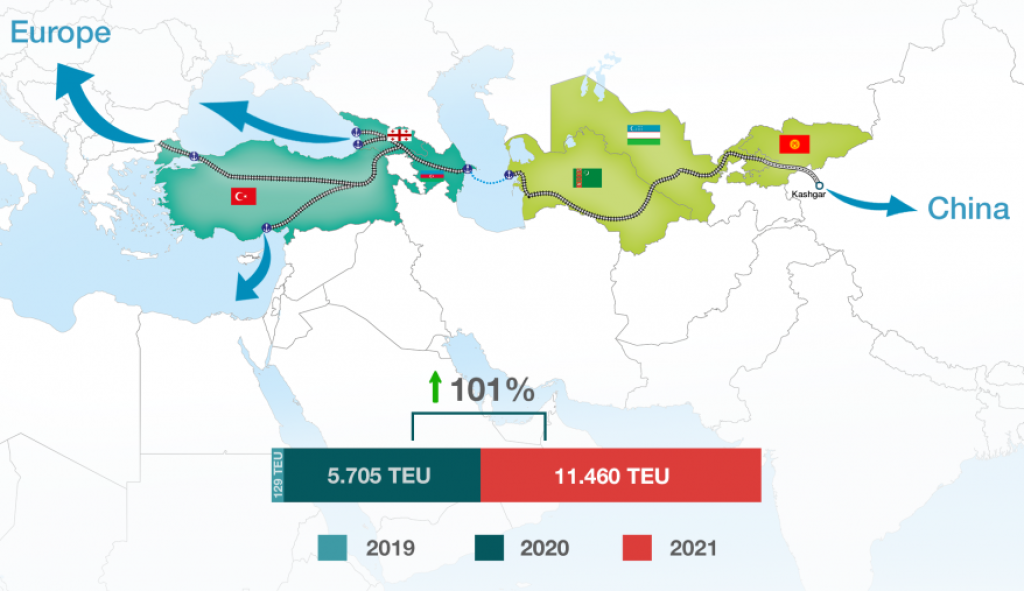
Fifth, the possibility of reviving the Zangezur corridor directly connecting Türkiye with Azerbaijan, as well as the intensification of projects on the Trans-Caspian transport routes, increase the importance of the OTS space as an important transport and transit hub between the West and the East.
This role of the OTS countries is strengthened by the fact that all the main routes of the Middle Corridor connecting China with Europe, bypassing Russia and Ukraine, run through the countries of this Organization.
Sixth, unlike other regional organizations active in Eurasia, the OTS does not create an antagonistic agenda between the West and the East. On the contrary, having two NATO/EU states and two more CSTO/EAEU member states, the Organization of Turkic States creates a certain balance of interests. The absence of internal conflicts, in the particular confrontation between member states, is another factor that distinguishes the OTS from other regional structures operating in Eurasia.
None of the Eurasian institutions (SCO, CIS, EAEU, CSTO) has representation in Europe and direct access to the EU market, while in the OTS two countries at once – Türkiye and Hungary – participate in the EU Customs Union and are carriers of European standards. The connectivity of the OTS with Europe is also reflected in the cultural and humanitarian sphere. Khiva was presented in Europe as the Cultural Capital of the Turkic World in 2019-2020. The TURKSOY Youth Chamber Choir is a three-time gold medalist of the European Choir Games.
In general, the formation of the Organization of Turkic States takes place in a difficult geopolitical context, due to dynamic changes in the countries of the Turkic world and the international arena. The status of the OTS is being strengthened not only as a promising association that enhances its authority in Central Asia, but also as a regional structure that is turning into an important link in the modern system of international relations. It becomes an effective sub-regional mechanism for building friendly relations between the participating countries and an additional platform representing them on the world stage.
The growing importance of OTS in Eurasia is evidenced by the dynamic process of its expansion (since 2018 – Hungary, in 2019 – Uzbekistan, in 2021 – Turkmenistan as an observer). Several other states, including South Korea, Iran, Afghanistan, Ukraine, have shown interest in establishing links with the OTS in one form or another in recent years.
At the same time, the Central Asian countries are becoming the driving force and the geographical core of the OTS. Important decisions initiated by Kazakhstan with the support of Uzbekistan to update the name of the association, develop the Organization Strategy for 2020-2025 and the Concept of the Turkic World 2040, as well as the initiative of Uzbekistan on the Economic Cooperation Strategy for the near and medium term are evidence of the active role of the Central Asian countries in setting priorities and long-term activities of the OTS.
These initiatives demonstrate that the conceptual vision of the prospects for the OTS is in Central Asia, and the key states of the region are the leading participants in the activities of the Organization. The announcement of Turkestan as the Spiritual Capital of the Turkic World and Samarkand as the Capital of the Turkic Civilization reinforces the special role of Central Asia in the OTS space.
Taking into account the preceding, it seems possible to put forward the following proposals for the states of the region participating in the activities of the OTS:
– continue to actively develop cooperation in the OTS, avoiding the formation of any alliance or closed bloc in the Turkic world so as not to cause a negative attitude on the part of other influential partner states in the region;
– while maintaining independence and a non-bloc position in relations with Ankara, strengthen strategic partnership with Türkiye, making the most of its potential in trade, economic, investment, innovation and technological spheres;
– continue efforts to preserve Central Asia as the main axis of cooperation in the OTS, which will increase the combined political weight and influence of the Central Asian countries.
Shukhratjon Yigitaliyev,
Independent Columnist