
Uzbekistan and Arab nations are united by common historical, cultural and spiritual values. An important partner of Uzbekistan in the Arab East is the Kingdom of Saudi Arabia.
Cultural relations between Uzbekistan and the Arabs began in the middle of the 7th century when the Arab armies entered Central Asia. At that time, Central Asia was a region with developed political and religious traditions.
According to Uzbek scholars, with the introduction of Islam to Central Asia, an active period in the development of this religion began, because people accepted it not for formality, but consciously. Muhammad al-Bukhari, Imam at-Termizi, Imam Moturidi are among the famous compatriots who are knowledgeable about Islamic theology, the Qur'an and the Sunnah of the Prophet, peace and blessings be upon him, and the whole Islamic world mentions them with great respect.
Without exaggeration, Mawarannahr became one of the main centers of the development of Islamic sciences and Islamic culture and made a great contribution to the development of universal and Muslim civilizations.
The following scientists and figures of our strong ties connect the peoples of Uzbekistan and Saudi Arabia.
Imam Bukhari (Abu Abdullah Muhammad ibn Ismail ibn Ibrahim ibn Al-Mughirah ibn Bardizyah Al-Jufri Al-Bukhari) was born on July 20, 810 in the city of Bukhara. He wrote down the hadiths of the Prophet, may God’s prayers and peace be upon him, and as a result divided the 600,000 hadiths he had memorized into sahih (reliable) and non-sahih (unreliable). Imam Bukhari is respectfully referred to as “Imam ul- Muhaddithun” (Leader of all Muḥaddith) in the Islamic world and among scholars. The collection compiled by Imam Al-Bukhari is the first important sacred source after the Qur'an to this day.
The great theologian Abu Mansur al-Moturidi (870-944), who went down in history with the title of “Imam who initiates guidance” and several other great qualities, fought against ignorance with the help of enlightenment, is a famous person in the Islamic world. He is one of the founders of the Moturidi School, one of the two major sects of the Sunni faith. The great imam of the word and scholar of jurisprudence was originally from the village of Moturid in Samarkand (located in the present Jomboy district). Abu Mansur al-Moturidi continued his early education in Samarkand, the religious and educational center of Mawarannahr. Al-Moturidi considered Abu Bakr Ahmad al-Jurjani, Abu Nasr Ahmad al-Iyadi, the great scholar of Imam Azam's sect Nasr ibn Yahya al-Balkhi, and Muhammad ibn al-Fadl as his teachers. It is difficult to imagine the religion of Islam without the doctrine of Moturidia. Especially in the current conditions of increased globalization processes, the opinions expressed by Imam Moturidi a few centuries ago, and his views on preserving the purity of our holy religion, are important.
The great jurist Ali ibn Abu Bakr ibn Abd al-Jalil al-Farghani ar-Rishtani al-Marghinani was born on September 23, 1123, in the ancient city of Rishtan. He is known by the names of Burhan ud-din wa-l-milla and Burhanuddin al- Marghinani, because he perfectly mastered the Qur'an and hadith sciences, had an extremely deep knowledge of fiqh-Islamic jurisprudence, and created incomparable masterpieces in this field.
Abul Qasim Mahmud ibn Umar Zamakhshari – a prominent linguist, historian, geographer, literary critic of the Muslim world, was born in 1075 in the city of Zamakhshar, Khorezm. His work on Arabic grammar, “Al Mufassal”, is second only to the Arabic scholar Sibawayh's “Al-Kitab”, and is still the main source for learning Arabic. Mahmud Zamakhshari wrote about 50 works on logic, grammar, religion, dictionaries, literary studies, pedagogy, history and geography. Mahmud Zamakhshari was awarded the high titles of “Teacher of the whole world”, “Teacher of all Arabs and other peoples” (“Ustoz ul-arab va-l-ajam”), “Fame of Khorezm”. He created many of his works during his stay in Makkah. For this reason, he will be entitled to the honorable name Jorullah (“Neighbor of Allah”).
Evidence of cultural ties between Uzbekistan and Saudi Arabia can be found in our modern history.
According to information, in 1979, our compatriot Abdulrahim Amin Bukhari (1917-1993) wrote down the inscriptions and decorations on the golden door of Ka'batullah in “suls” script. He was born in 1917 in the territory of Kokand Khanate. He moved to Saudi Arabia in the early 1920s. In the 1960s, he gained fame as the most famous calligrapher in Saudi Arabia. In 1962, according to the decree of the King of Saudi Arabia, he was appointed as the head of the enterprise of sewing Ka'batullah's Kiswa. He worked at this factory until his retirement in 1979. He also participated in the project to create the flag of Saudi Arabia.
The scientific community of Saudi Arabia knows our compatriot Nazir Torakulov well. Nazir Torakulov was born in 1892 in the family of a large cotton merchant in Kokand. The father of the future diplomat was a well-educated man of his time. At the insistence of his mother, he entered the Jadid School, where the Arabic language, the basics of Islam and the life of Islamic prophets are taught at the Kokand School. In 1906, he graduated from the Russian Tuzem School in Kokand. In 1914-1916, he studied at the Faculty of Economics of the Moscow Commercial Institute. In 1922-1926, N. Torakulov worked in Moscow. Along with leading the Central Publishing House of the Peoples of the Soviet Union, he was engaged in scientific and pedagogical work. In November 1927, N. Torakulov was appointed as the autonomous representative of the Kingdom of Hejaz and Najd and the regions joined them (now the Kingdom of Saudi Arabia). With his high professional level, he earns the sincere respect of the King and the ruling family. King Abdulaziz Al Saud called Nazir Torakulov “my brother”. The Ambassador had a good relationship with the King's sons, especially Prince Faisal bin Abdulaziz.
In 1932, a Saudi delegation led by Prince Faisal bin Abdulaziz visited the Soviet Union. This visit, which lasted for ten days, can be considered as one of the main political achievements of N. Torakulov as the Ambassador.
For 8 years, N. Torakulov worked as the Ambassador of the Soviet Union in Saudi Arabia and did a lot of work.
From 1936, Mr. Torakulov worked at the Institute of the Oriental Peoples in Leningrad and the Institute of the Language and Writing of the Oriental Peoples in Moscow and established himself as a major philologist. He is the author of the “Russian-Uzbek socio-political dictionary” published in Tashkent in 1922. He dealt with the problem of the Latinization of Turkish alphabets and was the project author in this field.
On July 17, 1937, N. Torakulov was arrested, accused of Pan-Islamic agitation and incitement to terror against Soviet statesmen, sentenced to death and shot.
One of the factors of our cultural and humanitarian cooperation is the presence of Arab diasporas in Uzbekistan and Uzbek diasporas in Saudi Arabia.
For almost fourteen centuries, Uzbek Arabs have maintained their identity by calling themselves Central Asian Arabs or simply Arabs.
Chronologically, two waves of Arab migration can be distinguished: the first – the arrival of the ancestors of Kashkadarya Arabs to this region occurred in the 7th-10th centuries. The second wave of Arabs entering the region dates back to the 14th century. According to oral tradition, Amir Temur settled the ancestors of Bukhara Arabs in the region. Most of them live in Zarafshan Valley, from the outskirts of Samarkand to Sherabad, Surkhan, Kafirnikhon, Vakhsh, Qizilsuv, and Jilga rivers.
A group of Arabs also lives in the northeastern part of Fergana Valley. Arabs lived and kept the name “Arab” in Boz, Baliqchi, Izboskan and Pakhtaabad districts of Andijan region.
Currently, the areas where Arabs are settled are Karshi, Mirishkor and Koson districts of Kashkadarya region, Samarkand, Pastdargom and Kattakorgan districts of Samarkand region, Gijduvon district of Bukhara region, Karmana, Konimekh and Nurata districts of Navoi region.
Arab national cultural centers were established in Kashkadarya region in 1992 and Samarkand region in 2018.
Among the famous representatives of the Arab nation in Uzbekistan are agronomist, economist M. Saidov, writer H. Saidzoda, writer and poet B. Istamkulov, A. Ibrahimzoda, T. Iskandariy, Doctor of Physics, Professor O. Khasanov, Doctor of History, Professor A. Choriyev, Doctor of History, Professor R. Rajabov.
Murodilla Saidov, who comes from the Arab village of Jaynau of Kashkadarya, was awarded the “Hero of Uzbekistan” and “Golden Star” orders.
According to the data, the number of Uzbeks in Saudi Arabia is about
1 million people. The main part of these compatriots are Uzbeks who emigrated in the late 20s – early 30s of the 20th century.
They mainly came from Fergana Valley, as well as Tashkent, Bukhara, Samarkand, partly from the cities and districts of Khojand, Osh, Jalalabad, and are called “Bukharians”.
The second group of Uzbeks in Saudi Arabia are people who fled to Afghanistan after the Soviet troops entered Afghanistan in 1978. They are called “Afghan Uzbeks”. They live and work under the sponsorship of persons who are considered citizens of Saudi Arabia.
Ethnic Uzbeks have effectively integrated into local Saudi society, with many holding prominent government positions, including diplomatic and military positions.
Among them, Abdulwahab Ahmed Bukhari worked as the Deputy Minister of Education and Minister of Islamic Affairs for many years, Abdulazizkhoja Abdullahkhoja Andijani, worked as the Deputy Minister of Information, the Kingdom's Ambassador to Turkey and Russia.
In the 80s and 90s of the 20th century, Abdulaziz bin Muhiddin Khoja was the Ambassador of Saudi Arabia to Lebanon, Russia and Morocco, as well as the Minister of Information and Culture of Saudi Arabia. Abdulaziz bin Abdu Sattar, the Kingdom's Ambassador to Japan in 2008-2015, is also from Turkestan (Uzbekistan).
Our compatriot Mushtaq Ma'ruf is the head of the department at the Ministry of Foreign Affairs of Saudi Arabia, Abdurahmonkhoja is the head of the Center for the Study and Protection of Living Nature in Taif, Muhammad Ali Momin is the head of the Secretariat of the State Standardization and Measurement Committee. Abdurahim Abdulaziz Margilani ibn Saud is a philologist, Habibullo Turkestani is an economist, and others.
There are “Bukhari” generals among our compatriots, who have also become generals of the military and internal affairs service.
In recent years, cultural and humanitarian relations between our countries have risen to a high-quality level. In 2019, more than 21,500 Uzbek citizens went to Saudi Arabia for Umrah and 7,200 for Hajj. Since the beginning of 2022, 37,000 of our citizens have performed Umrah and 12,000 have performed Hajj.
In 2019, under the auspices of the Sheikh Samir Najjar Charitable Foundation in Riyadh, 110 free heart surgeries were performed at a multidisciplinary medical institution in Fergana region. In September 2020, a Cooperation Agreement was signed between Tashkent State University of Uzbek Language and Literature named after Alisher Navoi and Saudi Electronic University.
In 2018, the Center for Islamic Civilization and the Imam Bukhari International Research Center signed a Memorandum of Understanding with the Center of Information and Arabian-Russian Studies of Saudi Arabia.
New Uzbekistan's foreign policy is aimed at enhancing and deepening political, economic and cultural relations with foreign countries. Today, promising opportunities are created for further development of relations with Saudi Arabia, which has deep historical and cultural ties with Uzbekistan.
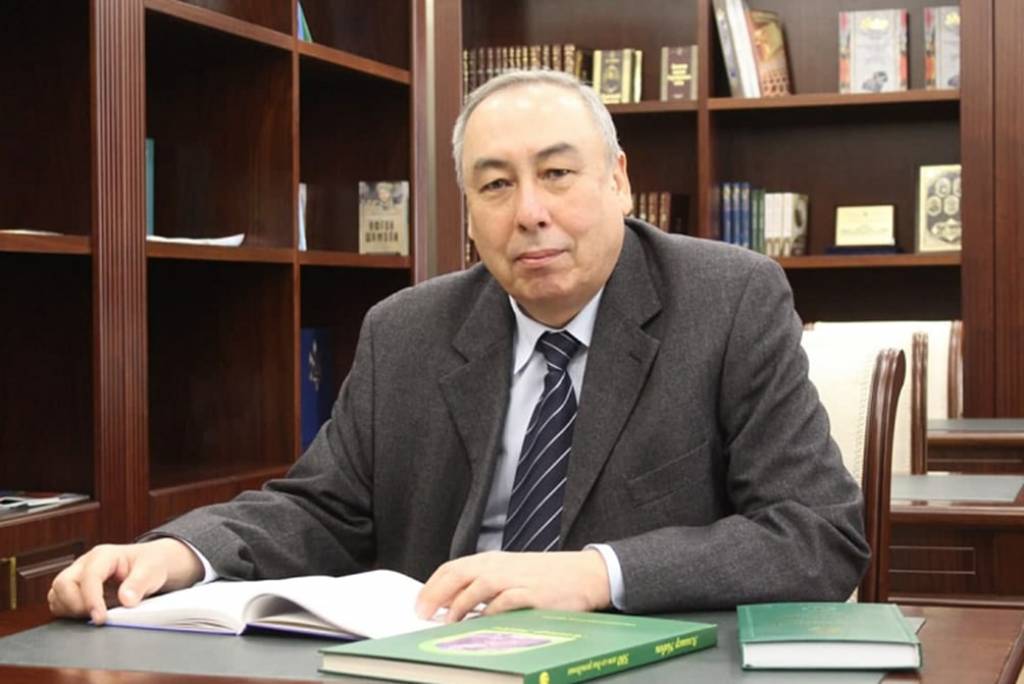
Alisher Sabirov
Head of Department of the International Institute for Central Asia,
Candidate of Historical Sciences
UzA