
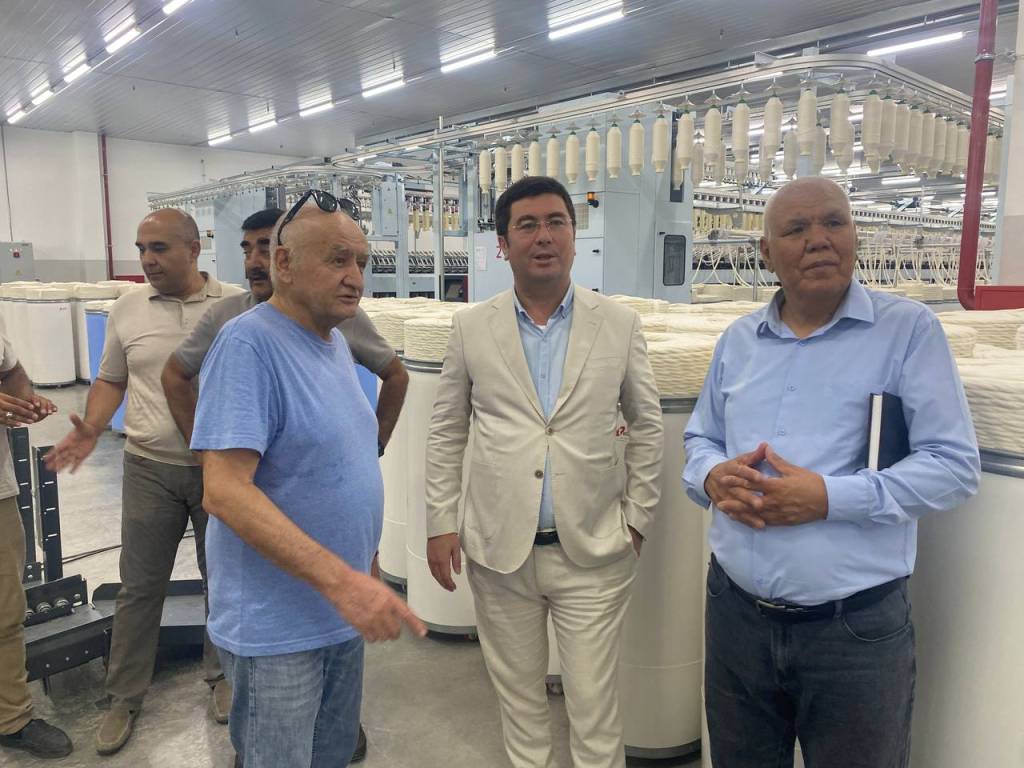
New industrial enterprises and social facilities were put into operation during the recent trip of President Shavkat Mirziyoyev to Tashkent region.
One of the 10 new facilities is Tashkent Cotton Textile LLC, part of the TST Cluster cotton-textile cluster operating in Quyichirchiq district.
This modern textile complex is considered one of the significant investment projects. Its total cost is 235 million euros. As part of the first stage of the complex, which unites five factories, investments in the amount of 112 million euros have been disbursed, a spinning mill has been built, and 1,100 new jobs have been created.
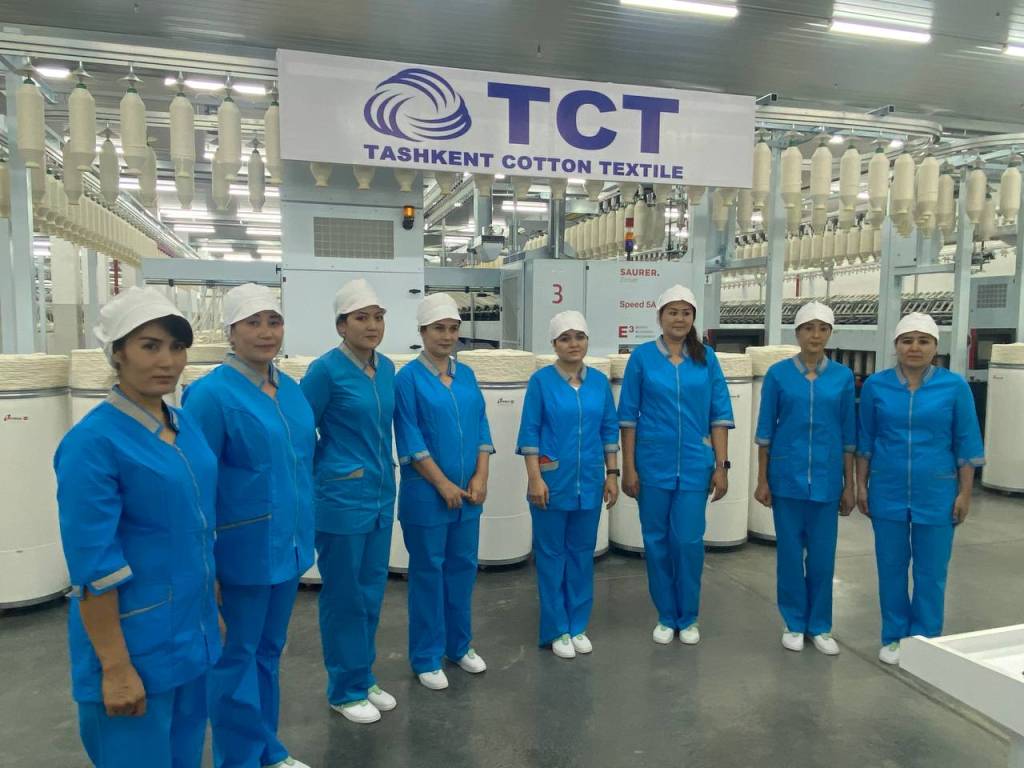
“At the initiative of the President, the cluster method has been introduced into agriculture, which in a short time has become the “driver” of the sphere”, said Senator Murtazo Rakhmatov, Chairman of the Association of Cotton and Textile Clusters of Uzbekistan. – The involvement of such an innovative structure has created modern manufacturing enterprises in rural areas and thousands of new jobs. All this ensures the population’s employment and increases the territories’ export potential.
Home Textile is a company specializing in the production of home textiles. Its annual capacity is 33 thousand tons of various types of yarn. At present, it is planned to arrange the export of part of the products in the amount of $75 million to European countries.
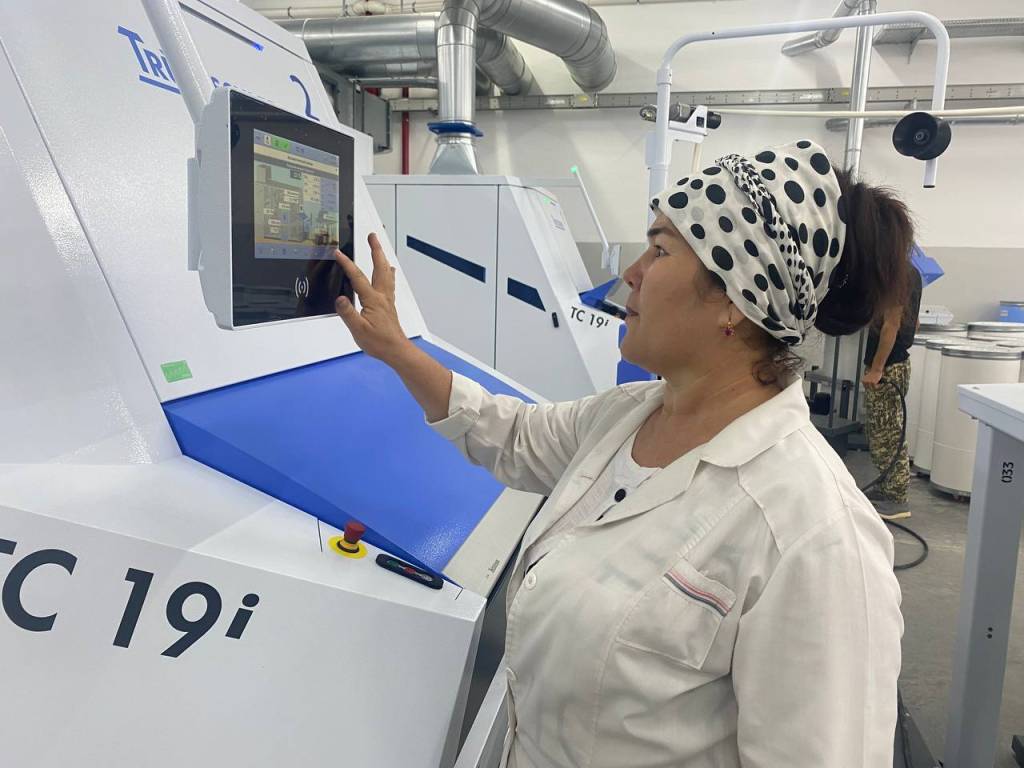
“The spinning factory is equipped with the latest models of technological equipment and machine tools imported from Germany, Türkiye, Switzerland, and Italy”, said Akbarkhon Bakhramov, head of Tashkent Cotton Textile LLC. – The production of competitive products on the world market has been established. Therefore, the demand for it is already growing abroad.
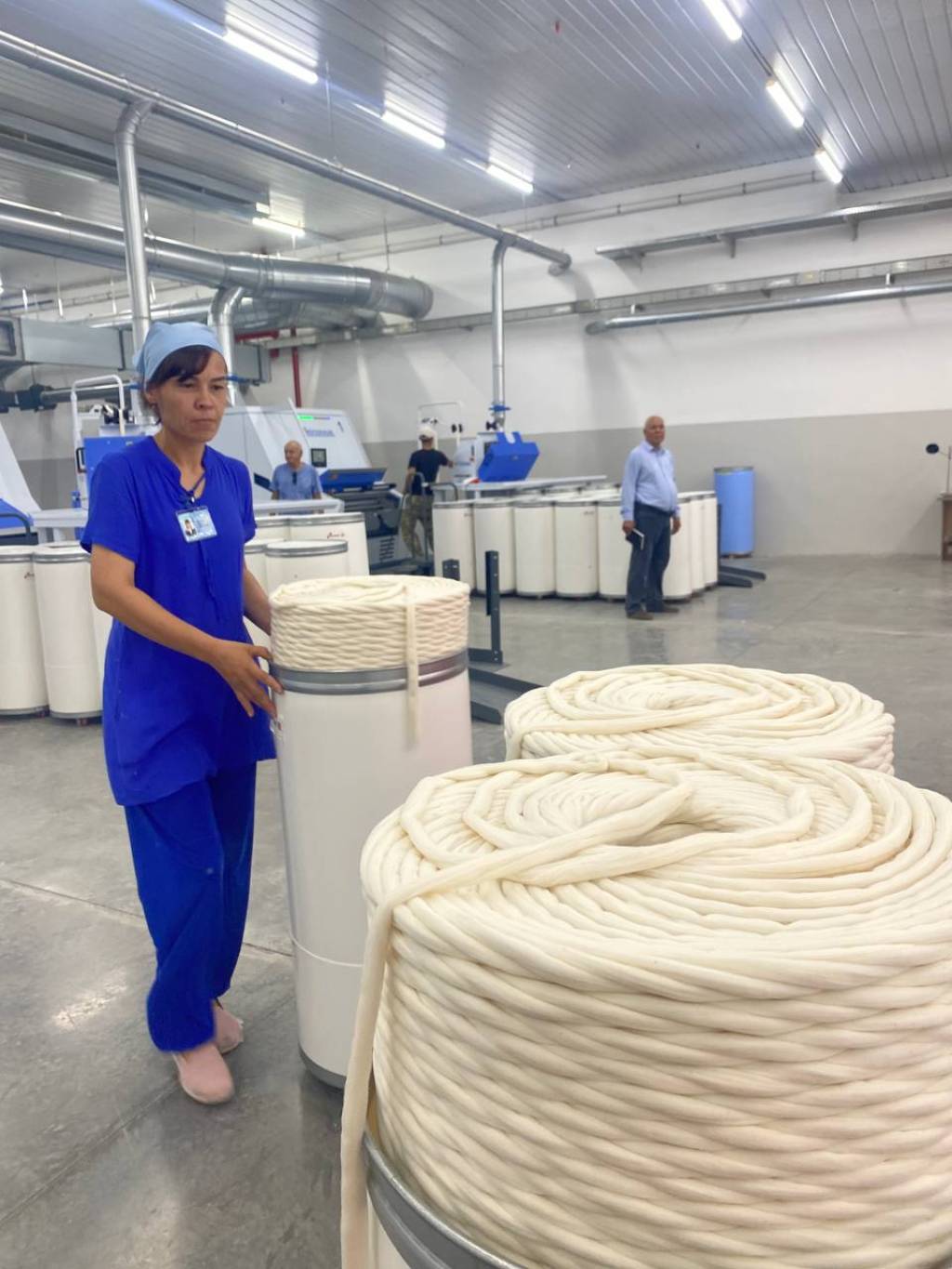
It should be noted that the enterprise, which occupies an area of 41 hectares, plans not to limit itself to yarn production. A whole chain will be created in the future – from the deep processing of cotton fiber to manufacturing textile and clothing products. The project’s second stage will be launched shortly, and dyeing, weaving, and clothing factories will begin to operate. They will produce textile products necessary for everyday life and a new range of fabrics for curtains and tablecloths.
After the project is launched at total capacity, the number of jobs created will be 4,610. First, they will be offered to young people and women from “Mingchinor” mahalla of Quyichirchiq district, where the cluster enterprise operates.
Said Rakhmonov