
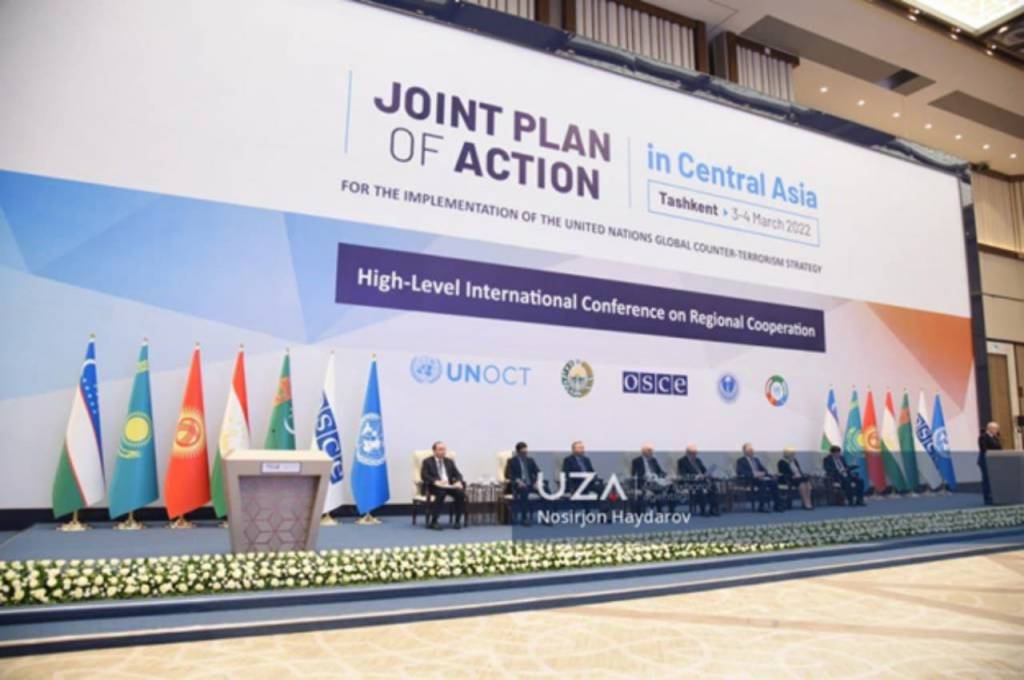
On March 3-4, Tashkent hosted the High-Level International Conference on “The Regional Cooperation among the Central Asian States on the Joint Plan of Action for the Implementation of the United Nations Global Counter-Terrorism Strategy”.
The event was organized in accordance with the initiative of the President of the Republic of Uzbekistan Shavkat Mirziyoyev, put forward at the 75th session of the UN General Assembly.
At the event, the participants summed up the results of ten years of work on the implementation of the Joint Action Plan within the framework of the UN GCTS, discussed trends and prospects for cooperation in the fight against terrorism.
It was noted that this prestigious conference has become not only a solid foundation in the joint struggle of Central Asian states against terrorism, but also a unique platform for the exchange of views and experience on the most important issues in this area.
Experts discussed several relevant issues on four important topics. Within two days, presentations were held on the activities of prestigious international organizations in combating terrorism, as well as more than a dozen bilateral meetings.
Within the framework of a breakout session on “Building states’ capacity to prevent and combat terrorism and to strengthen the role of the United Nations system in that regard”, the need was noted for an integrated regional and global approach to eliminating the conditions conducive to the spread of terrorism and joining efforts in this direction.
Over 60 leading domestic and foreign experts, representatives of international and regional organizations, relevant sectors, ministries, agencies, chambers of parliament and civil society institutions spoke on “Ensuring respect for human rights for all and the rule of law as the fundamental basis for the fight against terrorism”.
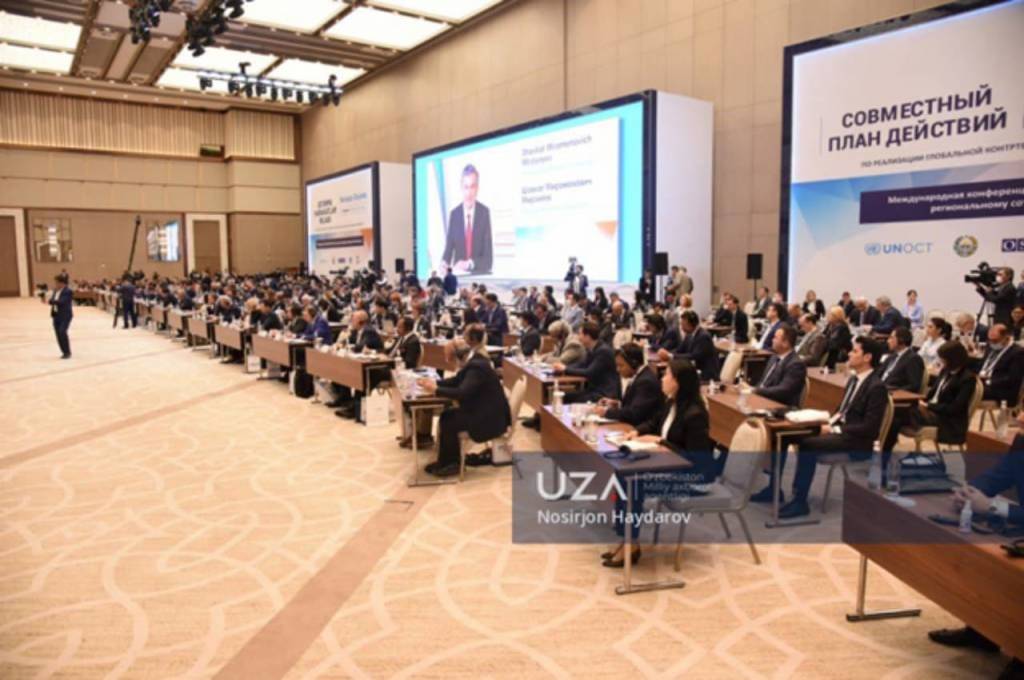
Participants discussed several issues related to strengthening the criminal justice system and ensuring fair justice. The main attention was paid to the issues of observing the guarantees of a fair trial, combating torture, improving the procedure for extradition or criminal prosecution, and protecting citizens.
Experts exchanged views on ensuring national, regional and international counter-terrorism regulations to be in line with international human rights, humanitarian and refugee rights norms and standards. The role of national human rights institutions and the Ombudsman was considered.
The Tashkent Declaration was adopted as the main document of the conference, confirming the commitment of the Central Asian states to the joint fight against terrorism, which poses a serious threat to peace and international security.
At the final plenary session, representatives of the United Nations Office of Counter-Terrorism, the Regional Centre for Preventive Diplomacy for Central Asia, the OSCE and other international organizations emphasized the enormous and decisive role of the Tashkent Declaration in ensuring security in the region.
Information was provided about the unique experience of the region in the implementation of the UN GCTS, the results of 10 years of work. A new version of the Joint Action Plan was presented and approved.
High-ranking guests noted that the Tashkent International Conference gives an opportunity to further develop a constructive dialogue between Central Asian states, strengthen multilateral cooperation, develop a unified approach to prevent terrorism and extremism and combat this evil.
Gayrat Khonnazarov, UzA