
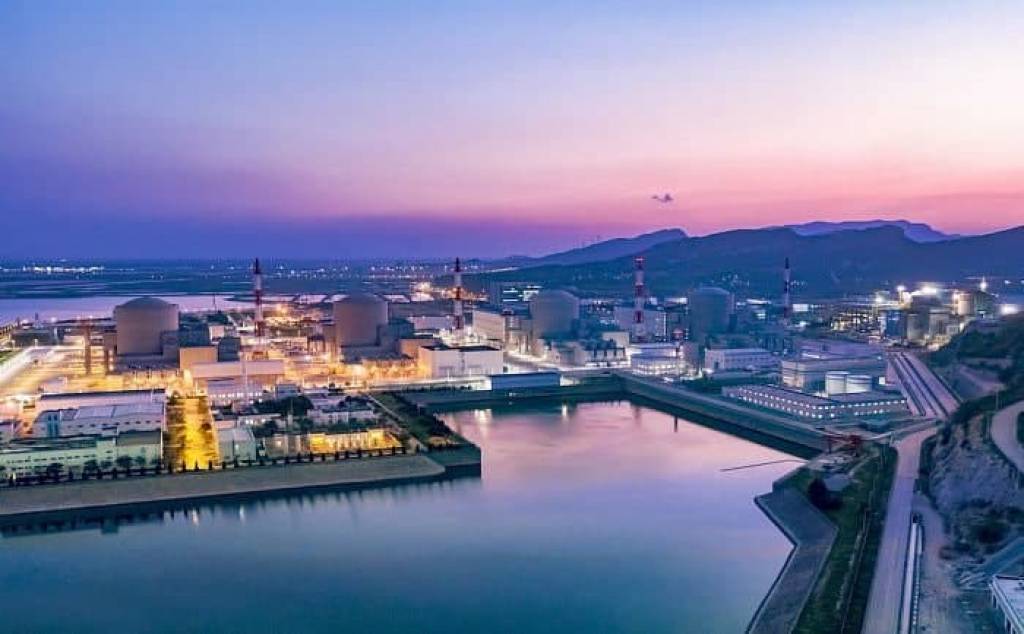
A ceremony was held in China to mark the start of the construction of power units 7 and 8 of Tianwan NPP and power units 3 and 4 of Xudapu NPP.
Russia and China’s joint nuclear energy project is being implemented as part of a series of strategic agreements signed in 2018. The new power units will complement China’s existing nuclear energy capacity to ensure a reliable supply of clean electricity to the country’s grid.
Situated in the city of Lianyungang in China’s Jiangsu province, Tianwan NPP is the largest instance of Russian-Chinese economic cooperation. The first two VVER-1000 reactor-equipped power units were built by Russian specialists and have been in commercial operation since 2007. In 2010, ROSATOM and China’s Nuclear Industry Corporation signed a general contract for the construction of the next stage of the Tianwan project – power units 3 and 4. In 2018, power units 3 and 4 were successfully put into commercial operation.
In March 2019, a ceremony was held in Beijing to sign a general contract for the construction of new units (units 7 and 8) of Tianwan NPP, each with a capacity of 1200 MW. Under this project, were signed an intergovernmental agreement and a framework contract on the construction of the world’s most advanced VVER-1200 reactors (generation 3+). Following the document, the Russian side will design the station’s nuclear island and supply its key equipment, as well as provide nuclear fuel for both units. The units are scheduled to be commissioned in 2026-2027.
Situated in Huludao in Liaoning province, Xudapu NPP is a new joint nuclear energy project between Russia and China. The parties signed several contracts in 2019, including a general contract for the construction of VVER-1200 reactor-equipped power units 3 and 4 of the Xudapu NPP, as well as a contract for the supply of nuclear fuel. According to the contracts, the Russian side will design the station’s nuclear island and supply its key equipment, as well as provide field supervision, installation supervision, and commissioning services for the supplied equipment. The units are expected to be commissioned in 2027-2028.
The VVER-1200 reactor design stands out for its increased safety and reliability, which are made possible by the presence of two additional passive heat removal systems – one tasked with removing heat from steam generators and the other tasked with removing heat from the containment structure – which allow the reactor to be maintained in a stable and safe state for almost an unlimited period of time.
Nasiba Ziyodullayeva, UzA