
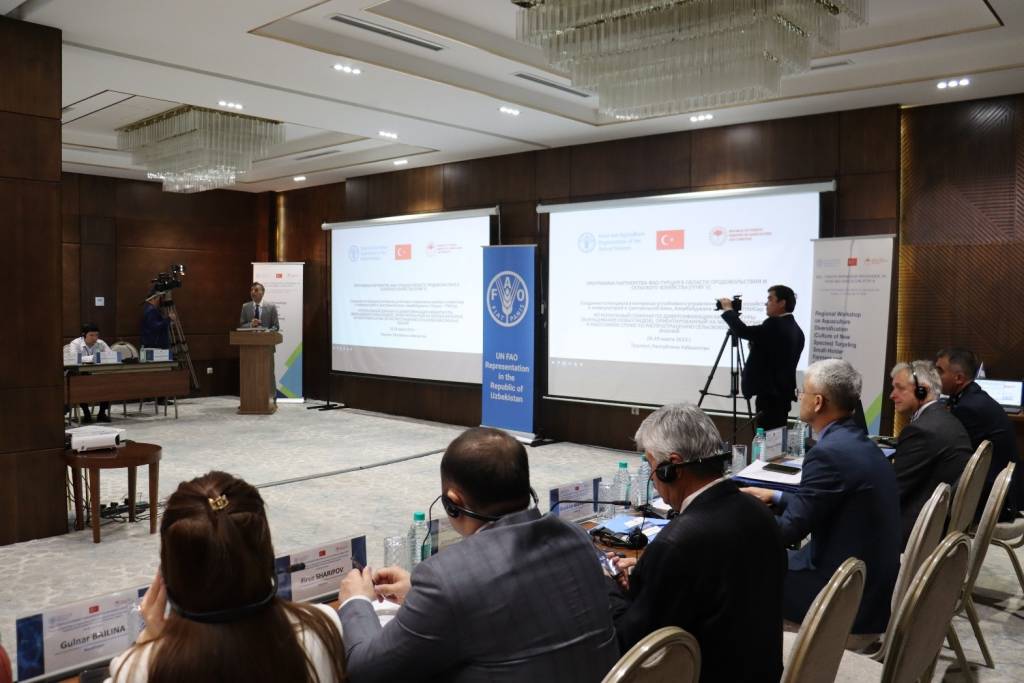
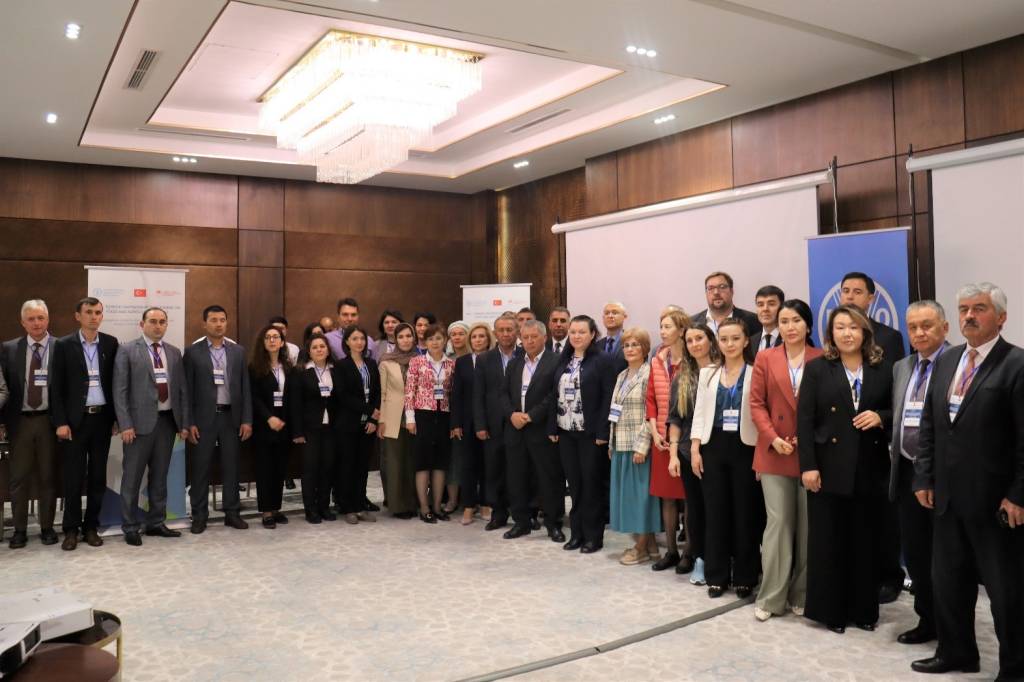
Regional Workshop on Aquaculture Diversification brought together stakeholders from Azerbaijan, Central Asian Countries and Türkiye in Tashkent.
A Regional Workshop on Aquaculture Diversification targeting smallholder farmers and extension agents was co-hosted by the Food and Agriculture Organization of the United Nations (FAO) in partnership with the Committee of Veterinary and Livestock Development of the Republic of Uzbekistan, the Uzbekistan Research Institute of Fisheries and the “Uzbekbaliqsanoat” Association. The workshop, which took place in Tashkent, was organized as a component of the “Capacity Development for Sustainable Fisheries and Aquaculture Management in Central Asia, Azerbaijan and Türkiye – FISHCap Project”, a project developed under the FAO-Türkiye Partnership Programme (FTPP II).
Species diversification in aquaculture is a strategy that contributes towards sustainable sectoral development. The event provided participants with an understanding of potential opportunities and constraints to the diversification of aquaculture production in their countries, and insights into the modalities for new species introductions requiring the support of government agencies, researchers and the private sector. The workshop brought together participants from Azerbaijan, Kazakhstan, Kyrgyzstan, Tajikistan, Turkmenistan, Türkiye and Uzbekistan. The target audience included government agencies involved in aquaculture planning, policy development, management and aquaculture extension services, managers of fish farms, smallholder fish farmers, and researchers working in aquaculture development.
The opening remarks were delivered by Sobir Mavlonov, Head of the Department for Innovation, Education and Science Development of the Committee of Veterinary and Livestock Development of the Republic of Uzbekistan; Haydar Fersoy, FAO Senior Fishery and Aquaculture Officer; and Abdumalik Namozov, National Project Facilitator from the FAO Country Office in Uzbekistan.
Sobir Mavlonov emphasized that the fishing industry is an important sector of food production in Uzbekistan, ensuring food security by supplying the country’s population with high-quality protein for good nutrition. He also stressed that aquaculture contributes to the creation of new jobs in rural areas, thereby improving the well-being of people. Highlighting the importance of aquaculture diversification for sustainable development, Haydar Fersoy reminded the participants that the basic objective of the FISHCap project is to disseminate best practices in the fishery and aquaculture industry among the beneficiary countries. Abdumalik Namozov noted that the FISHCap project contributes to the implementation of the Uzbekistan Presidential Decree “On additional measures for further development of the fishing industry”, which is aimed at increasing fish exports, supporting domestic aquaculture development and increasing fish production through the promotion of intensive production technologies.
Abdumalik Namozov’s speech was followed by remarks from Abdulla Kurbanov, Director of the Uzbekistan Research Institute of Fisheries, who pointed out that FAO makes a valuable contribution to the dynamic development of the fisheries sector in Uzbekistan by improving the skills of farmers, transferring knowledge and introducing innovative technologies. The opening remarks continued with a contribution from Shukhrat Rahmatov, Deputy Chairman of the Association “Uzbekbaliqsanoat”, who informed the participants about ongoing measures being taken by government authorities in Uzbekistan for the development of the fishery sector.
The workshop included the presentation of case studies and lectures from Europe and Uzbekistan, and country presentations that informed a regional synthesis of the current status of species diversification. It was noted that while species diversification leads to resilience and enhances sustainable aquaculture development, the introduction of new culture species to a country can be financially costly and technically difficult to achieve. In this regard, policy-makers, planners and the private sector need to assess the development resources available to them when evaluating prospects for the successful introduction of a new culture species. The summary report of the regional workshop will be published in the FAO FISHCap project publication series.
UzA