
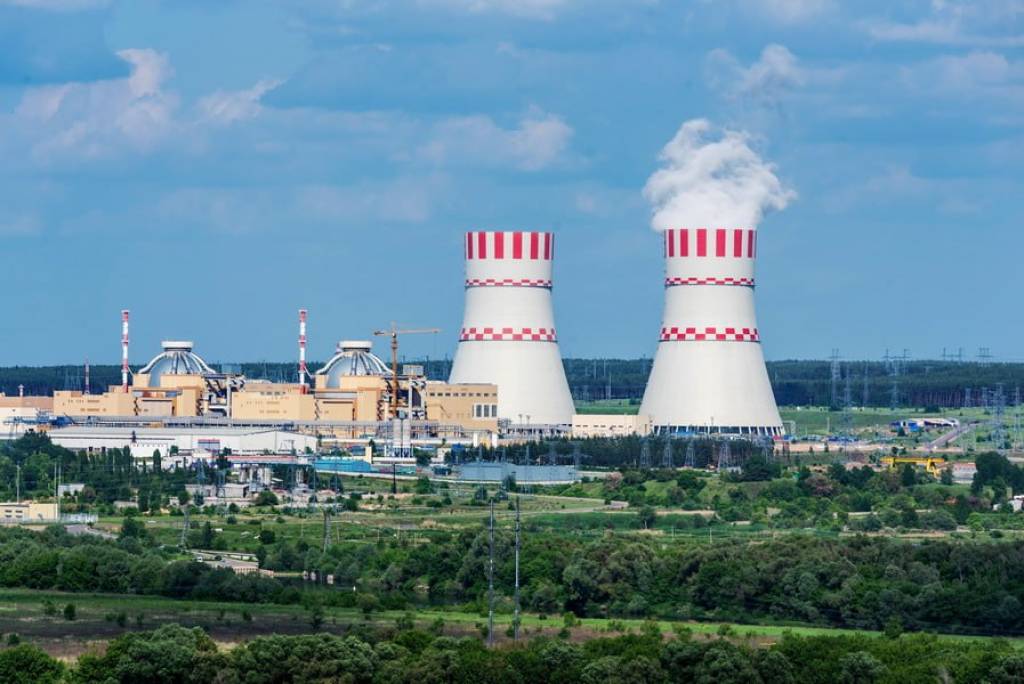
In recent years, Uzbekistan has been actively developing nuclear energy to ensure a sustainable energy future. In particular, a major project is underway to build Uzbekistan’s first nuclear power plant.
This project aims to diversify energy resources and reduce dependence on traditional hydrocarbons. In cooperation with leading international organizations and companies, measures are being taken to train qualified personnel, improve the regulatory framework, and introduce advanced technologies.
The Chief Specialist of the Department for Planning and Monitoring the Implementation of NPP Construction Projects at the NPP Directorate, Karimjon Yaznonov provided detailed information about this project.
– I would like to emphasize that the construction project of Uzbekistan’s small modular reactors (SMRs), a significant stage in developing the country’s energy system, will become one of the key steps towards sustainable and environmentally friendly energy.
The SMRs planned for construction in Uzbekistan will comprise 6 units with RITM-200H nuclear reactors. The total capacity will be 330 MW. The minimum service life of the station is 60 years, with a possible extension for another 20 years.
In accordance with the terms of the concluded contract, the contractor undertakes to perform a range of turnkey work, including research, design, construction, commissioning, and personnel training for the subsequent operation of the facility.
The project is currently under development. Its implementation is carried out in strict accordance with international safety standards.
Developing nuclear energy is the key to the country’s energy security. Small nuclear power plants have several advantages: short construction time, a high degree of safety, the ability to operate offline, and connection to the existing power grid.
It should be noted that the main facilities of the plant – the nuclear island, reactor installations, and related systems – will be designed and built by the Russian side.
The project will apply the experience of leading international companies to improve efficiency and ensure quality. The proposals of companies from Europe and China regarding constructing a nuclear island, reactor installations, related systems, and auxiliary facilities are being analyzed. Negotiations with potential partners in this area are planned.
It is planned to involve leading companies from various countries, including Russia, one of the recognized leaders in nuclear energy, in implementing the project. It will take over developing and constructing the plant’s key facilities, including the atomic island, reactor facilities, and related systems. Russian technologies have proven reliable and efficient at many nuclear power plants worldwide.
France has considerable experience in training qualified personnel. The project considers the possibility of cooperation with French companies to improve the skills of specialists, exchange best practices, and train certified specialists. This will ensure that personnel meet international standards and increase the effectiveness of the project.
China has made great strides in modular construction and localization of nuclear power plant production. We are considering the possibility of applying its experience in constructing auxiliary structures.
Hungary has significant experience in operating nuclear power plants built using Russian technologies. We are exploring an approach to the adaptation and modernization of nuclear power plants and the possibility of attracting Hungarian specialists.
European companies are considered partners for implementing advanced digital technologies, automated control systems, and energy-efficient solutions.
The construction of a nuclear power plant is not only a technological breakthrough, but also a challenge in specialist training. Currently, we are actively engaged in training qualified specialists. The training takes place at the Tashkent branch of the National Research Nuclear University MEPhI.
Internships are organized at nuclear power plants in Russia and other countries. Our goal is to form a team of professionals responsible for the safe operation of the plant and the further development of nuclear energy in our country.
The SMRs project is a strategic investment in our country’s future. It will ensure energy security, reduce dependence on hydrocarbons, create new jobs, and bring Uzbekistan to a new level in the development of high-tech industry.
In short, thanks to international cooperation, advanced technologies, and professional training, SMRs will become a safe and efficient nuclear energy model in Central Asia.
Interviewed by Nasiba Ziyodullayeva, UzA