
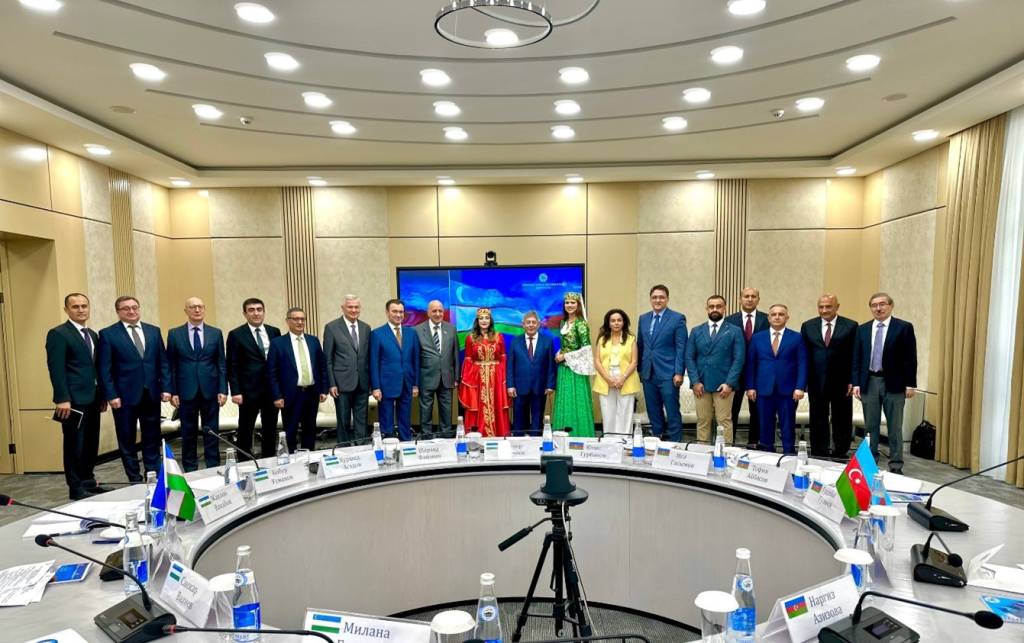
A roundtable was held at the International Institute of Central Asia (IICA) on “Uzbekistan and Azerbaijan: New Prospects for Alliance and Interregional Cooperation”.
The event, organized by the IICA in cooperation with the Embassy of Azerbaijan in Uzbekistan, was dedicated to the outcomes of the recent state visit of the President of Uzbekistan Shavkat Mirziyoyev to Azerbaijan (July 2-4, 2025) and the practical implementation of the agreements reached during the visit.
The discussions were attended by representatives of expert and business circles of the two countries, including a delegation from Azerbaijan led by Milli Majlis deputy Rasim Musabekov and experts from ADA University. The program of the roundtable included three sessions focused on political dialogue, economic partnership, and interregional connectivity.
Political Dialogue and Alliance
Opening the first session of discussions, the Uzbek side emphasized the dynamic development of relations between Uzbekistan and Azerbaijan in the spirit of trust and mutual support. It was noted that bilateral cooperation has reached a qualitatively new level thanks to the signing of the Treaty on Allied Relations and the launch of the work of the High Interstate Council.
“Allied relations between our countries are successfully developing in all areas today based on strong bonds of friendship and trust”, said Saidmukhtar Saidkasymov, Advisor to the Director of the IICA, adding that the political dialogue between Uzbekistan and Azerbaijan has achieved a high level of mutual understanding.
According to him, regular high-level contacts testify to the parties’ determination to deepen strategic partnership and coordinate efforts on the international stage. In particular, participants recalled that the visit of the President of Azerbaijan Ilham Aliyev to Uzbekistan in 2022 laid a solid foundation for bilateral cooperation, while the return state visit of President Shavkat Mirziyoyev to Baku gave additional momentum to the development of relations.
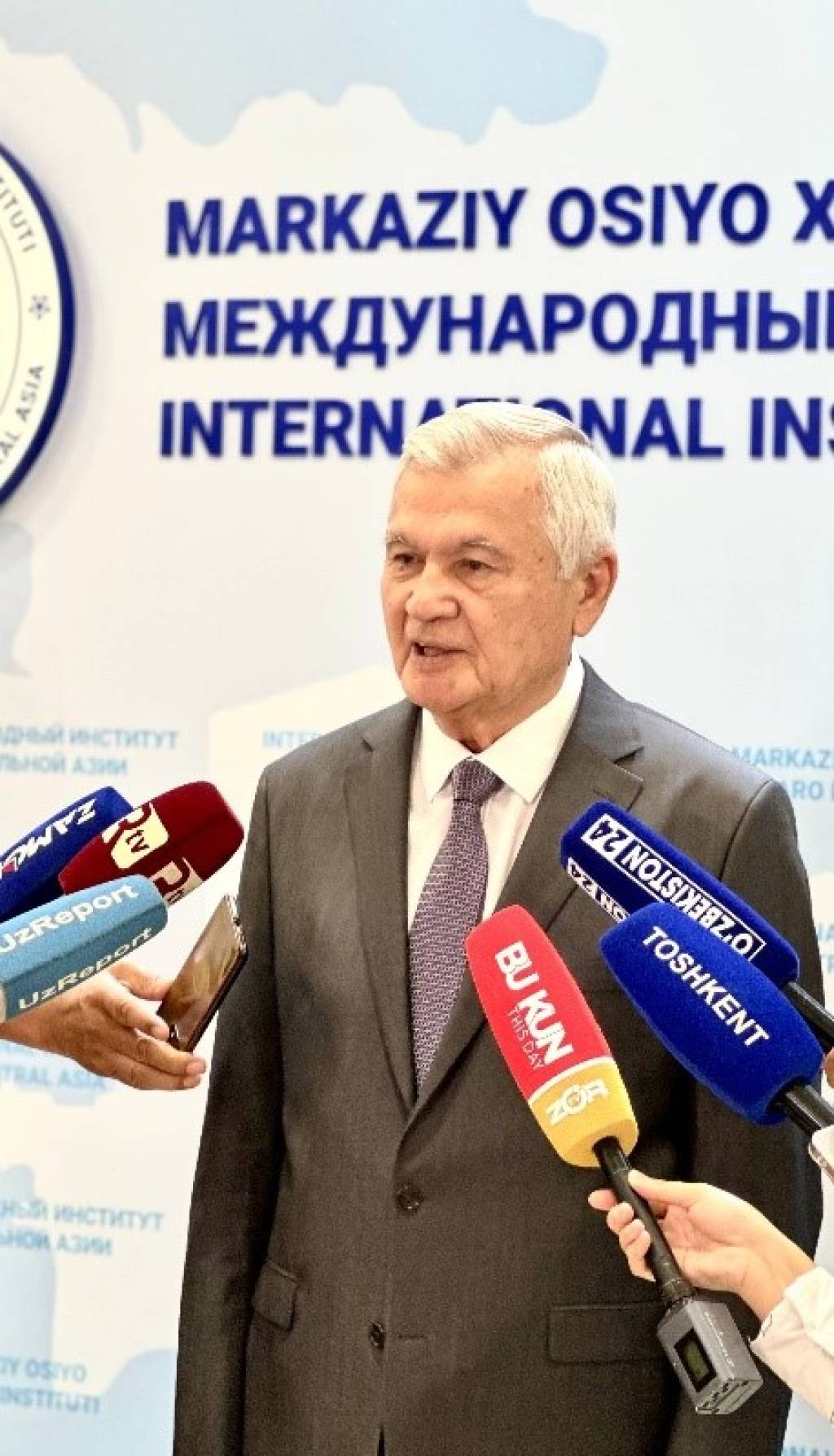
In their speeches, Azerbaijani experts focused on the importance of the strong political will of the two countries’ leaders.
“Uzbekistan and Azerbaijan are practically demonstrating a model of effective alliance based on trust and mutual benefit”, emphasized Milli Majlis deputy Rasim Musabekov.
The expert also noted: “Türkiye is the strongest Turkic state in the West, while Uzbekistan is the strongest in the East. Azerbaijan, located between, serves as a center of communication that strengthens these ties between the two poles of the Turkic world. Step by step, we will expand economic relations and diplomatic ties to act in solidarity on all international platforms, to strengthen peace and cooperation among Turkic states. A strong Uzbekistan and a strong Türkiye mean a strong Azerbaijan. A strong Azerbaijan, in turn, means a strong Uzbekistan and a strong Türkiye”.
The established relations of trust allow the parties to discuss all items on the agenda openly and jointly confront modern challenges. During the discussion, particular emphasis was placed on the statement of the President of Uzbekistan that Azerbaijan today serves as a kind of “strategic bridge connecting Central Asia and Europe”. According to participants of the roundtable, such an interregional approach to partnership reflects the growing role of the Tashkent – Baku alliance on a regional scale.
Economic Partnership and the Middle Corridor
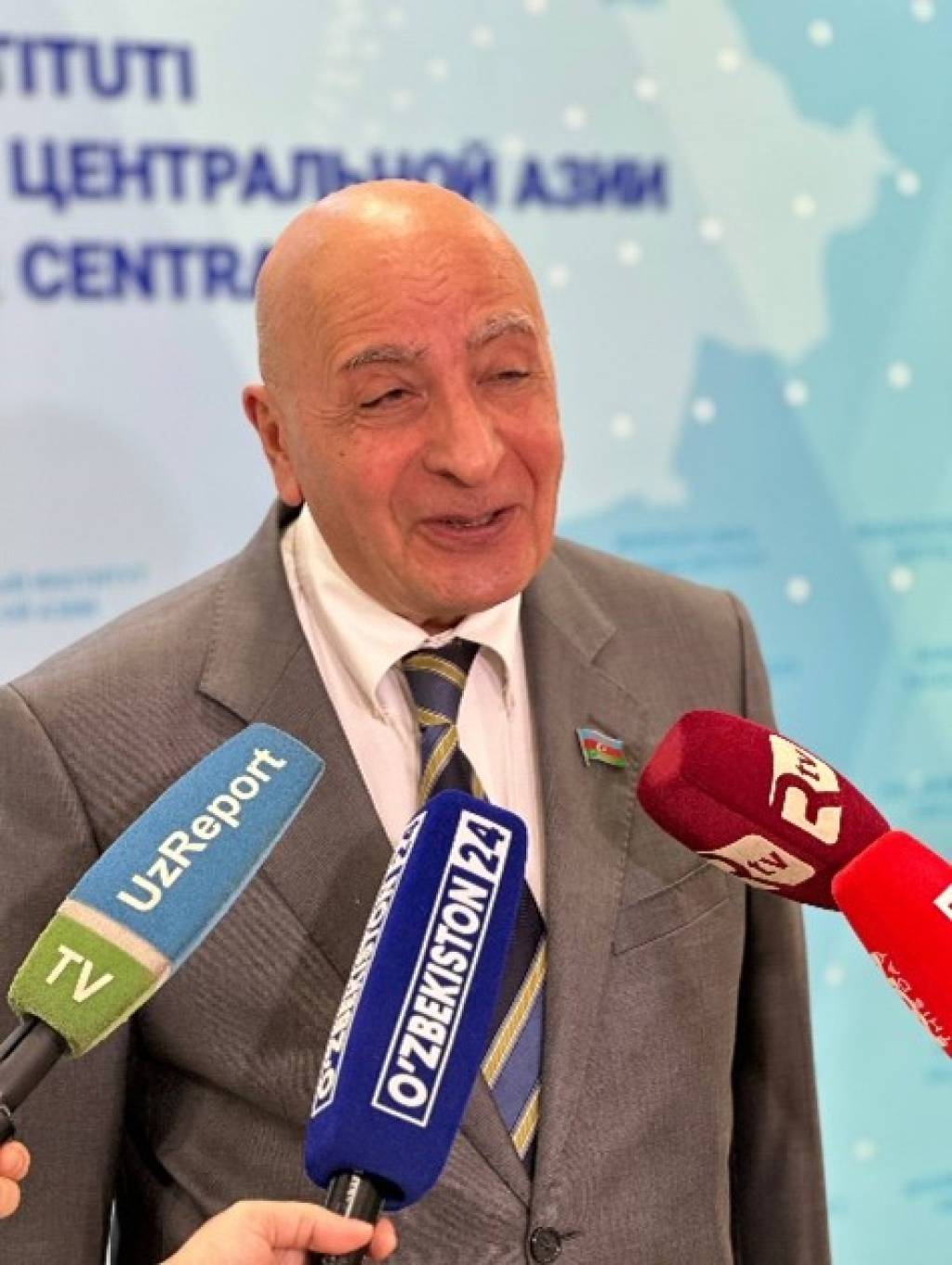
The second session focused on issues of strengthening economic cooperation, developing transport and logistics potential, and advancing joint energy initiatives. Participants noted that thanks to active high-level contacts, trade and economic partnerships have shown significant growth. In 2025, bilateral trade turnover increased by 25 percent, with the volume of Uzbek cargo transported through the Middle Corridor exceeding 1 million tons. The portfolio of joint projects has reached 4 billion dollars, with around 300 joint enterprises successfully operating in Uzbekistan and Azerbaijan. During recent bilateral meetings of the heads of state, the parties agreed on the implementation of the Industrial Cooperation Program for 2025-2027 and an Action Plan to increase trade volumes to 1 billion dollars by 2030.
Experts devoted particular attention to the development of transport communications. It was emphasized that cooperation within the framework of the Trans-Caspian International Transport Route (the Middle Corridor) serves the long-term interests of both countries and the entire region. A representative of ADA University noted that expanding the capacity of the Middle Corridor would significantly optimize logistics between Central Asia and the Caucasus, diversifying supply routes to Europe. In this regard, participants welcomed the 25 percent increase in shipments along this route over the past year. Since March of this year, electronic permits have been introduced for transport between the two countries, simplifying and accelerating cargo operations. “The development of transport corridors promises a flow of major investments into this region and our countries. The goal at the moment is to keep pace with this stream of developments and not fall behind global trends, while at the same time serving as an example of friendship among peoples and a center of stability in our unstable world”, an Azerbaijani expert remarked, adding that the implementation of large infrastructure projects would become a driving force of regional growth.
Cultural Exchange and Interregional Connectivity
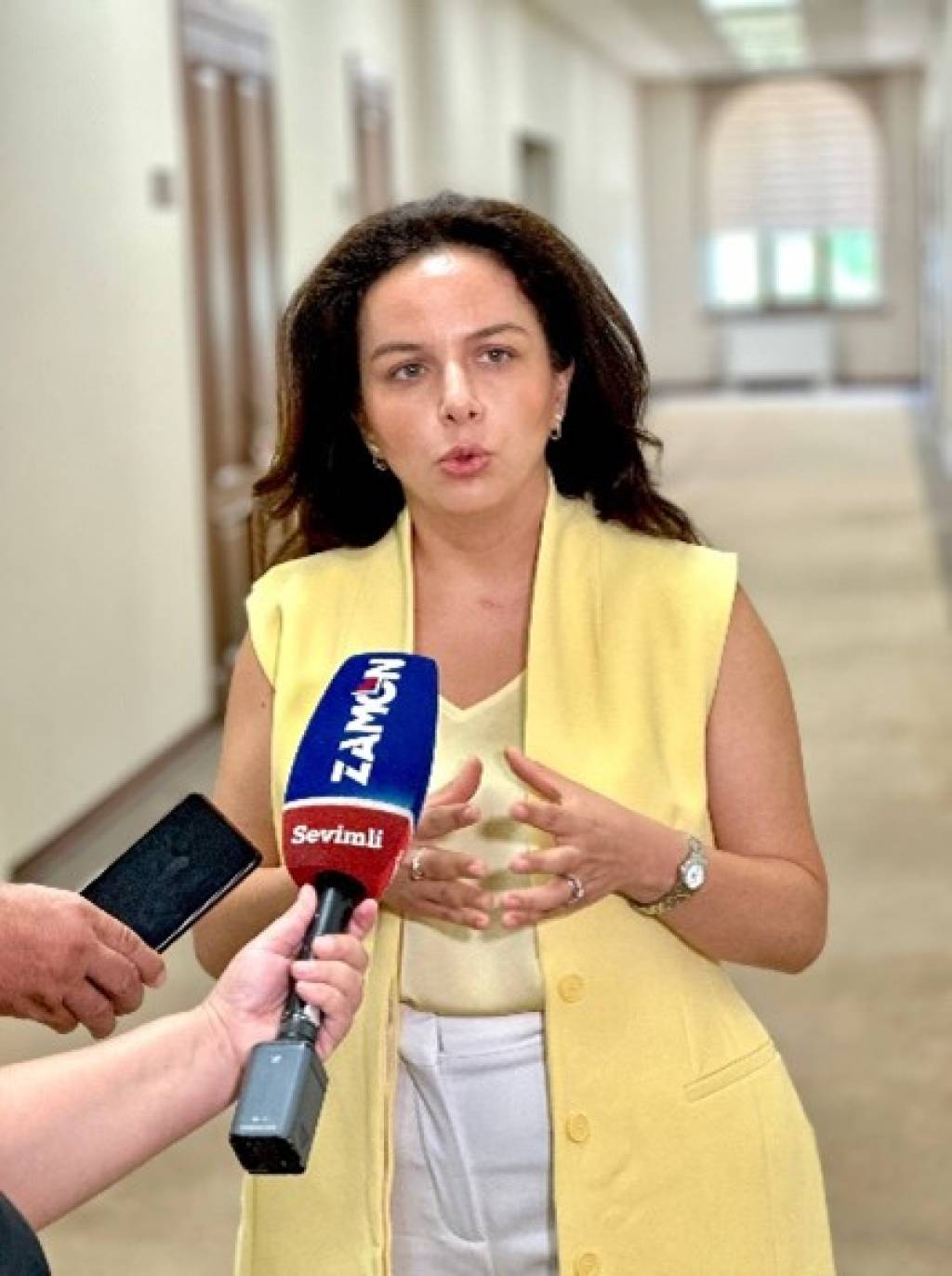
The third session was devoted to the humanitarian dimension of cooperation between the regions of the two states. Participants noted that the peoples of Uzbekistan and Azerbaijan are united by centuries-old historical and cultural ties, which provide a solid foundation for expanding contacts in education, science, culture, and tourism. During the event, a remarkable thesis was voiced: “Uzbekistan and Azerbaijan are one soul and two peoples with strong, millennia-old friendly relations”. This idea, expressed by the Azerbaijani side, reflects the special closeness of the cultures and traditions of our countries.
Speakers from academic circles highlighted the importance of developing exchanges between universities and research institutes. As a result of the 2025 state visit, a Cooperation Agreement in science, vocational, and higher education was signed, and active work is now underway on its implementation. Participants of the roundtable emphasized the need to expand mutual student internships, joint educational programs, and scientific projects. As examples of positive dynamics, they cited the opening of cultural centers and language courses, as well as the holding of Azerbaijan Culture Days in Uzbekistan and Uzbek cultural festivals in Baku. These events contribute to strengthening friendship between the peoples and promoting the rich heritage of the two countries.
A separate part of the discussion was devoted to expanding interregional cooperation – direct ties between the cities and regions of Uzbekistan and Azerbaijan. It was noted that this format of “people’s diplomacy” helps to bring the partnership to a new level. In the presence of the heads of state in Baku, protocols were signed establishing sister-city relations between Tashkent region and the city of Sumqayit, as well as between the cities of Navoi and Gabala. According to participants of the roundtable, the implementation of these agreements will help intensify contacts between regions, from exchanges of delegations and governance experience to the mutual promotion of tourist routes.
Significance for the Region and the Turkic World
Summing up the roundtable, moderators and speakers unanimously noted that the event had become a timely and essential platform for generating new ideas to deepen the partnership between Uzbekistan and Azerbaijan. It was emphasized that the expert dialogue made it possible to compare positions on key areas of cooperation and outline concrete steps for the implementation of agreements reached by the leaders of the two countries. Participants agreed that the growing partnership between Uzbekistan and Azerbaijan is having a positive impact on integration processes in a broader format. Joint projects and initiatives of the two states are now going beyond the bilateral agenda, acquiring interregional significance. Experts stressed that the successful implementation of all agreements – from infrastructure corridors to humanitarian exchanges – will contribute to strengthening stability and prosperity not only in our countries but also across the entire Central Asia – South Caucasus region.
Thus, Uzbekistan and Azerbaijan are demonstrating by their example new prospects for an alliance based on trust, mutual understanding, and a shared aspiration for progress. These prospects open broad horizons for the further development of interregional cooperation and the consolidation of Turkic states based on friendship and partnership.
Abduaziz Khidirov, UzA