

In recent years, relations between Uzbekistan and Azerbaijan have been experiencing a new stage in their development. Several bilateral agreements aimed at deepening cooperation in various fields have been signed, and agreements on implementing important joint projects have been reached.
Historical and cultural ties have been formed over the centuries, starting with the Great Silk Road, when Uzbekistan and Azerbaijan became important trade and knowledge exchange centers. Common religious traditions and Turkic linguistic heritage contributed to the strengthening of these ties.
In the 9th-10th centuries, during the heyday of the Khorezmshahs and Shirvanshahs, Uzbeks and Azerbaijanis maintained active contacts. Cultural exchange and dynastic marriages influenced the strengthening of cultural and political ties between the two states during the reign of Amir Temur (14th-15th centuries). During that period, works by outstanding literary figures Alisher Navoi and Nizami Ganjavi were written, reflecting mutual influence. For example, Ganjavi’s poem “Khusrav and Shirin” recreates scenes, images, and customs typical of Central Asia. One such example is the description of magnificent palaces, the architectural appearance of which resembled the residences of the rulers of Samarkand and Bukhara.
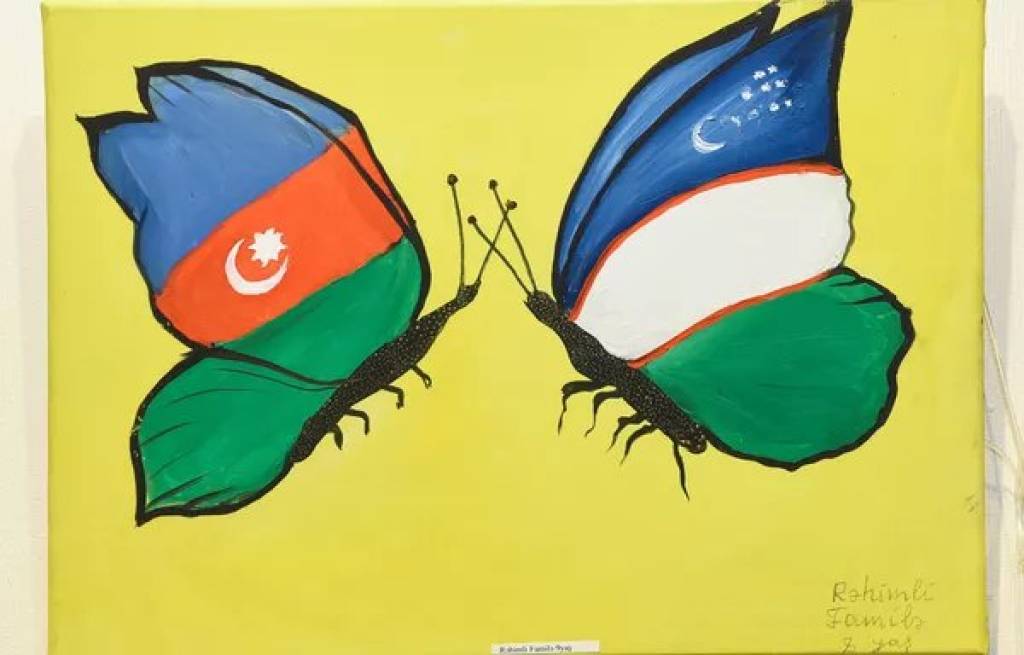
The peoples of Uzbekistan and Azerbaijan are united not only by architectural monuments, madrassas, and mosques built in the same style of Islamic architecture but also by musical traditions, including playing instruments such as the dutar and tar and folk dances containing similar elements.
In recent years, political interaction between Uzbekistan and Azerbaijan has demonstrated significant deepening and strengthening, which resulted in a fourfold increase in the number of joint ventures – today, there are more than 240 enterprises with Azerbaijani capital operating in Uzbekistan, an increase in the volume of Uzbekistan cargo transportation via the port of Baku – over 300 thousand tons of various goods were transported in the first three months of 2024. It is expected that this figure will reach 1 million tons per year; holding Uzbek Culture Days in Azerbaijan in 2023, including the presentation of Abdulla Qodiri’s novel “Bygone Days” in the Azerbaijani language; the opening of a street in Tashkent named after Heydar Aliyev, with a park and a memorial bas-relief; the construction of a modern school named after Mirzo Ulugbek in Azerbaijan’s Fuzuli, on the initiative of Uzbekistan, designed for 960 students, and much more.
During the visit of the Head of state to Azerbaijan on August 22-23, 2023, Presidents Shavkat Mirziyoyev and Ilham Aliyev signed an agreement on the establishment of the Supreme Interstate Council between the Republic of Uzbekistan and the Republic of Azerbaijan. This event became an important milestone in developing allied relations between the two countries. In total, 15 documents were signed during this visit, including a roadmap for deepening the comprehensive strategic partnership for 2023-2024, agreements on cooperation in energy, youth policy, and sports, and memorandums on cooperation in cybersecurity and other areas.
The two countries’ leaders note that there are no problematic issues between Uzbekistan and Azerbaijan and emphasize the importance of finding new opportunities to effectively use the great potential in the interests of the fraternal peoples.
On May 21, 2024, the Second Interregional Forum Azerbaijan – Uzbekistan was held in Guba, which served as a platform for discussing new initiatives. During the event, memorandums of understanding and cooperation in trade, economic, cultural, and humanitarian spheres were signed between Termez and Bilasuvar, Namangan and Mingechevir, Gulistan, and Fuzuli, as well as investment agreements and trade contracts in the agriculture and textile industries.
It was emphasized that the trade turnover between Uzbekistan and Azerbaijan has increased threefold over the past five years and by another 15 percent since the beginning of 2024. The countries are confidently moving towards the $1 billion mark in trade turnover, which will be achieved soon.
Particular attention was paid to plans to implement joint projects in the automotive industry, metallurgy, energy, agriculture, and tourism, designed to further strengthen economic ties and contribute to the creation of new jobs.
During the forum, the Minister of Investment, Industry and Trade of Uzbekistan Laziz Kudratov reported that Uzbekneftegaz plans to become a participant in the project to develop the Shah Deniz gas condensate field on the Azerbaijani shelf of the Caspian Sea, the gas reserves of which are estimated at 1.2 trillion cubic meters. The participants in the project are British BP (production operator – 29.99%), Russian LUKOIL (19.99%), Turkish TPAO (19%), Russian NİKO (10%) and SGC Upstream representing Azerbaijan (21.02%). It is expected that Uzbekneftegaz will complete the legal and financial examination and sign the necessary documents shortly.
Laziz Kudratov also discussed implementing joint projects in the food industry with Azersun Holding representative Savas Uzan. Azersun Holding manages more than 30 enterprises and exports products to more than 40 countries. The parties agreed on mechanisms for interaction and innovation exchange.
Today’s cooperation between Uzbekistan and Azerbaijan can be said to mark the revival of the ancient Silk Road, which once connected the East and the West, bringing prosperity to the countries located along it. Again, our countries are building this route based on mutual trust and strategic partnership in a new, modern context.
Large investment projects, such as the development of the Shah Deniz gas condensate project and cooperation with Azersun Holding in agriculture and food industry, can be compared to the foundation of new stations on this ancient route, the venues of interregional forums – to caravanserais, where traders and travelers could exchange knowledge and experience, days of culture and cinema – to threads that, intertwined, form an intricate pattern reflecting the rich history and traditions of the two peoples.
Uzbekistan and Azerbaijan, by supporting each other within the framework of international platforms such as the UN and the Organization of Turkic States, are not just striving for rapprochement and partnership. We are also actively contributing to regional progress and peaceful coexistence. This commitment to regional stability and cooperation is a testament to our shared vision and will serve as a reliable foundation for the future generations of our countries and the region as a whole.
Abduaziz Khidirov, UzA