
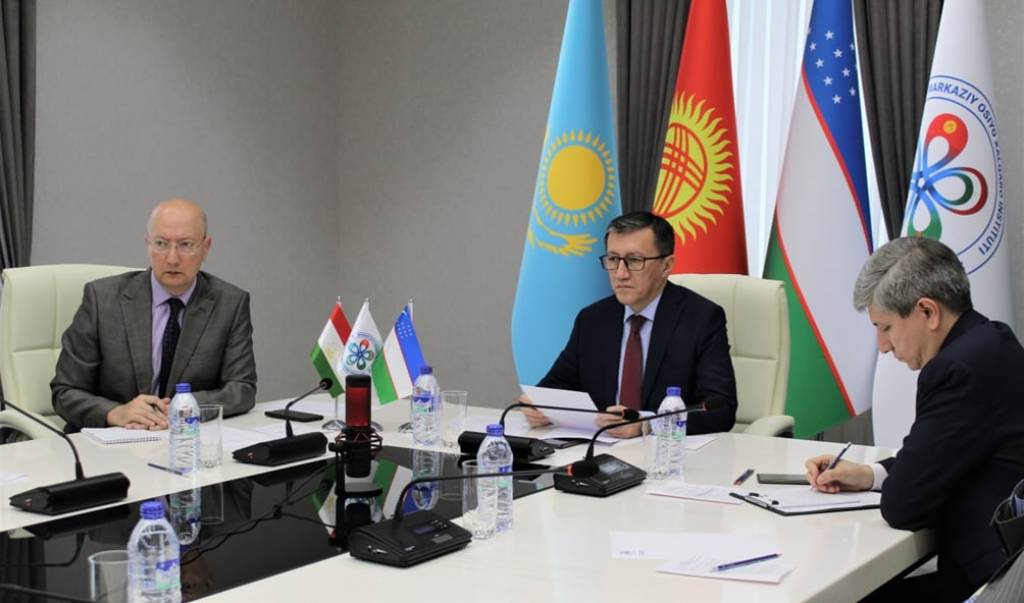
International Institute for Central Asia, together with the Center for Strategic Studies under the President of the Republic of Tajikistan, organized a conference on “Cooperation between Uzbekistan and Tajikistan in the rational use of water resources”.
The conference was attended by the heads and experts of IICA, CSS, the International Fund for Saving the Aral Sea, the Ministry of Water Resources, the Ecological Party of Uzbekistan, Tashkent Institute of Irrigation and Agricultural Mechanization Engineers, BWO “Syrdarya”, Coordination and Energy Dispatch Center, Agency for Hydrometeorology of the Committee for Environmental Protection under the Government of the Republic of Tajikistan.
 Director of the International Institute for Central Asia Anvar Nasirov noted the strengthening and expansion of dialogue between Uzbekistan and Tajikistan, which was given impetus in 2018 by the Leaders of the two countries.
It was emphasized that the current dynamics had a positive impact on political, diplomatic, trade, economic, transport, cultural and humanitarian ties, and interaction between states in the water and energy sector.
Mr. Nasirov noted that the parties express interest in developing partnerships in the rational use of water resources, emphasize the importance for the region of existing hydropower facilities and those that are under construction, stand for the need for the implementation of regional projects, taking into account the interests of all Central Asian states.
The participants of the conference analyzed in detail the state and prospects for cooperation between Uzbekistan and Tajikistan in the water and energy sector, the current climate situation in the region and its negative impact on the sustainable development of the countries of Central Asia as a whole, identified priority issues requiring attention, made proposals, which will contribute to the improvement of the water management and environmental situation on the territory of all states of the region.

Following the event, the participants noted the relevance of the exchange of views on the most pressing environmental issues in Central Asia.
Gayrat Khonnazarov, UzA