
On July 19, 2023, Saudi Arabia’s Jeddah hosted the First Summit of the Gulf Cooperation Council and Central Asian countries, which is a significant step towards strengthening ties between the regions.
Issues of the development of interregional cooperation in political, trade-economic, and cultural-humanitarian spheres were discussed within the framework of the historic event.
President of Uzbekistan Shavkat Mirziyoyev, addressing the summit, focused on several important aspects of relations, including economic cooperation.
Cooperation in trade and transport connectivity, considered key aspects of interaction, was particularly emphasized. The urgency of studying the possibility of concluding a multilateral trade agreement, which includes the introduction of a free trade regime, harmonizing technical regulations, and developing electronic commerce, was noted.
In this context, the Leader of Uzbekistan called for favorable tariffs on the Middle Corridor to fully utilize its potential, increase direct flights through targeted subsidies, and actively use the opportunities of existing multimodal corridors through Afghanistan.
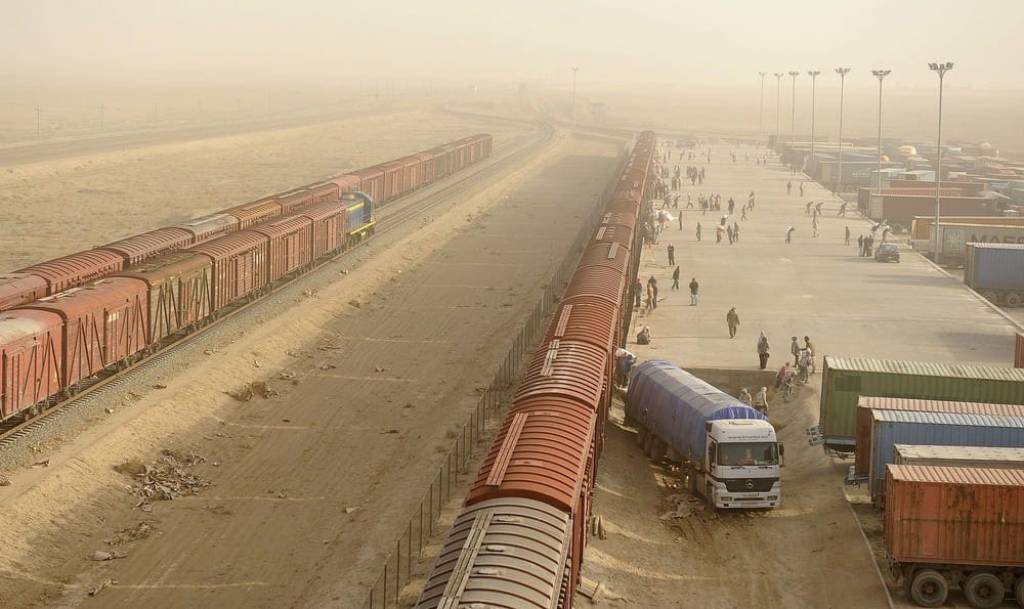
At the same time, the Head of Uzbekistan called on the Gulf countries to participate in the strategic project to construct the Trans-Afghan Railway.
It should be noted that this project can provide the closest and most convenient way connecting Central Asia and the Gulf region. According to experts, using this highway will significantly reduce the delivery time of goods from Uzbekistan to the ports of the Indian Ocean from a month to 3-5 days, as well as reduce the cost of transporting one container by about 3 times. As a result, barriers to trade between Central Asian countries and Arab states will be overcome, creating favorable conditions for attracting foreign investment and developing the region's manufacturing sectors.
In addition, there is a proposal for cooperation in ensuring food security. The Head of the state expressed readiness to introduce effective mechanisms for supplying high-quality organic agricultural products to the Gulf countries.
The implementation of this proposal will provide an opportunity for Uzbekistan and regional producers to open new markets and significantly expand their business horizons. At the same time, it contributes to a significant diversification of supply sources for the Arab States, which today imports up to 85% of food products.
The summit once again proved the importance of strengthening economic ties between the regions and mutual support in achieving common goals.
The initiatives put forward have become the basis for future cooperation, reflecting the desire to strengthen relations and expand constructive dialogue in Central Asia and the Arab States of the Gulf.
It is important to emphasize that these efforts create a favorable environment for long-term partnership and mutual benefit, confirming the importance of interregional ties in achieving sustainable and harmonious development.
Nurmuhammad Bakhtiyorov,
Leading Researcher at the International Institute of Central Asia