
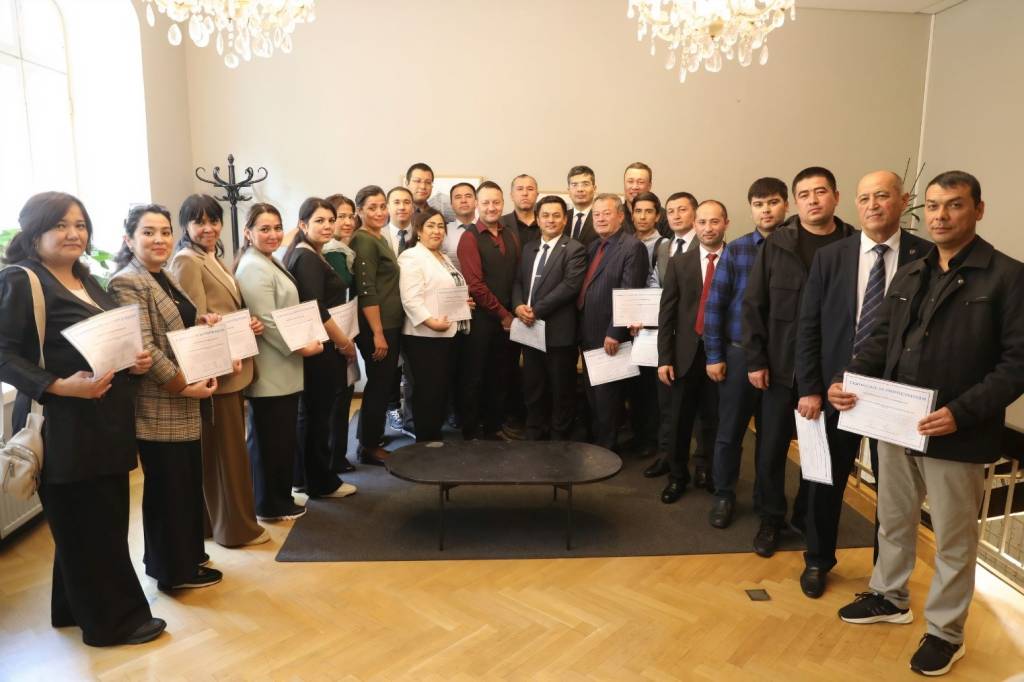
A delegation of teachers, led by Professor Odil Kuysinov, Vice-Rector of Nordic International University in Tashkent, Uzbekistan, spent 12 days in Finland from September 11 to September 22, 2023.
During the visit, the delegation attended workshops, visited public schools in Jyvaskyla, Joensuu, and Helsinki, and held talks with fellow professor colleagues at Finnish universities.
Two pedagogical staff members from Jizzakh State Pedagogical University, N.A. Khonturaev, a teacher at the Department of Sports Teaching Methodology, and Sh.S. Abduraimov, the Head of the Education Quality Control Department, also participated in this internship.
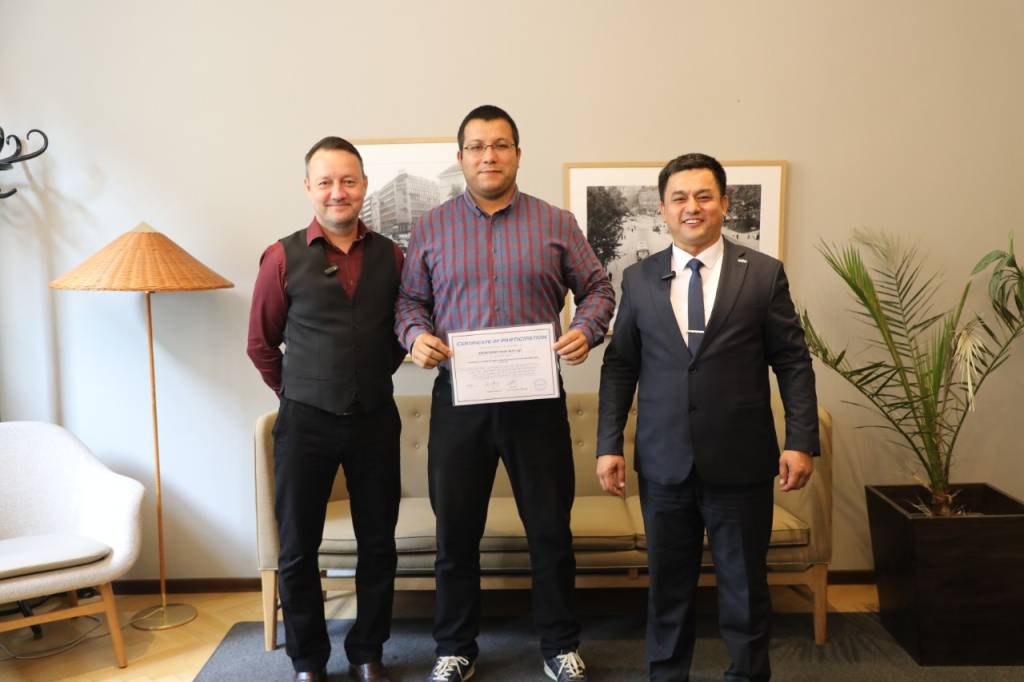
“Internship allowed us to gain hands-on experience in an educational setting. It allowed us to apply theoretical knowledge gained in the classroom to real-world situations, to build relationships with experienced educators, administrators, and peers”, said Sherali Abduraimov, the Head of the Education Quality Control Department.
During the internship, we found out Finland’s education system is often considered incomparable for several reasons:
Minimal Standardized Testing
Finland places minimal emphasis on standardized testing. Instead of focusing on standardized exams, the system emphasizes holistic assessments, teacher evaluations, and classroom-based learning. Students in Finland typically only take one standardized test at the end of their primary education.
High-Quality Teachers
Teachers in Finland are highly educated and respected professionals. They must have a master’s degree, and admission to teacher education programs is competitive. This rigorous training contributes to the overall quality of teaching in the country.
Collaborative Learning
Finnish classrooms often emphasize collaboration and group work. Students are encouraged to work together on projects and problem-solving, which fosters critical thinking, communication skills, and teamwork.
Reduced Homework
Compared to many other countries, Finland has relatively low student homework loads. The focus is ensuring students have time for extracurricular activities, hobbies, and a well-rounded life outside school.
Well-Being and Equality
Finland places a strong emphasis on student well-being and equality in education. Schools aim to provide all students with an equal and high-quality education, regardless of their socioeconomic background. This is achieved through a comprehensive welfare system and policies that promote inclusivity.
Teacher Autonomy
Finnish teachers have a high degree of professional autonomy in the classroom. They are trusted to make decisions about teaching methods, curriculum, and assessments, allowing flexibility and adaptability to individual student needs.
Shorter School Days
Finnish students have shorter school days compared to many other countries. This gives them more free time to engage in extracurricular activities, sports, and hobbies, promoting a balanced life.
A Balanced Curriculum
The Finnish curriculum places a strong emphasis on a well-rounded education that includes a variety of subjects. There is a focus on critical thinking, problem-solving, and creativity, rather than rote memorization.
Minimal Standardized Testing
Finland places minimal emphasis on standardized testing. Instead of focusing on standardized exams, the system emphasizes holistic assessments, teacher evaluations, and classroom-based learning. Students in Finland typically only take one standardized test at the end of their primary education.
Teacher Training and Professional Development
Finnish teachers receive continuous professional development and support throughout their careers, allowing them to stay up-to-date with the latest teaching methods and research.
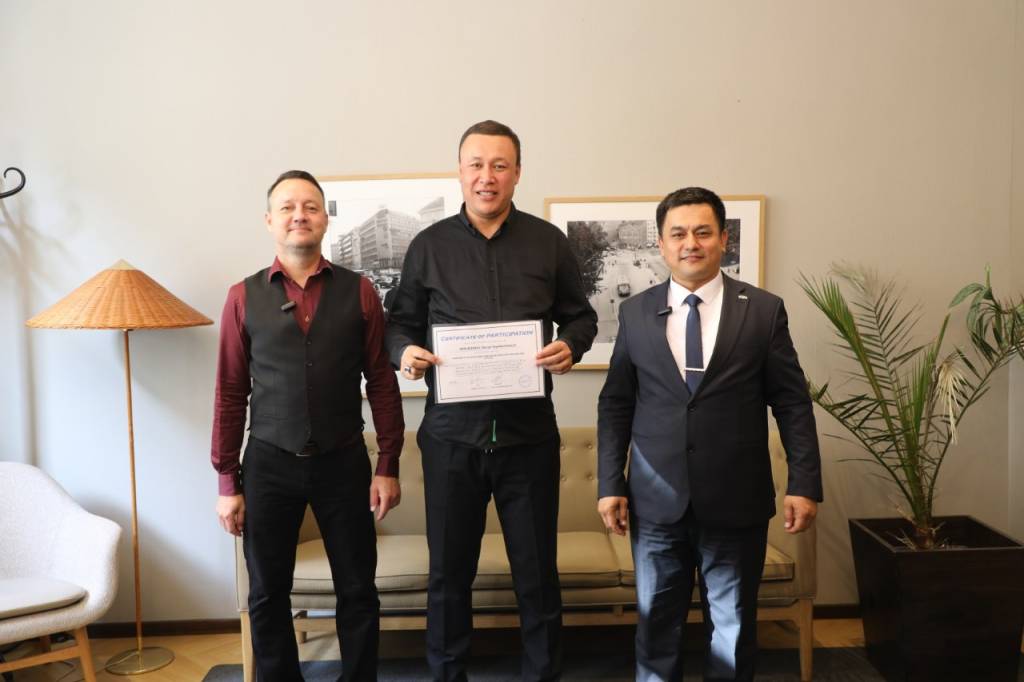
“These unique characteristics mentioned above have contributed to Finland’s education system consistently ranking among the top in international assessments, and they have garnered significant attention from educators and policymakers worldwide as a model for providing high-quality education. Even though adapting the Finnish education system to our Jizzakh State Pedagogical University as a model is a complex and long-term process, we will try to do our best to incorporate certain aspects of the Finnish education system into our educational approach in the foreseeable future”, said Nodir Khonturaev, a teacher at the Department of Sports Teaching Methodology, Physical Culture Faculty.

N.A. Khonturaev,
Jizzakh State Pedagogical University
UzA