The exhibits of Karakalpak State Museum of Arts named after I.V.Savitsky reflect the connection between East and West.
On November 22, an exhibition of folk and applied arts of Uzbekistan from the mid-19th to early 20th centuries will open at the Arab World Institute in Paris. The main part of the exhibition will include exhibits of the Karakalpak State Museum of Arts named after I.V.Savitsky – samples of traditional arts and crafts of the Karakalpak people and paintings by Uzbek artists of the 20th century, which make up the golden fund of the avant-garde painting of Turkestan. The selection of exhibits for the exhibition is carried out by the museum staff and their colleagues from France.
One of the most interesting exhibits is the tobelik, a traditional headdress of a Karakalpak woman in the 17th-18th centuries. Tobelik has a cylindrical shape, assembled from silver plates with coral and turquoise inserts. Tobelik as an additional decoration was worn on a festive headdress – saukele.
Kimeshek is another type of women’s national headdress. Kimeshek completely covers a head, leaving the face open. It looks like a hood. Women put on a kimeshek of different colors, the colors reflected the status of a woman in society.
The exhibition will also present arebak – small decorations for the nose. They were made of gold and decorated with spiral curls, small turquoise and pearls. Young Karakalpak women put on an arebak on the right nasal cavity. This type of decoration is not found in other territories of Uzbekistan.
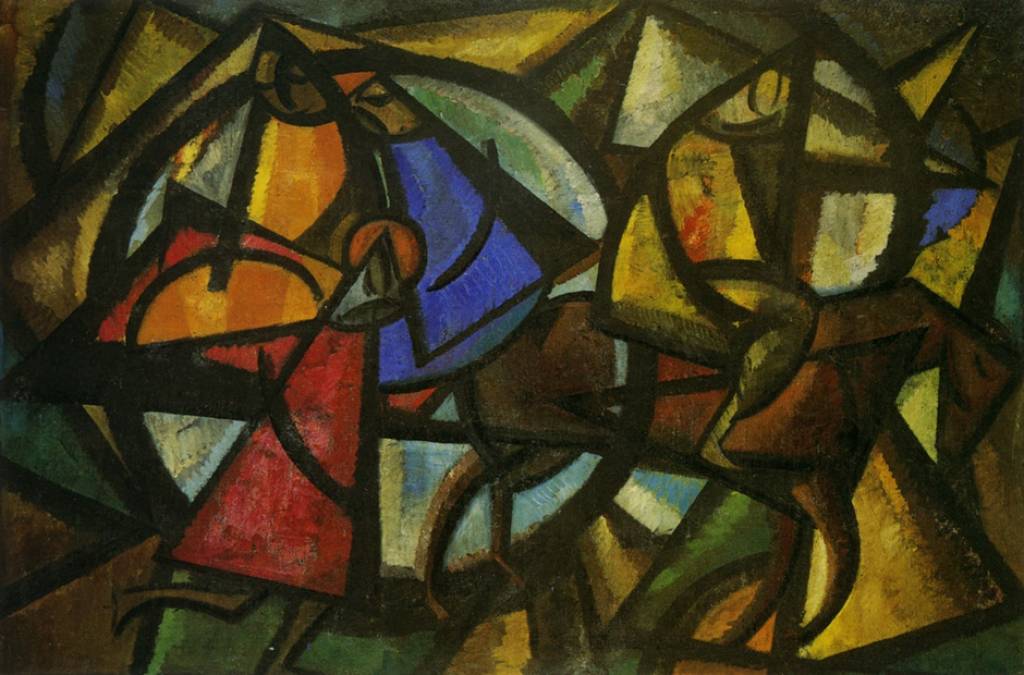
The canvases of Ural Tansykbayev, Viktor Ufimtsev, Nadejda Kashina, Alexander Volkov, Alexey Isupov and other artists deserve attention. These unique works are united by one theme – inspiration from the East and the harmony of its colors. The painting by Nikolay Karakhan “Tea house near the pond under the elms” shows the way of life of people and the surrounding nature.
“Melodies of the East” painting by Viktor Ufimtsev. Born in Siberia, the artist, along with his acquaintance with Central Asia, comprehended the secrets of Islamic art. “Melodies of the East” is an Islamic miniature created in the Art Nouveau style: two women resting and a man heading towards them with a jug in his hands. Looking at this work of art, Western art lovers will be convinced of how much respect for a woman is shown in the East.
The collection of the museum demonstrates the beauty and attractiveness of the culture of the East, in particular Uzbekistan. A special meaning lies in the fact that the exhibition will be held at the Arab World Institute, located in the capital of a European state. This once again confirms that East and West can peacefully coexist and complement each other.
UzA