
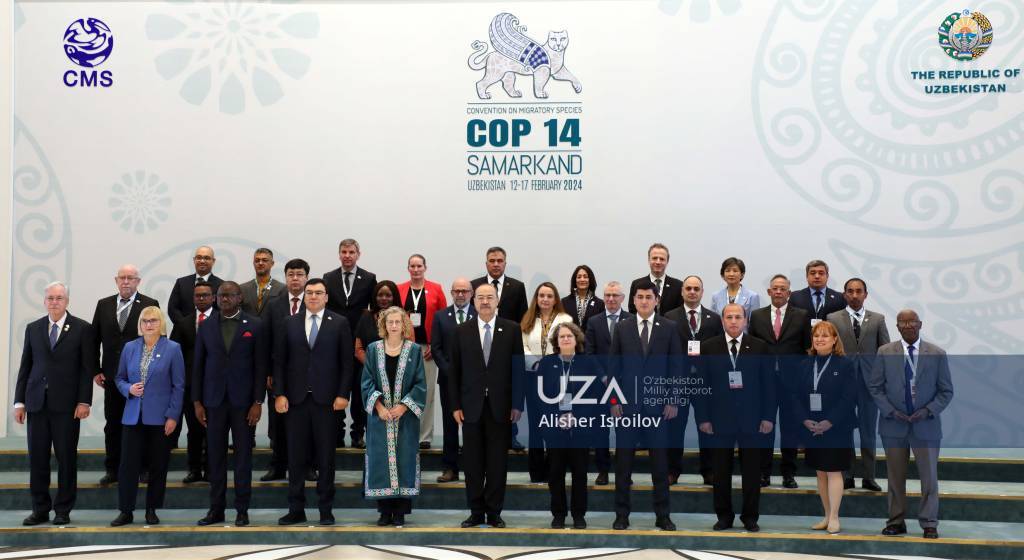
The grand opening ceremony of the 14th Meeting of the Conference of the Parties to the Convention on the Conservation of Migratory Species of Wild Animals (CMS COP14) was held in Samarkand, Uzbekistan, on 12 February.
The Convention on the Conservation of Migratory Species of Wild Animals, also known as the Convention on Migratory Species (CMS) or the Bonn Convention, was signed in 1979 in Bonn, West Germany, and entered into force in 1983. There are 133 Member States to the convention. Uzbekistan ratified this document on September 1, 1998. The 13th meeting was held before the pandemic in India. This time, the participants decided to find answers to accumulated problems and exchange views on essential issues in Samarkand.
The event, held under the motto “Nature Knows No Borders”, is attended by representatives of international organizations and more than 1,800 specialists from 130 countries.
Prime Minister of the Republic of Uzbekistan Abdulla Aripov read President Shavkat Mirziyoyev’s greetings to the forum participants.
The event was attended by Under-Secretary-General of the United Nations and Executive Director of the United Nations Environment Programme Inger Andersen, Executive Secretary of the Convention on the Conservation of Migratory Species of Wild Animals Amy Fraenkel, CEO and Chairperson of the Global Environment Facility Carlos Manuel Rodríguez, Director General of the International Union for Conservation of Nature Grethel Aguilar, and others. They noted that this forum is essential in the current climate change environment.

Minister of Ecology, Environmental Protection and Climate Change of Uzbekistan Aziz Abdukhakimov noted that thanks to the attention of the Head of state, the necessary measures to protect the environment and prevent climate change are being implemented in Uzbekistan. In particular, work has been carried out to increase the protected areas to six million hectares, and the nationwide project “Yashil Makon” (Green Space) has been launched, which provides for the annual planting of 200 million seedlings and improving the ecosystem of the Aral Sea region.
The CMS COP14 weekly agenda includes a discussion of more than one hundred issues. As part of the events of the first day of the meeting, a global presentation report on the status of migratory wild animal species took place. Issues of transboundary and regional cooperation in the conservation of migratory species were also discussed.
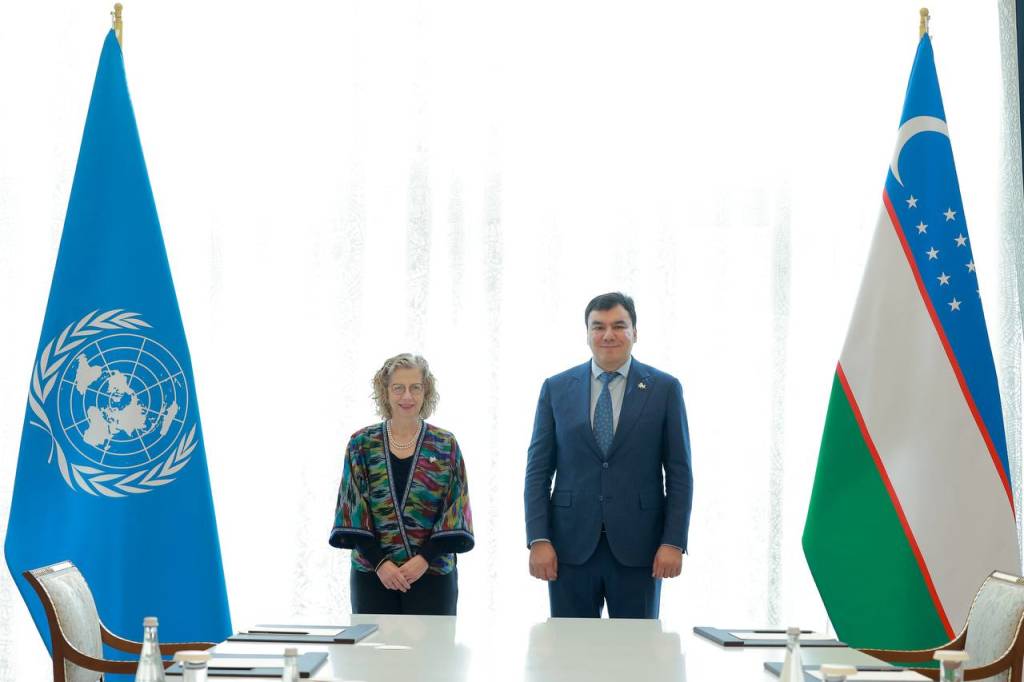
Along with this, meetings were organized with the Minister of Ecology, Environmental Protection and Climate Change of Uzbekistan Aziz Abdukhakimov, the Under-Secretary-General of the United Nations and Executive Director of the United Nations Environment Programme Inger Andersen, other guests, and heads of delegations. The international forum continues.
[gallery-15934]
Golib Khasanov, UzA