
As previously reported, the President of Uzbekistan Shavkat Mirziyoyev today and tomorrow will be on an official visit to Egypt at the invitation of the President of the Arab Republic of Egypt Abdel Fattah el-Sisi.
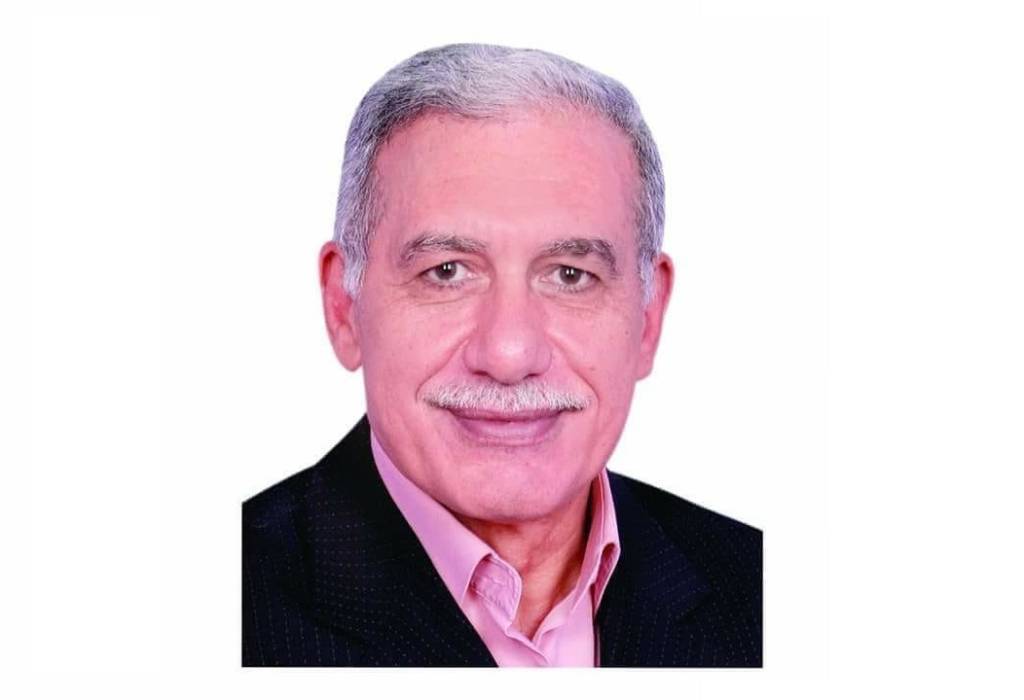
On the eve of the visit, an UzA Correspondent interviewed the Chairman of Egypt – Uzbekistan Friendship Society, Professor, Dr. Magdy Zaabal.
– First of all, I should note that we know Uzbekistan as a state with a rich history and developed civilization. This land gave the world scientists who surprised the world with their encyclopedic knowledge.
The esteemed President of Uzbekistan will present in Egypt the values of national independence, modern economy, scientific revival, the achievement of great history and advanced civilization, the unique experience of the past and inspiring ideas for the future of the country.
– Mr. Magdy, would you please brief us about the current state of relations between Uzbekistan and Egypt, in general, about the priority areas of cooperation?
– The project of Uzbek revival began with the acquisition of independence by Uzbekistan, which was distinguished by its civilized content and the modern spirit of building a new state. This is what I called the “Uzbek model of development”. The countries of the world have recognized the independence of Uzbekistan and are making their contribution to the provision of political, economic and technical support. In particular, Egypt also opened its Embassy in Uzbekistan, the Egyptian Cultural Center operates here, which is the center of cultural and scientific ties between the two countries.
– On September 4, 2018, the President of the Arab Republic of Egypt Abdel Fattah el-Sisi paid an official visit to Uzbekistan. A joint statement of the heads of state following the talks and several other documents were signed. What changes have taken place in Egypt over the past four years as a result of the adopted acts?
– The historic visit of President Abdel Fattah el-Sisi to Uzbekistan in 2018 opened new horizons in relations between the two countries. For me, this visit was especially significant, because as the head of Egypt – Uzbekistan Friendship Association in Cairo, I met with our President and presented him with two books written by me about Uzbekistan. And I asked His Excellency to visit Uzbekistan as soon as possible as a sign of respect for its important role in world civilization and recognition of its great strategic importance in Central Asia.
The visit was successful, and the two presidents signed several important agreements in the development of relations between the two countries in diplomacy, agriculture, youth, sports, justice, tourism, history, cultural heritage, museums, higher education and double taxation.
Over the past four years, we have managed to develop relations on most of the agreements. Many businessmen from Uzbekistan visited Cairo. I received an invitation from the committee of the Shanghai Cooperation Organization to visit Tashkent and represented Egypt at a conference in public diplomacy in May last year.
– It is known from history that our great ancestor, astronomer, mathematician and geographer Ahmad Fergani, along with studying the movement of stars, determined changes in the water level in the Nile River, drew up a graph of land productivity. Thus, he created the tax system. His Nilometer, installed on Roda Island, became the basis for the creation of a new tax order in Egypt. How important are these scientific discoveries in the country?
– Yes, of course, this is one of the unique achievements, because in 248 according to the Muslim chronology “Hijri” and in 862 according to the Christian chronology, on behalf of the caliph of the Abbasid dynasty al-Mutawakkil, Ahmad al-Fergani arrived in Egypt, who installed on the Roda Island in the center of Cairo, the Nilometer. This device was of great importance during the construction of the High Dam, and also when the level of the river was regulated thanks to the dam. This measuring device is an example of the achievements of science and a symbol of the selfless service of scientists for the prosperity of the Motherland. The scientific heritage of Ahmad al-Fergani and the monument erected to him in the very heart of Cairo is proof of the eternal friendship between Egypt and Uzbekistan.
– We are well aware that there are many Uzbek mahallas in Egypt. Many Uzbeks live in different parts of the country. What can you say about our compatriots as a specialist and as ordinary person?
– Near the theater in the center of Cairo there is a large park and a famous book fair. All this is directly related to the Uzbek diaspora. Cairo people call this area the “Uzbek mahalla”. In the Middle Ages, people who arrived from Central Asia lived there, the park was also created by the Uzbeks. In addition, there are mosques, streets and mahallas founded by Uzbeks. These cultural buildings have their history, there are many legends and stories about their origin.
I would like to tell about how the Uzbek mahalla in the center of Cairo has been preserved. Families who came from Shosh (the ancient name of Tashkent), Bukhara, Fergana, Taroz (the former name of Jambul) live here. It is amazing that they still retain the names of the places that their ancestors once gave them. According to Egyptian historians, the history of the formation of the mahalla goes back to the end of the 14th century.
One of the legends reflecting the interest and knowledge of the ancient Egyptians in astronomy is the legend of our great ancestor, the first engineer in the history of mankind, a doctor and the first historian of Egypt, Imhotep. Our ancestors noted the great role of Uzbek scientists in our scientific achievements.
It should be noted that the civilizational closeness between Egypt and Uzbekistan is also expressed by the fact that both countries had a lot of great scientists, such as Imhotep, Avicenna, Al-Khwarizmi, and others.
– What should be done to develop Uzbekistan – Egypt relations, to raise cooperation between the two countries to a new level by searching for new promising areas? What aspects do you think should be paid attention to in this process?
– We have many proposals in this direction. We should strengthen ties, make mutual investments. Therefore, I would like to focus on the priority areas of cooperation:
First, it is expedient to develop economic cooperation and localize industry. This is one of the areas that will make a great contribution to the development of relations between our countries. Because the industry, especially heavy industry, is the engine of development, it plays a revolutionary and decisive role in the expansion of common markets.
In the last four years, there has been noticeable activity and development at places. If we talk about new proposals, I would advise starting with the localization of the Egyptian industry in such areas as the leather industry, pharmaceuticals, and the production of outerwear. The main goal is to fill the Uzbek market with Egyptian products with subsequent export to Russia and the countries of Central Asia, at the same time, the entry of Uzbekistan goods to the markets of Arab and African countries through Egypt.
Second, cultural heritage is an effective way to develop relations between our countries in manuscripts, archeology, Arabic language and history.
The issue of cultural tourism requires a special approach. In Egypt, millions of Sufis want to visit holy places in different regions of Uzbekistan, in particular, Bukhara. It would be great if this project is successful.
Third, the exchange of student and youth delegations will make a great contribution to the study of the positive experience of the two countries. And here I would like to emphasize that mutual research in higher education and science is the common goal of our development strategies.
Uzbekistan and Egypt have achieved great success in all branches of science. There are also common sectors in our relations, one of the most important being agriculture. In particular, we plan to intensify scientific research in cotton, fruit and vegetable growing. We also need to conduct scientific research in manuscripts, sources, especially to study the manuscripts available in Tashkent and Cairo libraries, written in Arabic. Therefore, during the visit of President Shavkat Mirziyoyev, I would like to present my research work “Is Avicenna the first geneticist in the history of mankind?”.
In this study, I have presented scientific evidence that Avicenna was the first geneticist about 800 years before mankind knew this science. All this suggests that we deeply appreciate and respect Uzbek scientists.
Allow me to finish the conversation with an address to the President.
Dear Mr. Shavkat Mirziyoyev, please bring with you to Egypt a bouquet of Uzbek flowers grown by noble Uzbek farmers and a flatbread with fingerprints left by Samarkand residents. Our immortal Nile River craves the waters of the Amudarya.
Mr. President, welcome to Egypt!
Thank you for your attention.
Interviewed by Bekhruz Khudoyberdiyev, UzA