
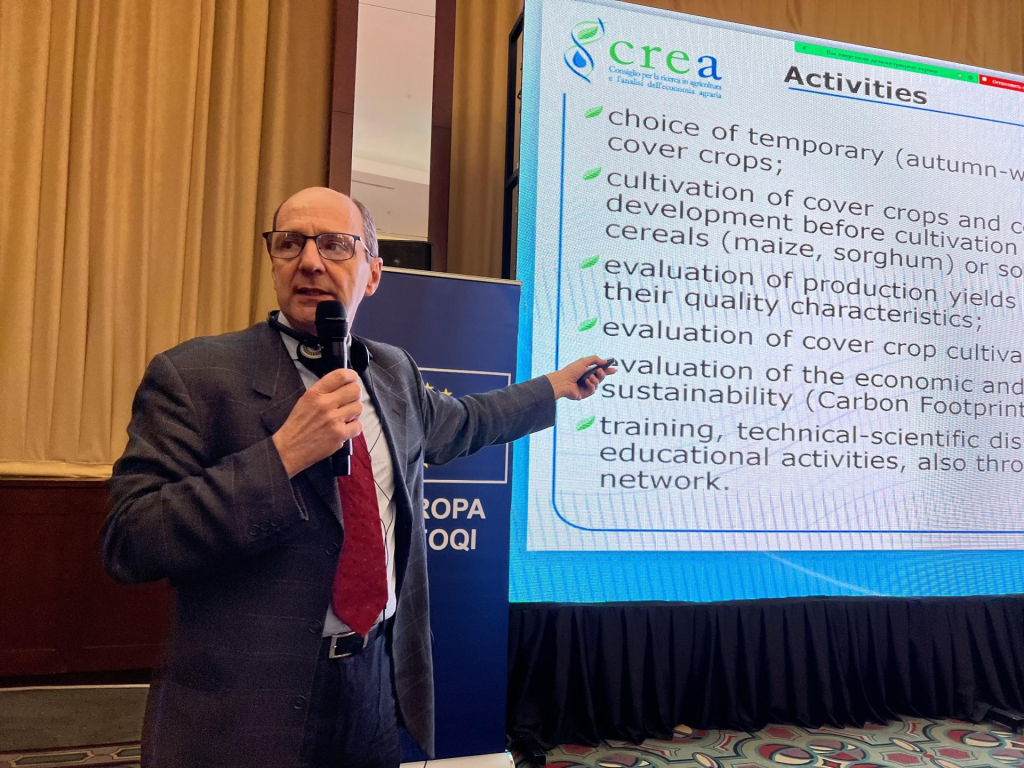
Tashkent hosted a training with the participation of experts from the CREA research center, Italy, on “Operational/Innovation Groups: An overview of the experience of the European Union”.
The event was organized by the project of the United Nations Development Programme (UNDP) and the Ministry of Agriculture of the Republic of Uzbekistan “Supporting an inclusive transition to a green economy in the agri-food sector and developing a climate-smart knowledge and innovation system in agriculture in Uzbekistan” (“EU-AGRIN”), funded by the European Union.
The workshop, which was held in a hybrid format, was attended by representatives of research institutes in agriculture and their scientific and experimental stations in the regions, centers of knowledge and innovation in agriculture of Fergana, Kashkadarya and Tashkent regions of the National Center for Knowledge and Innovation in Agriculture, secondary specialized educational institutions, as well as farms, clusters, business representatives and NGOs.
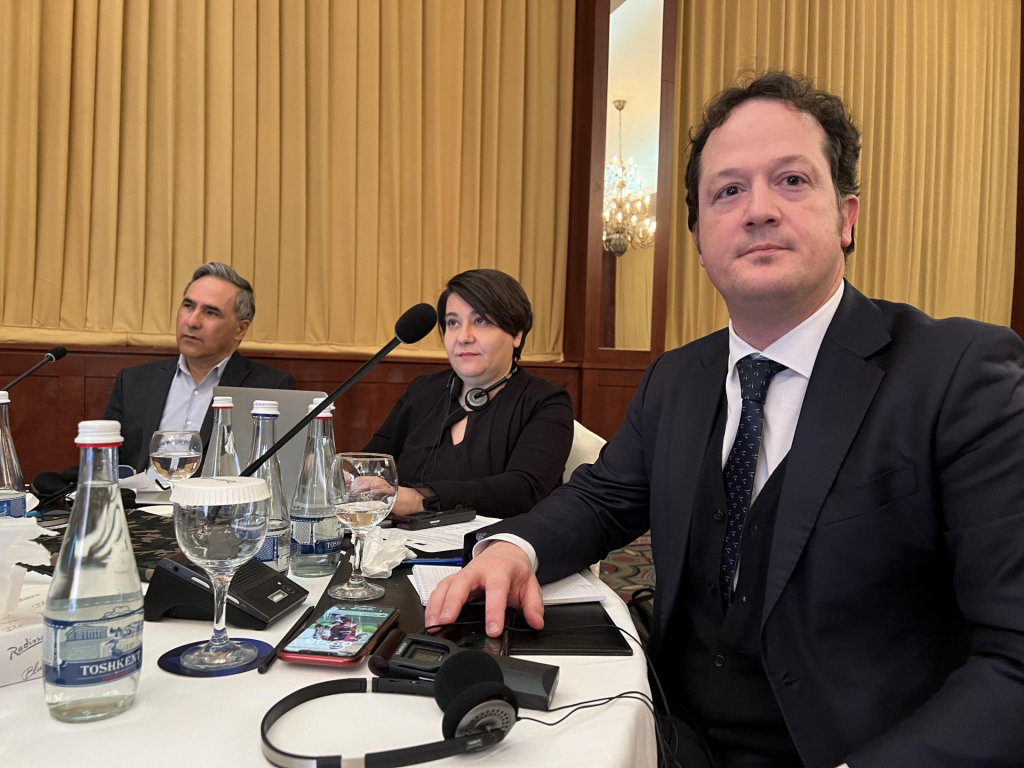
In the first part of the event, to present to Uzbekistan the experience and knowledge of the European Union in the creation and management of innovation groups aimed at the development of agriculture, CREA experts made several practical presentations.
Riccardo Passero, Representative of the Council of CREA, gave a presentation “Introducing the concept of EIP-AGRI by providing practical information on the relevant implementation in Italy and the EU, including the tools and actions carried out by the Italian National Network of Rural Areas, managed by CREA, to support the launch and operation of operational groups”. During his speech, he stated that CREA is ready to provide the necessary recommendations and practical support for the successful implementation of the activities of the Innovation Groups in Uzbekistan.
Mara Lai, another representative of the board of CREA, gave a presentation on “Co-creation of innovations in agriculture: application of the interactive model to the European Organization for Innovation Cooperation and its practical examples”.
The second part of the workshop was devoted to discussions between European experts and local participants.
Nasiba Ziyodullayeva, UzA