
Today, the relations among Central Asian countries, in all spheres, are reaching a qualitatively new level, built on the foundations of mutual friendship, good neighborliness, and strategic partnership.
As the sense of unity and regional identity continues to grow stronger, Central Asia is rapidly transforming into a hub of economic activity and a key transportation and communication bridge linking East and West, as well as North and South. Trade turnover and investment volumes with neighboring countries have increased several times over, while cross-border trade zones and modern transportation and energy infrastructure are being established.
Today, Tajikistan is hosting the first-ever trilateral meeting among the Presidents of Uzbekistan, Kyrgyzstan, and Tajikistan. The summit in Khujand is expected to become a significant step toward strengthening regional cooperation. The leaders will discuss ways to strengthen friendship, promote good neighborliness, and maintain strategic partnerships between their countries, as well as explore opportunities to expand trade, economic, cultural, and humanitarian cooperation.
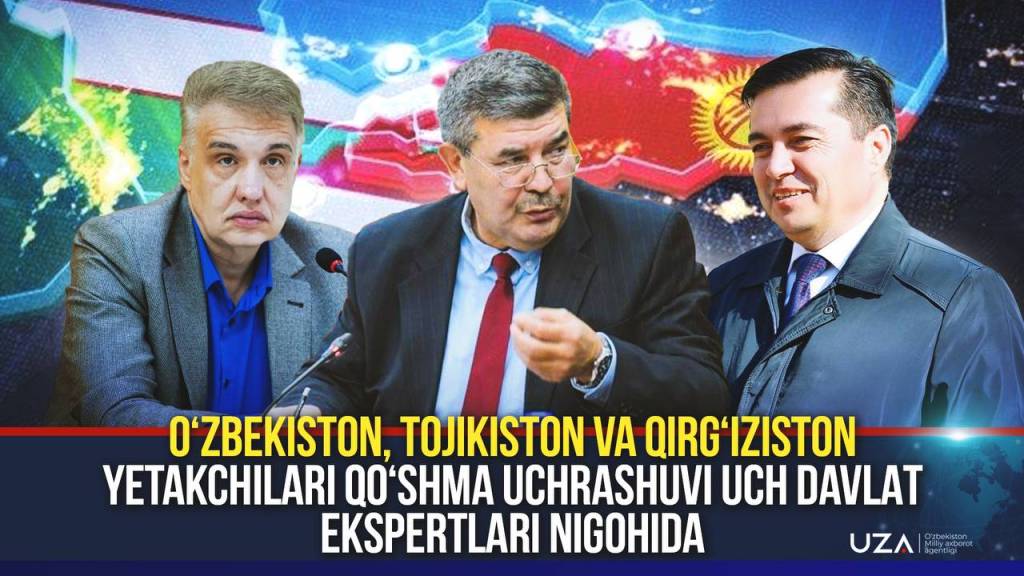
On the eve of this event, an UzA correspondent interviewed experts from all three countries.
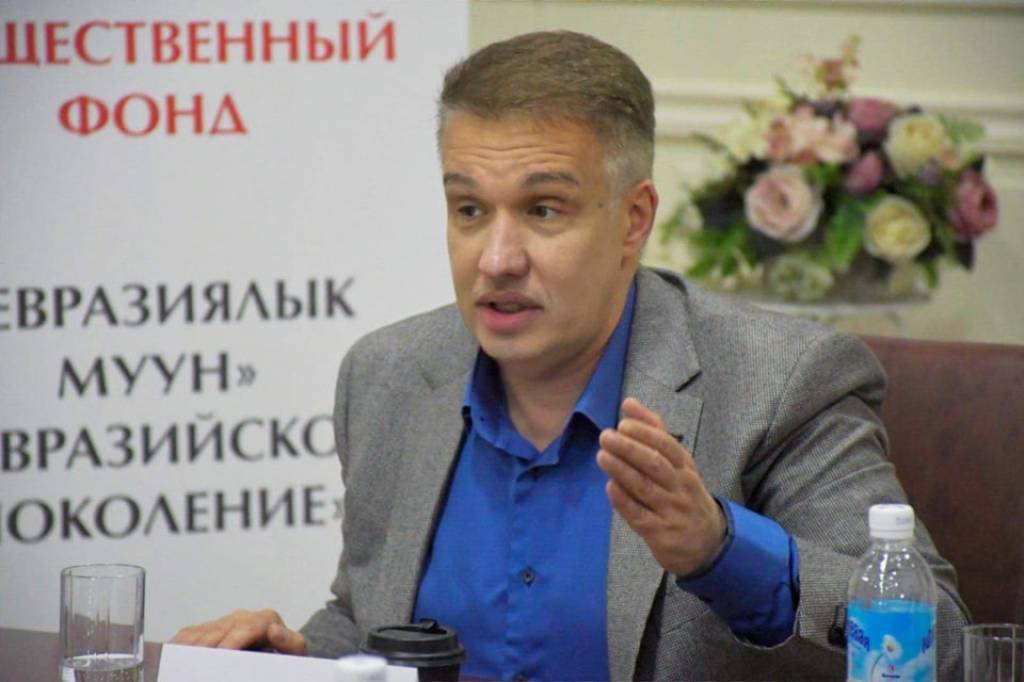
Igor Shestakov, Head of the “Oy Ordo” Center for Expert Initiatives in the Kyrgyz Republic:
– I believe the upcoming trilateral meeting will play a key role in strengthening cooperation. It is likely to have a positive impact on enhancing regional security and increasing trade and economic exchange.
It is worth noting that with the election of Shavkat Mirziyoyev as President in 2016, the process of regional integration in Central Asia entered a truly active phase. For example, the consultative meeting format established within the region is primarily the result of the efforts of the President of Uzbekistan to enhance Central Asia’s significance on the global stage.
The country has adopted the principle of openness in its foreign policy. For instance, in the past, crossing the border in the Sokh enclave could take several hours. Now, it requires only a few minutes. Border-crossing procedures have been simplified, allowing citizens to move freely between territories and engage in regular visits. Bus services have been restored, and people-to-people interactions have significantly increased.
Without exaggeration, the border crossing points between Kyrgyzstan and Uzbekistan represent a unique and, indeed, exemplary model for simplifying border procedures – not only for Central Asia but for the entire CIS region – thereby contributing to the development of trade and economic cooperation. It is encouraging to see that Tashkent continues to pursue a consistent and pragmatic policy in this regard.
In the early 2000s, many foreign experts emphasized that regional cooperation among Central Asian countries was severely limited due to closed borders. Today, however, nearly all of our borders are open, and cross-border movement is smooth and accessible.
Indeed, Uzbekistan’s role must be acknowledged in the signing of the border delimitation and demarcation agreement between Kyrgyzstan and Tajikistan. President Shavkat Mirziyoyev demonstrated strong engagement in facilitating dialogue between Bishkek and Dushanbe to resolve the border issue. The fact that the Khujand meeting is being held shortly after the Presidents of Kyrgyzstan and Tajikistan agreed upon and signed key documents related to the implementation of the border agreement carries deep symbolic significance.
In my view, this dialogue will undoubtedly pave the way for future negotiations and even more successful consultative meetings going forward.
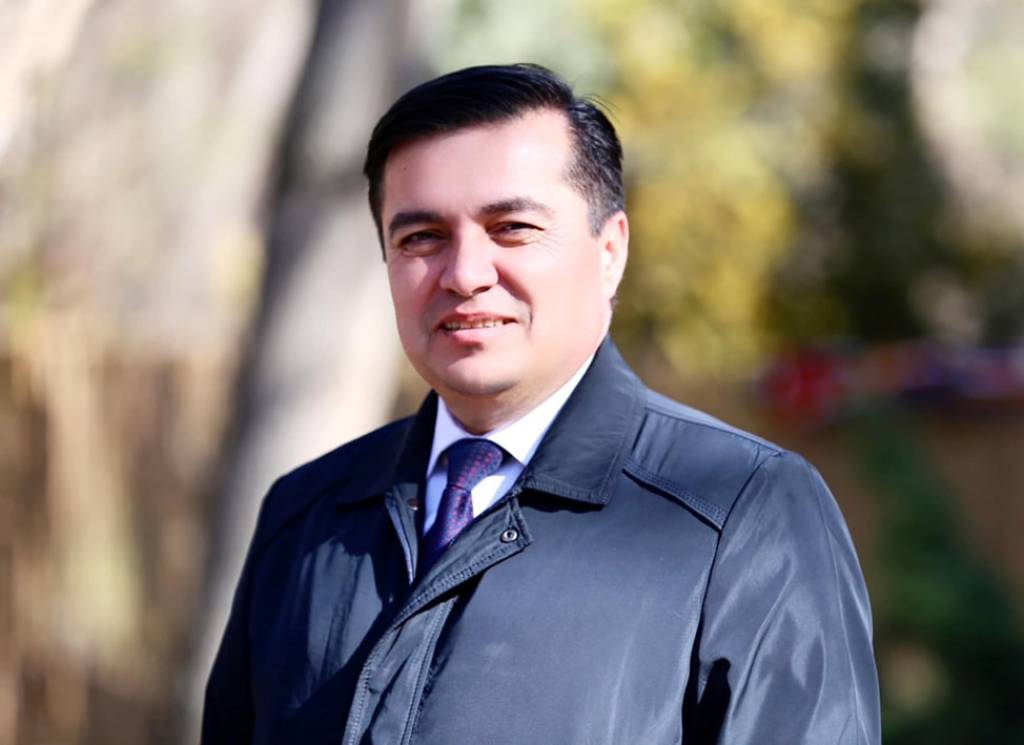
Marufjon Oqilov, Director of Tajikistan’s Dushanbe TV Channel:
– In today’s era of globalization, amid rising geopolitical tensions, Central Asia has, one might say, conducted a kind of masterclass in resolving issues of internationally recognized borders and territorial integrity through political and diplomatic means. This development enhances the international community’s positive perception of the region.
Tajikistan, Uzbekistan, and the Kyrgyz Republic share deep historical, cultural, and economic ties. Without a doubt, today’s summit serves as a crucial platform for addressing transboundary issues, including water resource distribution, trade and economic cooperation, and security. The forum aims to strengthen trust among the countries of the region.
It is worth recalling that for many years, our region faced numerous challenges related to border disputes and difficult economic conditions. The joint efforts now being made to resolve these issues are bringing significant benefits to all our nations.
At the joint meeting, discussions are expected to focus on the prospects of infrastructure projects that promote integration and facilitate trade, with particular attention given to cooperation in energy and logistics. These topics remain highly relevant for Central Asia.
Strengthening economic cooperation in a stable Central Asia is a key factor for global security and economic development. From this perspective, this historic event will be closely followed not only within the region but also on the international stage.
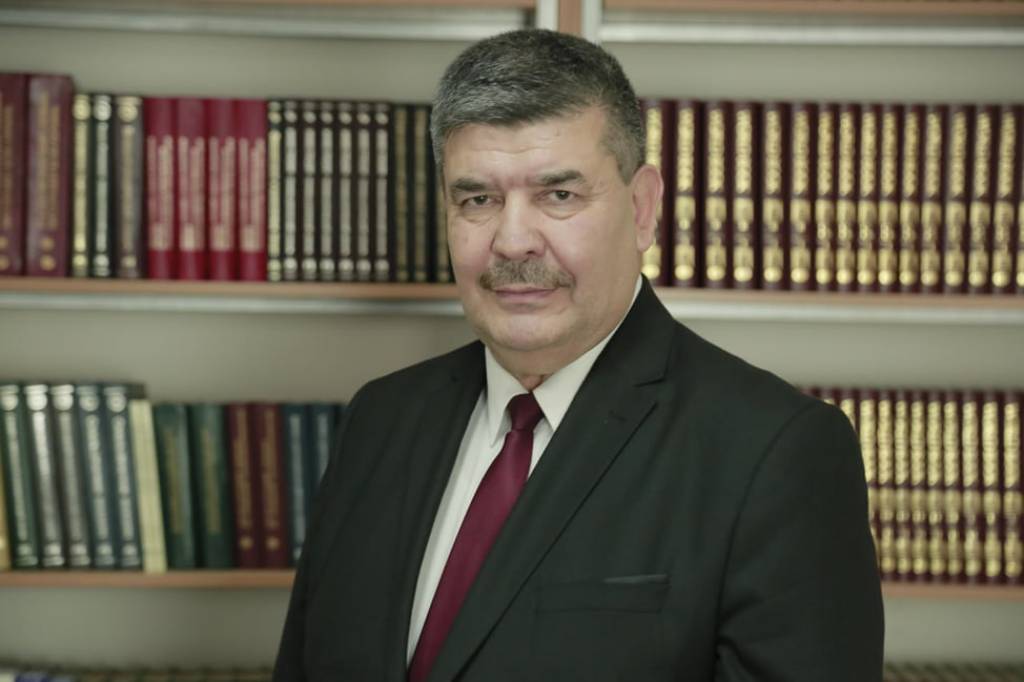
Anvar Yuldoshev, Professor at the Academy of Public Administration under the President of the Republic of Uzbekistan:
– From a geopolitical standpoint, the Central Asian countries have relatively limited access to maritime communication routes. In this regard, the region’s future development and prospects are increasingly linked to the China – Kyrgyzstan – Uzbekistan railway. This route is expected to be connected to the Trans-Afghan corridor in the future. Additionally, other projects aimed at developing Trans-Asian road and air connections will transform the region into an actual transportation bridge between the West, East, and South.
The awareness of their geopolitical significance by the countries of the region is regarded as a crucial factor for sustainable socio-economic development. It calls for joint efforts to build a stable and secure region while preserving the territorial integrity of states within their existing borders.
Moreover, our region serves as a bridge between the cultures, values, and religious traditions of Asia and Europe. Importantly, Central Asia – with its strong natural, economic, and labor potential – is increasingly becoming integrated into the global financial system.
It is no secret that Central Asia has attracted the attention of the world’s major powers today. The region, endowed with vast reserves of oil, gas, and precious metals, holds significant strategic importance as a vital link connecting Europe and Asia. As a result, countries such as Russia, China, the United States, Türkiye, Iran, as well as the European Union, and the Gulf Arab states have developed and adopted special documents, strategies, and concepts aimed at advancing their interests through cooperation with Central Asia.
Uzbekistan, situated in the heart of Central Asia, is the only country in the region that shares borders with all its other Central Asian neighbors and possesses the most enormous human capital. For this reason, our country is regarded as a key pillar for ensuring regional security and sustainable development. Accordingly, the Government of Uzbekistan has defined the development and strengthening of friendly, good-neighborly, and mutually beneficial relations with all neighboring states as a top priority of its foreign policy.
In particular, long-standing, complex, and sensitive issues in relations between Uzbekistan and Tajikistan, such as border demarcation and water-energy cooperation, have been successfully resolved. Most importantly, these positive changes are now being felt in the daily lives of ordinary citizens. Today, citizens of both countries can freely and without obstacles, visit their relatives and friends. Not long ago, the Uzbekistan – Tajikistan border remained largely inactive for weeks or even months. Now, nearly 20,000 people cross it each day.
Since September 2016, the leaders of Uzbekistan and Tajikistan have met nearly 20 times within the framework of various events. During President Emomali Rahmon’s official visit to Uzbekistan in June 2022, bilateral relations between the two countries were elevated to the level of an alliance. In recent years, mutual trade turnover has increased nearly 40-fold.
In relations between Uzbekistan and Kyrgyzstan, a significant breakthrough on the border issue was achieved for the first time in over a decade. After assuming office, President Sadyr Japarov made Uzbekistan the third country he visited as head of state. During that visit, 22 documents covering various areas of multifaceted partnership were signed. On January 26-27, 2023, President Shavkat Mirziyoyev paid a state visit to Kyrgyzstan. Later that year, on November 8-9, the President of the Kyrgyz Republic visited Uzbekistan again. Over the past two years, both sides have successfully elevated bilateral relations to an entirely new level. Notably, the completion of the delimitation of the Uzbekistan – Kyrgyzstan border is recognized internationally as a historic achievement.
Overall, Uzbekistan, as an equal actor in international relations, is actively pursuing a dynamic foreign policy at both regional and global levels. The country continues to steadily expand mutually beneficial cooperation with foreign partner states and neighboring fraternal countries. The historic meeting and negotiations in Khujand will undoubtedly mark an essential step toward ensuring regional peace and security.
Utkir Alimov, UzA