
Representatives of the Jadid Movement, which arose in Turkestan in the first quarter of the twentieth century, considered education the most reliable means of developing society. In the first half of 1922, the Jadids actively prepared young people for education abroad and established cultural exchange.
The “Kumak” society was formed, designed to serve enlightenment and serve as the basis and platform for developing the idea of national independence. We remember history, and a century later. It seems to speak about the realities of today and the prospects for the future...
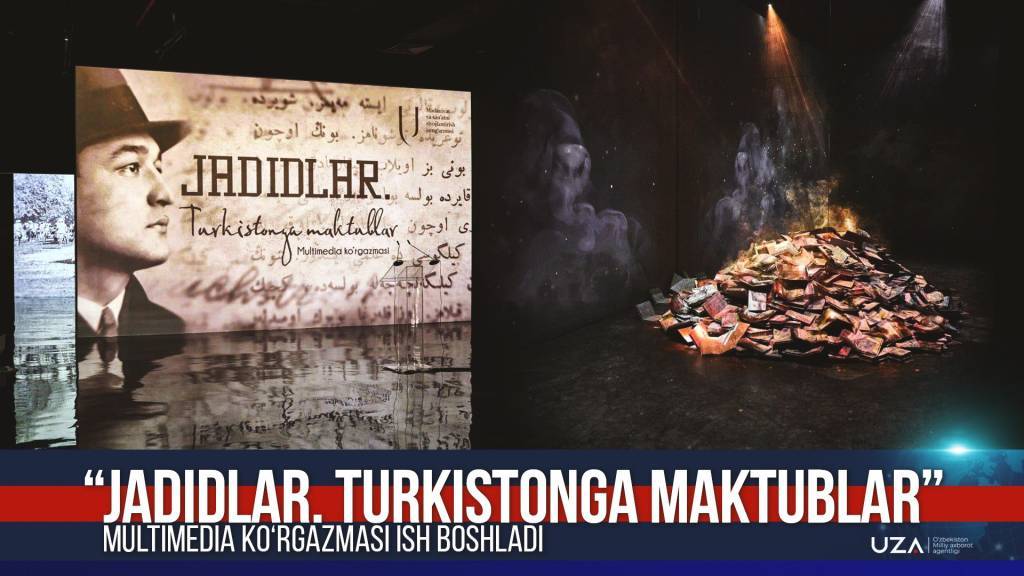
The Art and Culture Development Foundation of Uzbekistan organized the exhibition “Jadids. Letters to Turkestan” for the first time. The grand opening took place in Tashkent, attracting the general public’s attention to an essential period in Central Asia’s history. Jadidism, which emerged as a leading movement in the early twentieth century, played a crucial role in radically transforming the education system in the region.

The head of the Department of Social Development of the Presidential Administration, Odil Abdurakhmanov, who spoke at the opening of the exhibition, noted that in difficult historical conditions, the Jadids showed true heroism in achieving national freedom, awakening and development of the people.
“Based on the idea of “Unity in language, thinking, work”, they did not spare their lives for the sake of arming the people with modern knowledge, bringing the country to the world level of development”, said O. Abdurakhmanov. “To this end, the Jadids organized new methods in schools, theaters, and libraries, published newspapers and magazines, and changed people’s consciousness and worldview. Most importantly, they sought to train personnel with modern knowledge necessary for the country’s comprehensive development”.
Executive Director of the El-Yurt Umidi Foundation Adham Bekmurodov and Head of the Department for the Development of Museum Activities of the Cultural Heritage Agency Bobirmirzo Sayomov spoke about the significance of Jadidism’s history at the present stage, as well as the attention paid, at the initiative of the Head of State, to the study of the life and activities of Jadids, which serves as an example to our society to this day.

Exhibits of the exhibition “Jadids. Letters to Turkestan” tell the story of Turkestan youth, in particular 73 students sent to study in Germany. Their letters are a beautiful story about their aspirations and plans. These exhibits are presented in an impressive installation, complemented by visual images and audio produced using modern technology.
“The exhibition presents unique historical documents reflecting the ideas and efforts of young Jadids who served to form modern Uzbek society”, said Bahrom Irzayev, Ph.D. in historical sciences. “I think that visitors to the exhibition will appreciate the contribution of the Jadid generation to the cultural and educational heritage of our region and will be inspired by their knowledge and desire for progress”.

According to experts, Jadidism, having served as a powerful impetus for many important transformations in the region, continues to have a positive impact on society today. This period of history shows how the desire for enlightenment and development can change society, help overcome obstacles, and form the basis of a bright future. Its impact is especially felt by young people.

The scenography of the exhibition and the audio story about the history of the Jadids are presented as a multimedia projection, which arouses special interest among visitors. The head of the Directorate for the Development of Museum Activities of the Cultural Heritage Agency noted that most of the rare archival materials from the Jadid period displayed at the exhibition, including letters, articles, and photographs, were presented to the public for the first time.

We believe that this exhibition and its name, “Jadids. Letters to Turkestan”, are pleasant to our ears and an invitation to independent research and reflection on the meaning of noble intentions in educational and cultural exchange.

Bekhruz Khudoyberdiyev, UzA