
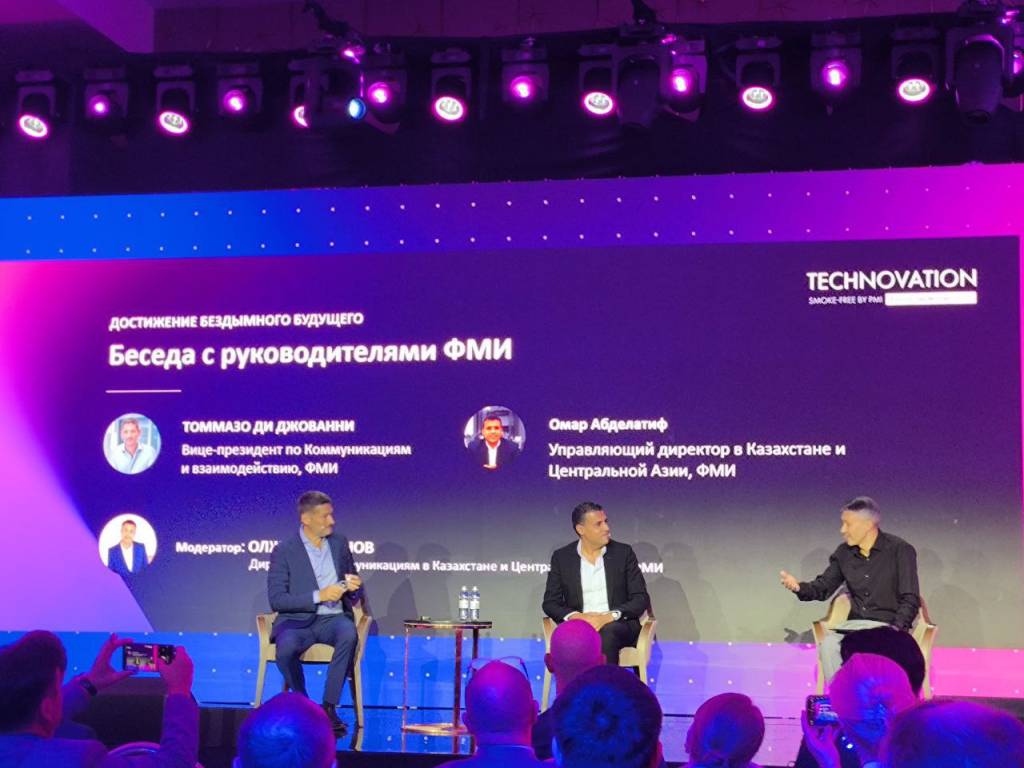
Astana, Kazakhstan, is hosting the international conference “TECHNOVATION: A Smoke-Free Future by PMI”, dedicated to innovations in reducing the harm caused by smoking and the development of smoke-free products.
From smart agriculture and sustainable packaging to breakthrough vaccines and weight-loss drugs, modern solutions are helping to address global challenges. With the right policies, these achievements can lead to real change. The same applies to tobacco: smoke-free alternatives provide an opportunity to reduce health risks.
Conference participants are discussing the role of new technologies, scientific evidence on the effectiveness of smoke-free alternatives, and the international experience of CIS, Central Asian countries, as well as leading nations around the world.
In his welcoming remarks, PMI Vice President for International Communications and Engagement Tommaso Di Giovanni noted that innovation has always faced skepticism. As examples, he cited attempts to use the telephone in the 20th century, society’s reaction to the first airplanes, and distrust of vaccines. However, it was precisely the cooperation between science, government, and business that made it possible to turn these ideas into reality.
At the conference, experts recalled that as early as 1997, the United Nations launched an initiative to reduce the toxicity of tobacco products, and in 2001, the U.S. Institute of Medicine proposed a science-based approach to creating less harmful alternatives. In 2015, the World Health Organization again emphasized the need to develop solutions in this area.
During panel discussions, it was noted that in the second quarter of 2025, 41 percent of PMI’s net revenue came from smoke-free products. This demonstrates steady growth and confirms that smoke-free technologies are becoming a significant part of the company’s business.
Experts stressed that the main objective is to make the CIS and Central Asia a predominantly smoke-free region within the next decade.
In addition, medical professionals spoke at the conference. They emphasized the importance of providing consumers with objective scientific information, the need to combat misinformation, and the development of policies that would enable people to make informed choices.
The conference program also features demonstrations of innovative technologies, virtual reality experiences, scientific evidence on the effectiveness of smoke-free products, and discussions on solutions to combat the illicit tobacco trade.
Ziyodbek Jumayev, UzA