
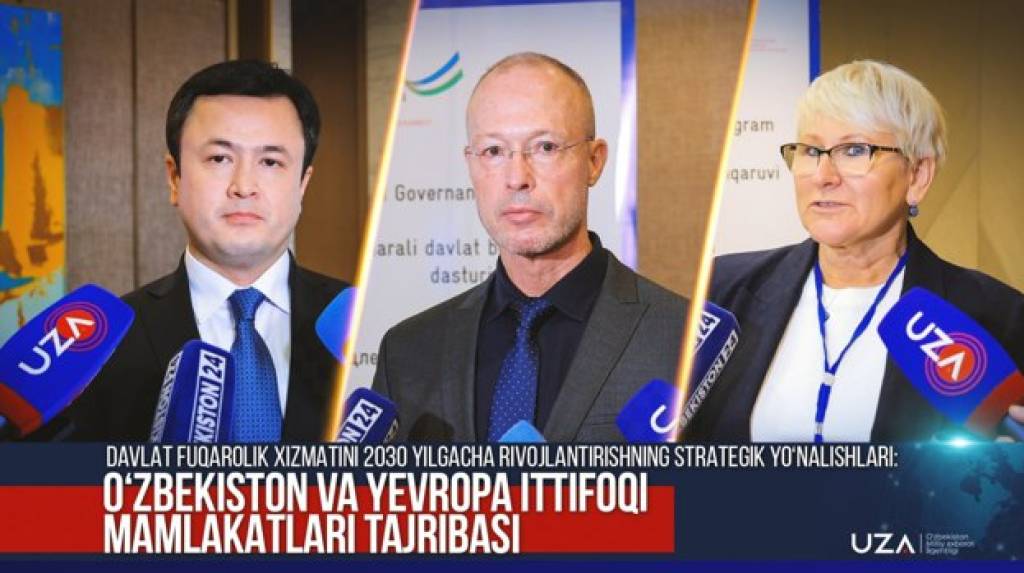
On August 27-28, 2024, GIZ, jointly with the Public Service Development Agency under the President of the Republic of Uzbekistan (ARGOS), organized a conference in Tashkent on “Improving the draft strategy for the development of the civil service 2030 – using the best practices of the EU”.
The event was held as part of the Good Governance Program, implemented by GIZ in cooperation with the Central Finance and Contracting Agency (CFCA) from Latvia. The aim was to discuss the draft Strategy with the involvement of government agencies, the public, and experts.
According to the Presidential Decree of the Republic of Uzbekistan of February 21, 2024, the task was to develop the “State Civil Service Development Strategy 2030”. To implement this program, issues in the civil service sector were reviewed, leading international practices were studied, and effectiveness indicators and an action plan for 2025-2027 were developed.
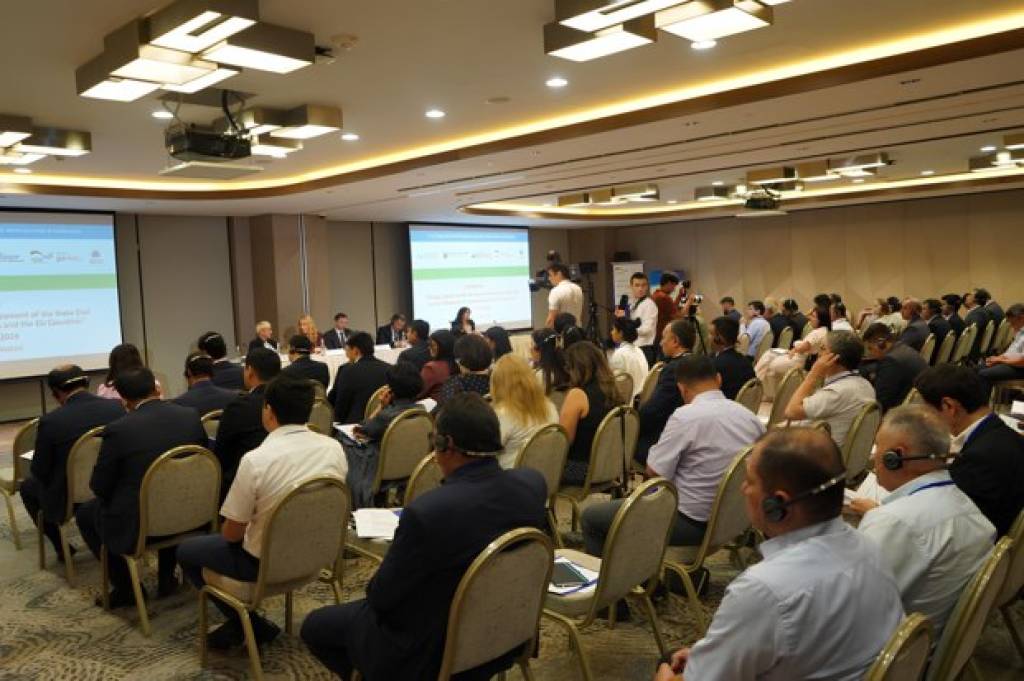
The conference was opened by Amirtemurkhan Musayev, the First Deputy Director of the Public Service Development Agency under the President of the Republic of Uzbekistan, Dr. Michael Wimmer, Deputy Head of Mission and Head of Cooperation at the German Embassy in Uzbekistan, and His Excellency Reinis Trokša, the Ambassador of the Republic of Latvia to Uzbekistan. The event brought together heads and representatives of ministries and agencies of the Republic of Uzbekistan, NGOs, academic institutions, the Human Resources Association of Uzbekistan, and the media.
The conference delved into five key areas of the Strategy, each crucial to the development of the civil service. These areas include modern and effective civil service, increasing the attractiveness of civil service, human resources management and development, effective leadership and change management, and the development and recruitment of HR resources.
The conference, dedicated to improving the 2030 State Civil Service Development Strategy, was a success. It brought together representatives from various sectors and countries to discuss key aspects of the reform. Participants actively shared their views and experiences, contributing to a deeper mutual understanding and the development of cooperation in public administration.
Implementing EU best practices adapted to Uzbekistan’s specifics will be an important step towards creating a modern and effective civil service. Participants expressed confidence that the proposed ideas and developments will form the foundation for further realization of the Strategy and strengthening the country’s civil service.
The conference laid a solid foundation for future discussions and cooperation aimed at improving the effectiveness of public administration and enhancing the quality of services provided to the population.
Bekhruz Khudoyberdiyev, UzA