
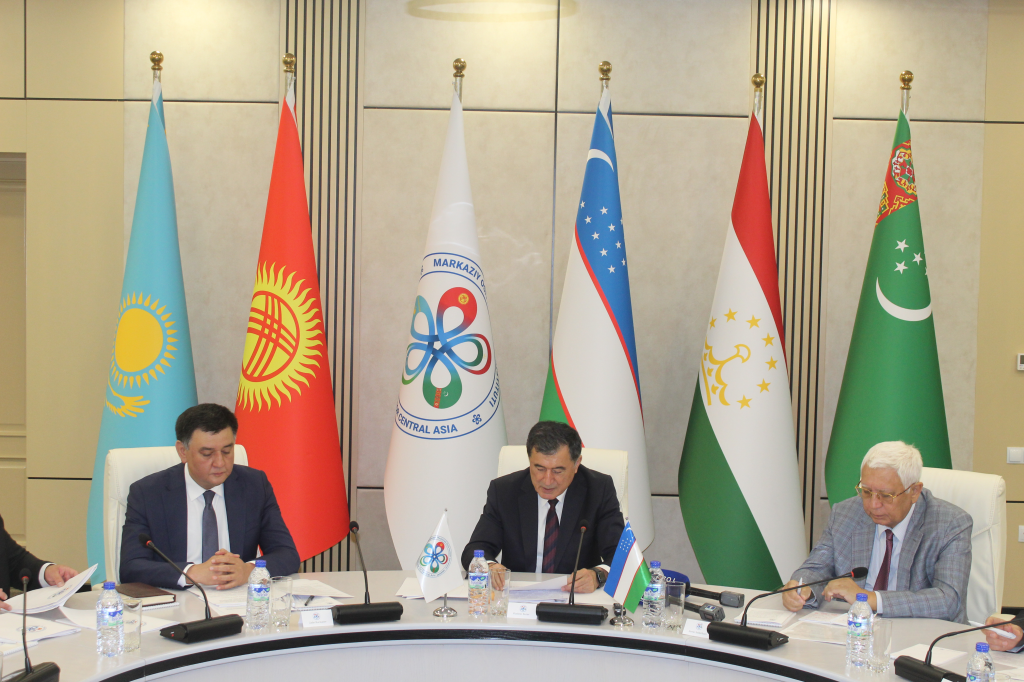
During his speech at the roundtable discussion on “Internal development processes and prospects for strategic partnership between Uzbekistan and China”, Director of the International Institute for Central Asia Vladimir Norov noted that the event is very relevant on the eve of the Summit of the Heads of State of Central Asia and China, to be held on May 18-19.
Vladimir Norov is confident that the Summit will raise relations between Central Asia and China to a completely new level of mutually beneficial cooperation.
Mutually beneficial relations between Uzbekistan and China have acquired a dynamic, multifaceted, and long-term character. Thanks to the efforts of the leaders of the two countries, bilateral cooperation has reached a qualitatively new and high level of interaction, economic cooperation has strengthened, and comprehensive strategic partnership is expanding. Trade between the two countries is actively developing. In 2022, the mutual trade turnover increased by 20 percent and exceeded $8.92 billion. In addition, Uzbekistan and China are strengthening constructive cooperation within the framework of bilateral relations and in the format of international organizations and multilateral platforms of the UN, SCO, CA+PRC.
Guided by the principles of openness, mutual trust, and support, Tashkent and Beijing play an important role in ensuring security and sustainable development in Central Asia, which is the core of the SCO.
The importance of the historic Samarkand SCO Summit, which became the largest political event in the entire history of the organization, was noted. At the same time, it is important to emphasize that at the SCO summit, the member states welcomed the Samarkand Solidarity Initiative for the Sake of Common Security and Prosperity, put forward by the President of Uzbekistan.
As the Head of the state noted, the goal of the initiative is to involve in a global dialogue all those who care about our common future, who are ready, regardless of differences, to seek coordinated approaches and solutions, and who share the principles of the Samarkand Spirit.
G.Khonnazarov, UzA