
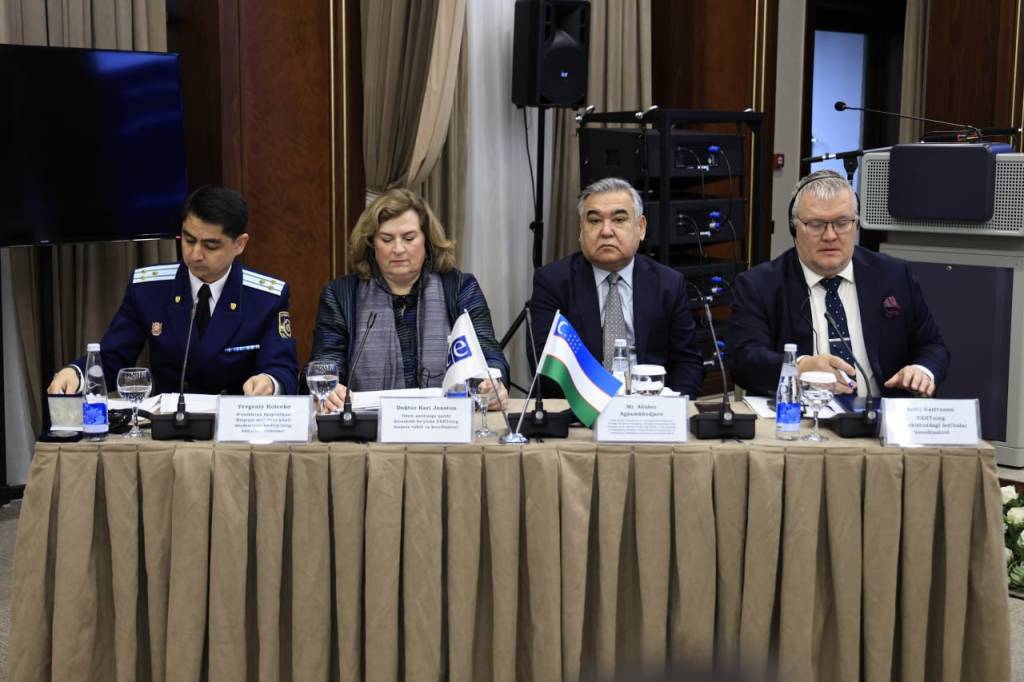
A training session on combating human trafficking in Uzbekistan through the use of technology has commenced in Tashkent.
The two-day training is organized by the National Commission on Combating Human Trafficking and Forced Labor in cooperation with the Organization for Security and Co-operation in Europe.
Participants include Chairman of the Senate Committee on International Relations, Foreign Economic Relations, Foreign Investments and Tourism and member of the National Commission Alisher Agzamkhodjayev, OSCE Special Representative and Co-ordinator for Combating Trafficking in Human Beings Kari Johnstone, OSCE Project Co-ordinator in Uzbekistan Antti Karttunen, as well as representatives of the Ministry of Internal Affairs, the General Prosecutor’s Office, the Supreme Court, the Ministry of Digital Technologies, the Ministry of Employment and Poverty Reduction, and the Children’s Ombudsman.
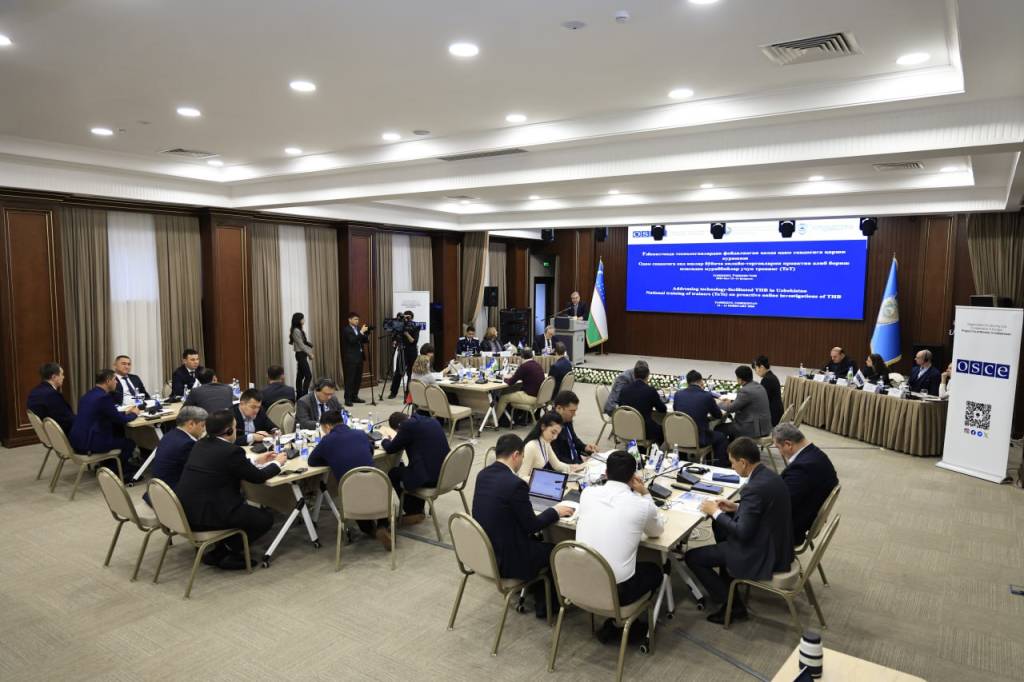
The training is aimed at developing modern, practice-oriented skills for the early detection of human trafficking cases through technology and the analysis of online threats.
Speakers at the opening of the event drew attention to the growing number of crimes related to human trafficking carried out through the online environment, virtual platforms, and social media.
It was noted that international conflicts, economic instability, and forced migration processes increase the risk of human trafficking. Women, children, and socially vulnerable groups remain the primary victims of this crime.
As part of the training program, participants will study how information and communication technologies are used to combat human trafficking. Particular attention will be paid to risks associated with the darknet and digital financial instruments. Methods for identifying and analyzing high-risk online platforms will also be examined.
The training will be conducted in an interactive format using real cases and simulations. As part of the train-the-trainers component, special sessions are planned on teaching methodologies and integrating training modules into the educational process.
UzA