
The Global Soil Laboratory Network (GLOSOLAN), the Food and Agriculture Organization of the United Nations (FAO), and the Ministry of Agriculture of the Republic of Uzbekistan are organizing trainings on salt-affected soil analysis. Partners from 30 countries gathered in Tashkent, including representatives from Australia, Armenia, Bangladesh, the Central Asian countries, China, Egypt, France, Georgia, Italy, Malaysia, the Netherlands, Pakistan, Senegal, Spain, Tanzania, the United Arab Emirates, and others. The trainings took place at the Tuproqsifattahlil enterprise under the Ministry of Agriculture of the Republic of Uzbekistan.
Trainings are conducted by international experts and representatives of the International Network on Salt-affected Soils (INSAS). Training participants are studying using electromagnetic induction instruments and data to create digital soil maps of soil physical, biological, chemical, and hydrological properties. As noted, salinization is one of the significant soil degradation processes influencing human livelihoods and food systems. Monitoring of salt-affected soils, sustainable management practices, and projects conducted on these soils often involve the assessment of socio-economic impacts. In this regard, the training agenda included studying these aspects.
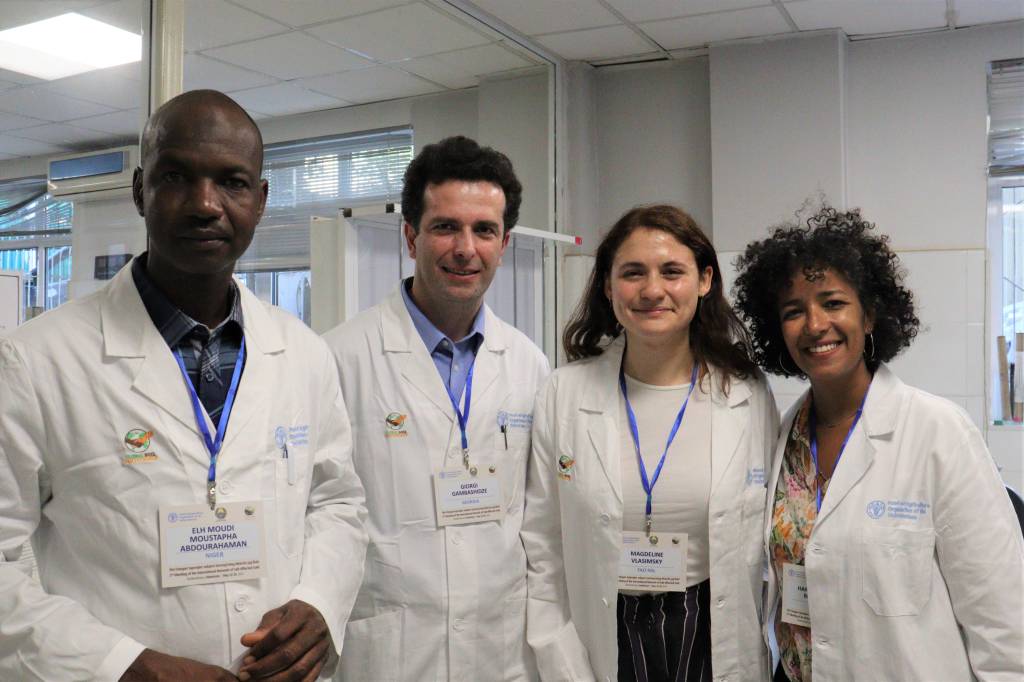
“Our goal is to train regional and international participants on best practices for analysing salt-affected soils. It is critical to unite international efforts on soil analysis because the soil doesn’t recognize borders, so issues in one country impact the soil across the border and connected ecosystems. We work together to promote the same approach on the soil analysis and to raise activities in this area to the same level to compare the data and make much stronger solutions to solving salt-affected soils”, said Magdeline Vlasimsky, FAO Soil Specialist.

Training participants got familiarized with the activities of the Tuproqsifattahlil enterprise under the Ministry of Agriculture of the Republic of Uzbekistan. At this enterprise, work is underway to assess the quality of irrigated lands and monitor soil fertility and ecological state. Here, the information base of soil covers in Uzbekistan is formed, and cartograms of soil salinity and their supply with nutrients are compiled. The company's specialists develop recommendations for the reclamation of saline and degraded lands.
The Global Soil Laboratory Network (GLOSOLAN) was established in 2017 to build and strengthen the capacity of laboratories in soil analysis and to respond to the need for harmonizing soil analytical data. Harmonization of methods, units, data, and information is critical to (1) provide reliable and comparable information between countries and projects; (2) allow the generation of new harmonized soil data sets; and (3) support evidence-based decision-making for sustainable soil management. The work of GLOSOLAN supports the implementation of the Sustainable Development Goals, the 2030 Agenda for Sustainable Development, and the mandate of FAO on food security and nutrition.
UzA