
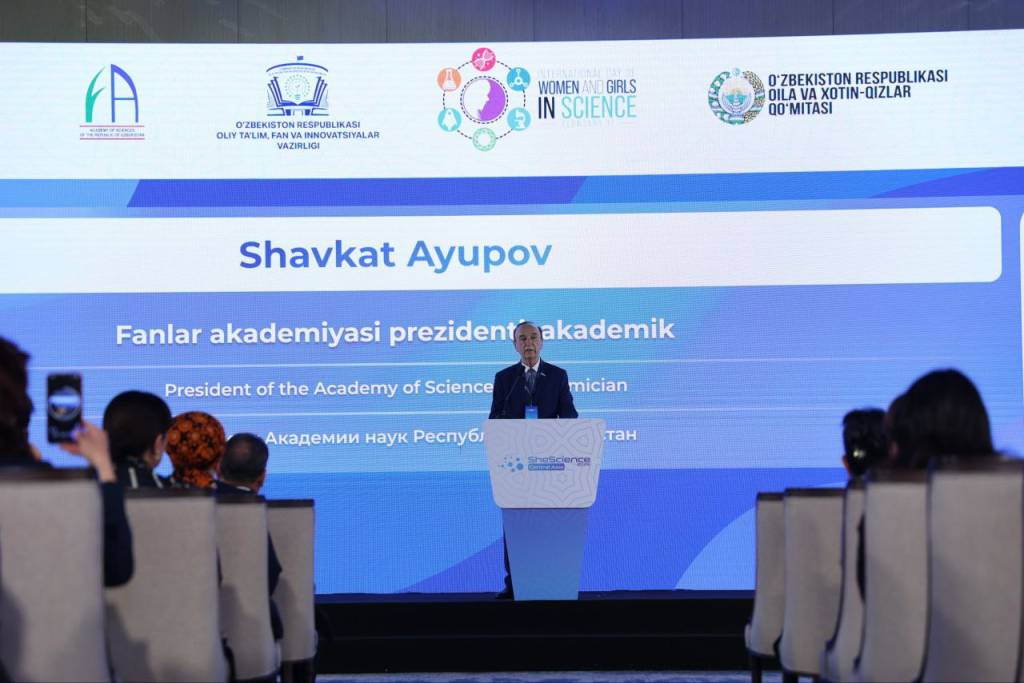
Tashkent hosted the SheScience 2026 Forum of Women Scientists from Central Asian countries, dedicated to celebrating the International Day of Women and Girls in Science.
The event was organized in cooperation with the Academy of Sciences of Uzbekistan, the Ministry of Higher Education, Science and Innovation of Uzbekistan, the Family and Women Committee of Uzbekistan, the Asian Development Bank, and the World Academy of Sciences.
Representatives of government bodies, international organizations, scientific institutions, and the higher education system took part in the forum, along with about 200 women scientists from Kazakhstan, Kyrgyzstan, Tajikistan, Turkmenistan, and Uzbekistan.
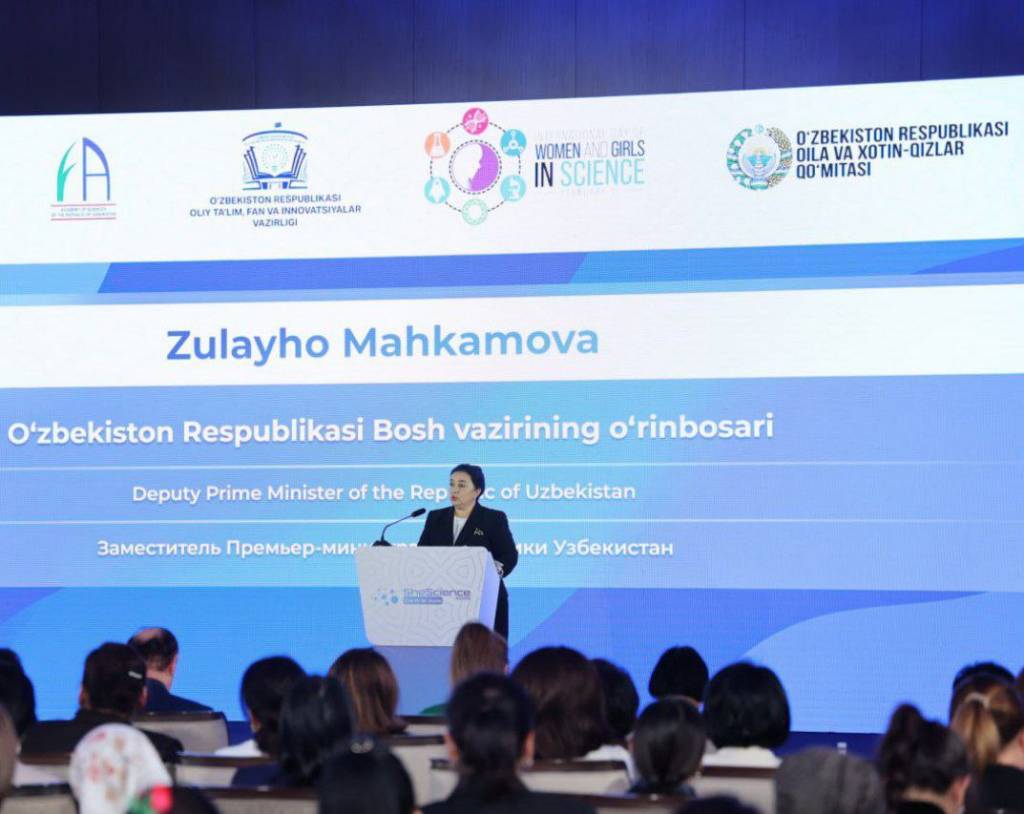
The event was opened by the Deputy Prime Minister and Chairperson of the Family and Women Committee of Uzbekistan Zulaykho Mahkamova, the Minister of Higher Education, Science and Innovation Kungratbay Sharipov, and Hero of Uzbekistan and President of the Academy of Sciences of Uzbekistan Shavkat Ayupov.
Kanokpan Lao-Araya, ADB Country Director for Uzbekistan, and Sabah AlMomin, Vice President of the World Academy of Sciences (TWAS), also delivered presentations on supporting the scientific activities of women researchers in Central Asia, ensuring gender equality, and developing international scientific cooperation.
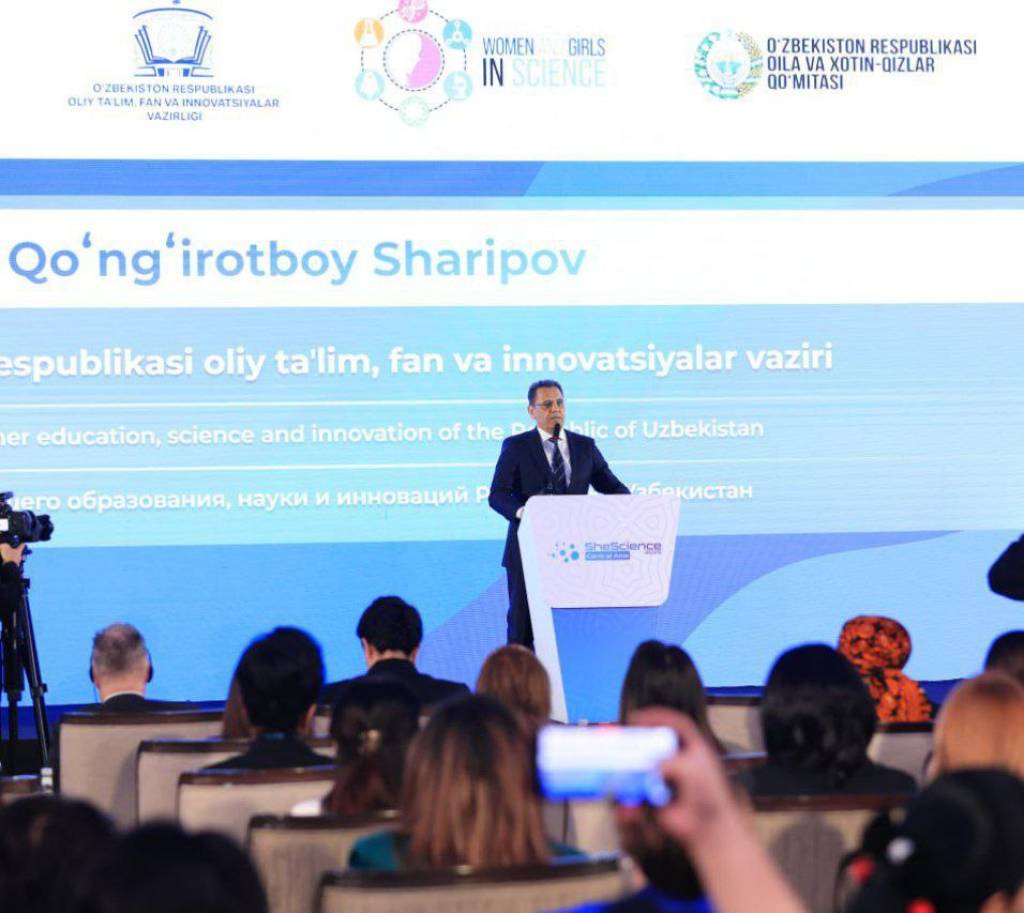
The participants discussed several pressing topics, including women’s participation in scientific and innovative activities, regional and global cooperation, sustainable development, ecology, medicine, engineering, digital technologies, and biotechnology.
As part of the forum, the “Moʻtabar ayol 2025” (“Respected Woman”) badge of distinction was presented, and an award ceremony was held for the winners of the national grant competition “Woman Scientist 2025”. It should be noted that this competition has been held since 2021 as an important initiative to support talented women scientists.
A panel discussion was also organized on regional development through the integration of scientific and innovative ecosystems. Representatives of the United Nations, Central Asian countries, and international scientific organizations took part in it.
As part of the forum’s scientific program, three sessions were held, covering biology and medicine, ecology and climate, mathematics, engineering, and physics.

According to the figures, 763 scientific projects with a total value exceeding 1 trillion 405 billion UZS were implemented in 2025 under state programs for scientific activity. Of these, 214 projects, or 28 percent, were led by women scientists, indicating the continued strengthening of women's role and potential in science.
Of the more than 17,000 researchers and trainees admitted to postgraduate studies in 2025, nearly 48 percent were women. Today, almost half of the more than 36,000 researchers studying within this system are women.
In addition, women accounted for 40 percent of the 93 winners of the academic mobility program last year.
Women also accounted for more than 24 percent of the 145 young scientists sent overseas for research internships in countries such as Hungary, Türkiye, China, Malaysia, the United Kingdom, and Belarus.
Today, 47 percent of the more than 7,400 members of the Youth Academy under the Ministry of Higher Education, Science and Innovation of Uzbekistan are women.
Forum participants emphasized that the SheScience 2026 event will serve as an important platform to promote support for women scientists’ activities in Central Asia, ensure gender equality, engage young people in science, and elevate international scientific cooperation to a new level.
Nazokat Usmanova, UzA