
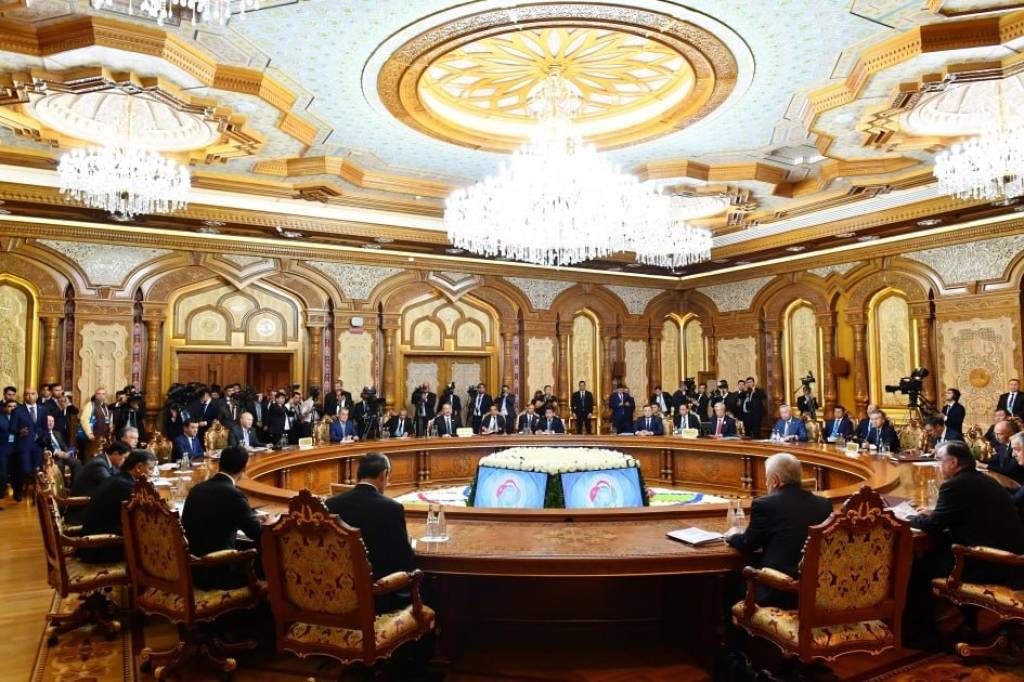
The Fifth Anniversary Consultative Meeting of the Heads of State of Central Asia in Dushanbe confirmed the firm political will of the leaders of the region to expand and deepen multifaceted interstate cooperation comprehensively.
An essential role in the conditions of increasing geopolitical turbulence was given to discussions on cooperation in ensuring peace and stability and strengthening cooperation in the security sector of the region.
In this regard, President of Uzbekistan Shavkat Mirziyoyev emphasized that the region urgently needs “a confidential exchange of views to develop collective solutions to prevent, counter common challenges and threats”.
To this end, the Leader of Uzbekistan proposed an initiative to form a regional system of forecasting, prevention, early warning, and joint response to emergencies.
The need to implement this system is also justified by the Centre for Research on the Epidemiology of Disasters (CRED) data. Thus, from 1999 to 2022, 184 natural disasters occurred in Central Asia, and the leading share of damage occurred in Tajikistan (71.4%), Kazakhstan (10.2%) and Uzbekistan (5%).
The creation of this system will make it possible to intensify joint efforts to develop and deepen cooperation in disaster risk reduction, as well as to increase preparedness to respond to emergencies, especially of a cross-border nature.
This initiative also provides for improved information exchange, joint assessment of risk factors, and implementing programs and projects to minimize damage from disasters and adaptation to climate change, contributing to more rapid responses to emergencies.
Such steps demonstrate the understanding of the heads of State of Central Asia of the need to move to a new, higher-quality level of security cooperation, which meets the strategic and regional interests of each country.
In general, the Fifth Consultative Meeting of the Heads of Central Asian States demonstrated the readiness of the countries of the region to deepen cooperation in various fields, including security and risk management. This testifies to the desire of our fraternal nations for closer collaboration, which will help us all to cope with the challenges of the future successfully, to ensure the well-being of our citizens.
Ilkhom Abdukarimov,
Leading Specialist at the International Institute for Central Asia