
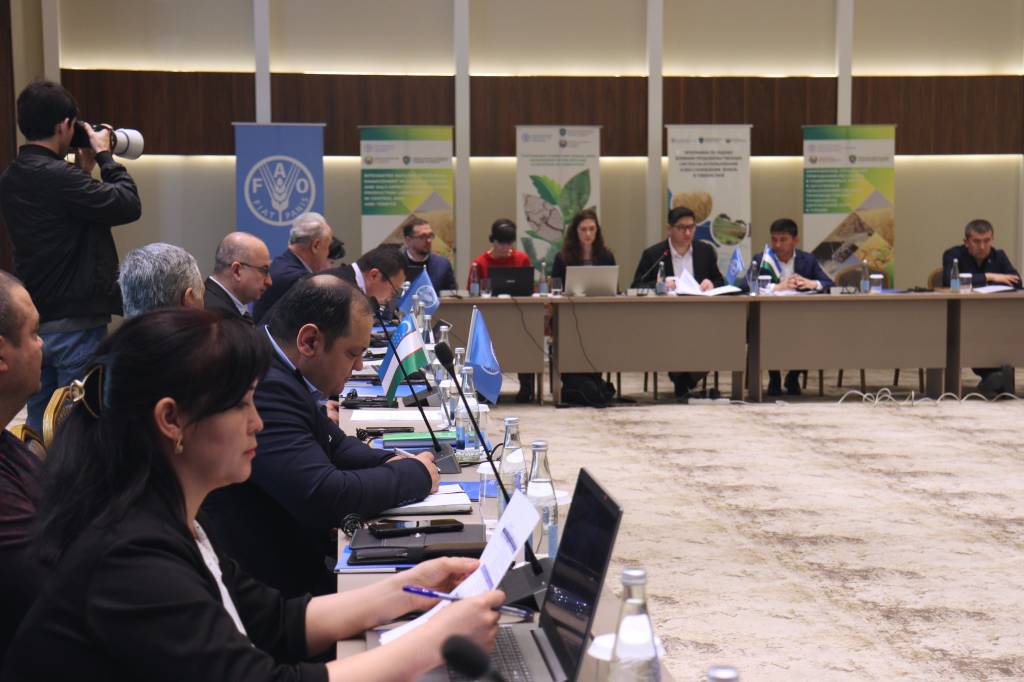
The Food and Agriculture Organization of the United Nations (FAO) and its Global Soil Partnership (GSP), in collaboration with the Ministry of Agriculture of the Republic of Uzbekistan and several partners, held an introductory seminar in Tashkent on the launch of the “Recarbonization of Agricultural Soils (RECSOIL)” initiative in Uzbekistan.
The initiative will be implemented in collaboration with two other FAO projects in Uzbekistan, which are funded by the Global Environment Facility (GEF). These are the projects named “Integrated natural resources management in drought-phone and salt-affected agricultural production landscapes in Central Asia and Turkey” and “Sustainable Forest and Rangelands Management in the Dryland Ecosystems of Uzbekistan”. In recent years, these projects have proven effective in supporting agricultural development in drought-prone regions of Uzbekistan through advanced resource-saving methods. They continue to contribute to the technical equipment of farms, increase their incomes, and maintain land degradation neutrality.
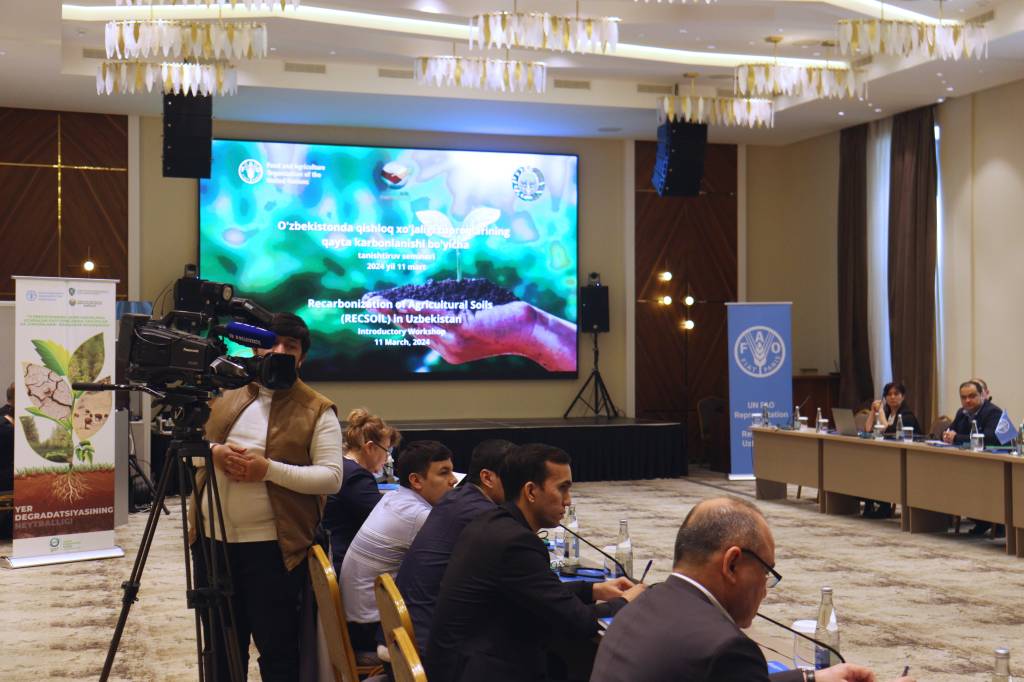
The RECSOIL initiative addresses climate change and sustainability challenges by promoting sustainable soil management (SSM) to increase soil health, thus making soils more productive and shock resilient. The mechanism focuses on maintaining or improving soil carbon stocks by adopting SSM practices such as cover crops, crop rotation, and agroforestry. This boosts the health of soils and, in turn, increases food security and farmers’ incomes. The RECSOIL initiative addresses carbon sequestration and greenhouse gas (GHG) emissions mitigation. As noted at the event, RECSOIL will be piloted by providing farmers with both trainings and financial compensation to support the adoption of SSM practices. RECSOIL also provides a robust method to monitor and assess soil health and estimate GHG emissions reduced through the project, providing valuable insight into the value of SSM practices for farmers and the climate.
The main purpose of this workshop is to inform the participants about the RECSOIL initiative activities and to identify potential project partners among relevant ministries, agencies and scientific and technical institutions. In particular, participants were provided with information on how RECSOIL tools will contribute to achieving land degradation neutrality and how data is collected and used to measure the impact of SSM practices. During the workshop, an action plan for implementing RECSOIL in Uzbekistan was also developed and agreed upon.
UzA