
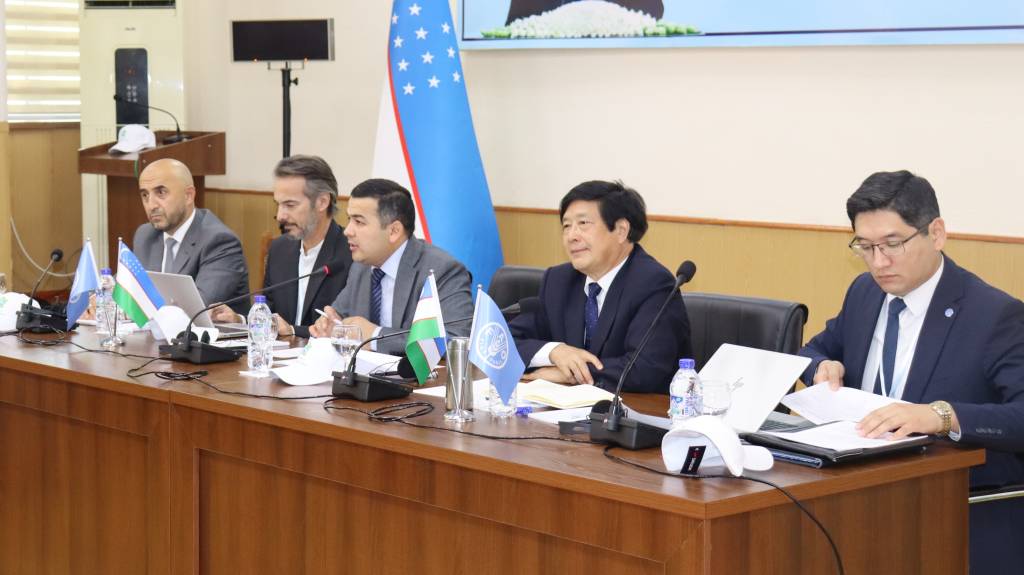
FAO regional launch event and workshop were organized on implementing the country projects under the Global Action on Green Development of the Special Agricultural Products: “One Country One Priority Product” (OCOP) in Europe and Central Asia.
The Food and Agriculture Organization of the United Nations (FAO) hosted the event in cooperation with the Ministry of Agriculture of Uzbekistan. The forum brought together national and foreign experts including representatives from Albania, Armenia, China, Georgia, Kyrgyzstan, Moldova, Serbia, Tajikistan, and Türkiye.
The workshop provided a good platform for participants to review the progress of OCOP implementation in Europe and Central Asia, exchange information and good practices, identify significant issues and challenges, and agree on key actions to be taken.
FAO launched the Global Action on Green Development of the Special Agricultural Products (SAPs): “One Country One Priority Product” (OCOP) in September 2021 to address the current and recurring challenges of hunger, food insecurity, and malnutrition as well as to contribute to the development of smallholders and family farms, amongst other strategic objectives. The sustainable value chain of the respective Special Agricultural Products (SAPs) can play an essential role in ensuring food security and nutrition, more effective use of unutilized resources, supporting farmers’ livelihoods and economic growth, and protecting the environment and biodiversity for present and future generations. The SAPs, covering all kinds of agricultural products, are locally known, available, and unique to specific agroecological regions. They play a significant role in achieving food security and nutrition and have the potential to be promoted in local, regional, and international markets.
In November 2022, FAO launched the OCOP country projects at the global level by identifying the first-round demonstration countries to lead the way for implementing the OCOP Initiative at the country level and in farmer’s fields. These include Malawi, representing Africa, which is promoting banana as their SAP; Bangladesh, representing Asia and Pacific, promoting jackfruit; Uzbekistan, representing Europe and Central Asia, promoting sweet cherry; Trinidad and Tobago, representing Latin America and the Caribbean, promoting cocoa; and Egypt representing Near East and North Africa promoting date palm. These five OCOP demonstration countries will subsequently share their best practices, innovations, and technologies as they develop their SAPs.
The Ministry of Agriculture of the Republic of Uzbekistan strongly supported the implementation of OCOP in Uzbekistan, identifying further steps to promote green technologies for the sustainable development of the sweet cherry value chain. In this regard, FAO is implementing the project “Innovative Approaches for Better Plant Production” in Uzbekistan. As noted at the workshop, sweet cherries have great potential for sustainable and inclusive growth. The country produces up to 180 thousand tonnes of the product annually. Agroecological conditions are favorable for growing sweet cherries with minimal use of chemicals. In addition, sweet cherries enable diversified and sustainable farming systems, including agroforestry and pastoralism.
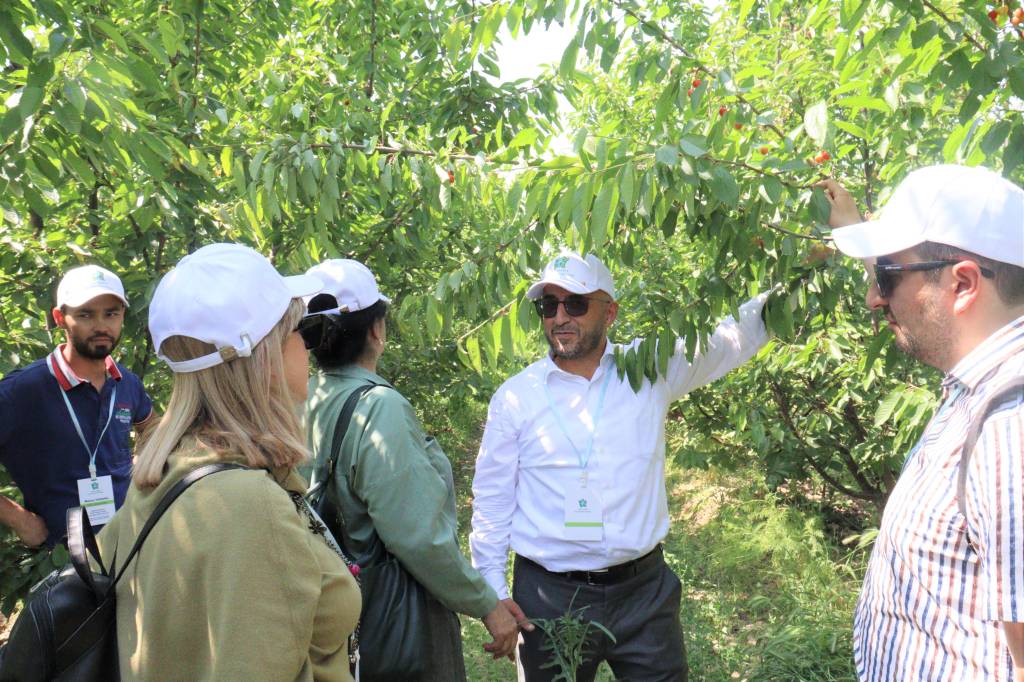
The workshop agenda included a visit to sweet cherry orchards and the national bazaar, providing participants with the opportunity to get acquainted with the process of cherry production, assess the capabilities of enterprises, talk with small farmers, and discuss the enhancement of market opportunities.
The regional workshop enabled participants to consolidate collaborative efforts for all OCOP potential project countries and to facilitate the successful implementation of the OCOP Initiative in the region.
UzA