
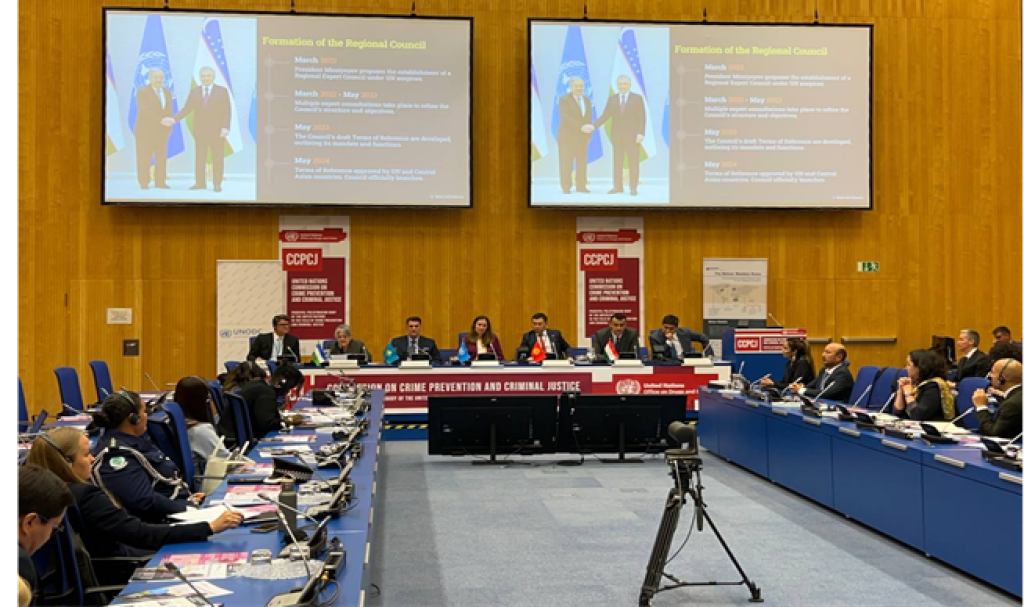
On May 21, 2025, at the UN Headquarters in Vienna (Austria), within the framework of the 34th session of the UN Commission on Crime Prevention and Criminal Justice, a side event was held on “Effective rehabilitation and reintegration of persons returning from war zones in Syria and Iraq: the experience of Central Asian countries”.
The Commission is the UN’s paramount crime prevention and criminal justice policy-making body. It adopts resolutions and decisions on relevant issues and serves as a platform for exchanging knowledge, experience, and information between states to develop national and international strategies in this area and to determine priorities.
The event, organized with the support of the United Nations Office on Drugs and Crime (UNODC) Regional Office for Afghanistan, Central Asia, Iran, and Pakistan, attracted considerable interest from UN Member States. Over 50 representatives from Asia, Africa, Europe, North America, and Latin America participated.
The key message of all the speeches was the confirmation that the Central Asian states have responded to the call of the UN Secretary-General António Guterres, have committed to implementing the UN Security Council resolutions on the repatriation of their citizens from war zones, and have already returned more than 2,100 people.
In particular, UNODC Senior Programme Coordinator for Europe, West and Central Asia Jeremy Milsom noted that this event symbolizes the common commitment of the Central Asian countries to joint efforts in the fight against extremism and terrorism.
UNODC representative Kate Fitzpatrick described the actions of countries in the region as a powerful and inspiring example for other countries.
Deputy Director of the Institute for Strategic and Regional Studies under the President of the Republic of Uzbekistan (ISRS), Shafoat Nurullayeva, in her speech, paid special attention to the key measures taken by Uzbekistan in the fight against terrorism.
The expert emphasized that in recent years, under the leadership of President Shavkat Mirziyoyev, the country has conceptually revised approaches to countering extremism and terrorism, emphasizing the use of “soft methods” such as social rehabilitation and prevention.
Particular attention is paid to education and scientific research in religion. The Center for Islamic Civilization and the international centers named after Imam Bukhari, Imam Termizi, and Imam Moturidi have been established.
Priority areas include strengthening interfaith harmony, inclusive religious policy, and working with individuals who have fallen under the influence of radical ideology. This comprehensive approach allows not only the elimination of the consequences of radicalization but also the prevention of its causes.
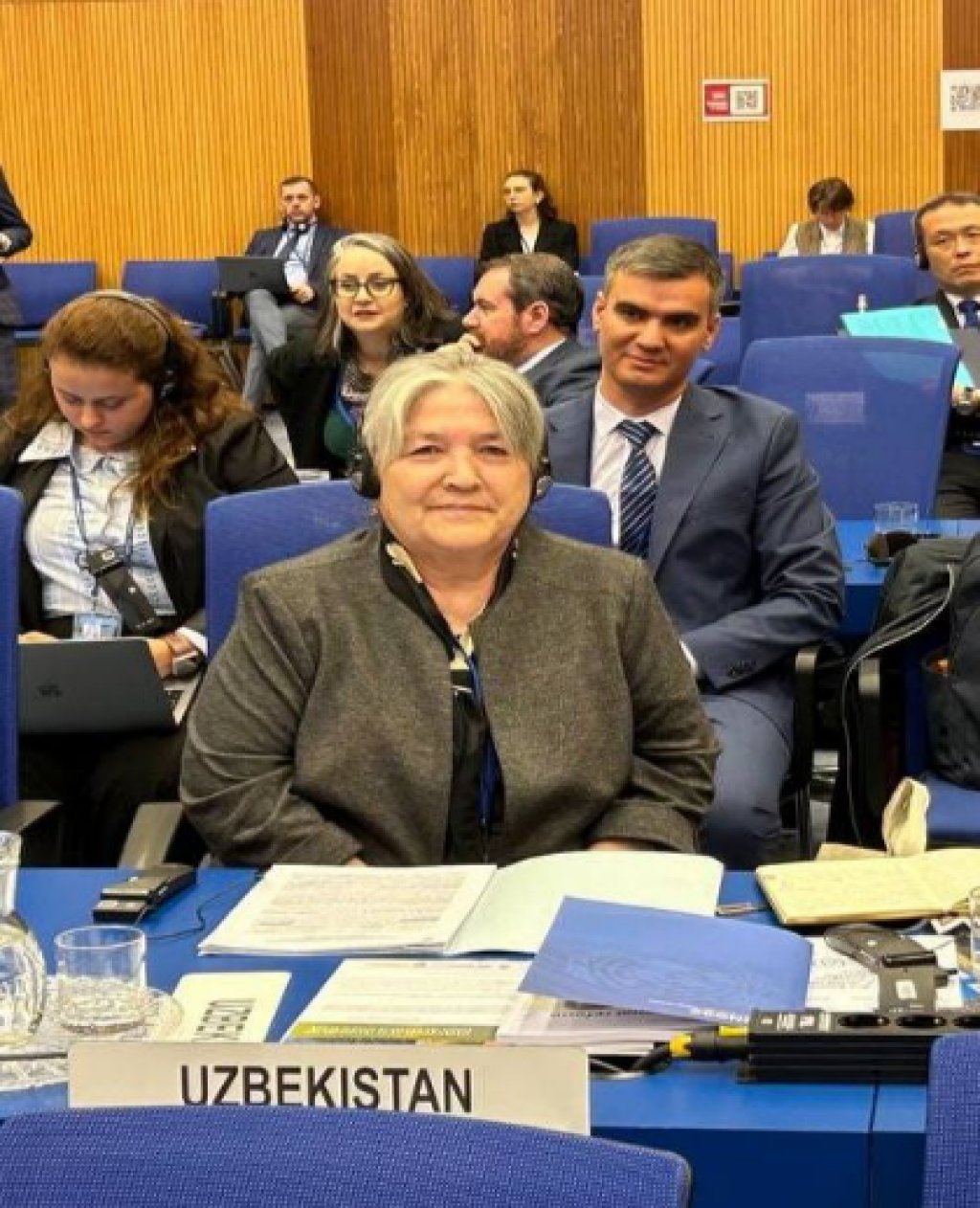
According to Shafoat Nurullayeva, an essential step in this area was the establishment, at the initiative of the President of Uzbekistan, of the Regional Expert Council on the rehabilitation and reintegration of returnees under the auspices of the UN Counter-Terrorism Office.
It was noted that this has become a key element in institutionalizing regional cooperation to increase the effectiveness of joint efforts.
“Today, positive results are already being observed: consultations are being held, joint events and discussions on this issue are being organized”, the ISRS Deputy Director noted.
In her opinion, the Council has the potential to become a unique source of professional knowledge and methods of working with repatriates and offer effective practices in reintegration and rehabilitation.
In general, the participants highly appreciated the initiative of the President of the Republic of Uzbekistan to establish a Regional Expert Council on the rehabilitation and reintegration of returnees, noting its timeliness and significance. It was emphasized that tens of thousands of women and children from more than 60 countries are still in conflict zones and awaiting repatriation. UN representatives called on other states to follow the example of Central Asian countries.
UzA