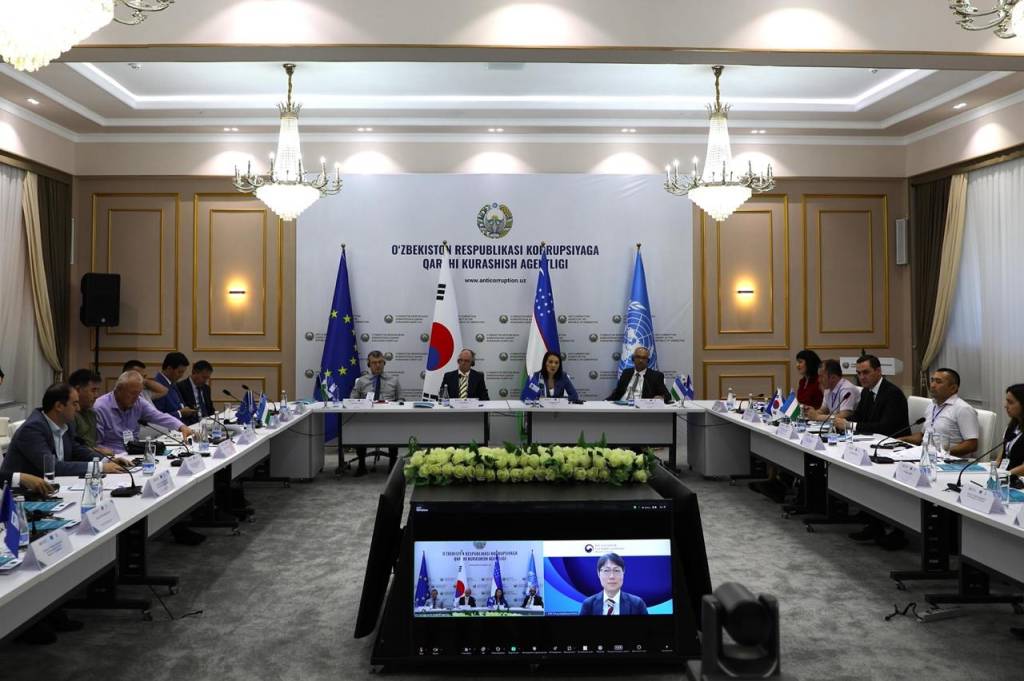
UNDP Uzbekistan, the Anti-Corruption Agency of the Republic of Uzbekistan, and the Anti-Corruption and Civil Rights Commission of the Republic of Korea held an online discussion to exchange experiences on the Integrity Assessment System.
By bringing together over 50 compliance officers from state bodies, employees of the Anti-Corruption Agency, and representatives of government agencies, the event served as a platform for gaining insights into the Republic of Korea’s exemplary approaches to assessing the effectiveness of anti-corruption activities.
In his opening remarks, Mr. Ryu Chul Whan, Chairperson of the Anti-Corruption and Civil Rights Commission of the Republic of Korea, stated that the country’s Comprehensive Integrity Assessment for Public Institutions, established in 2002, was honored with the United Nations Public Administration Award in 2012. Owing to its significant contributions to preventing and combating corruption, this system has been successfully shared with 13 other countries.
This exchange of expertise enabled the formulation of recommendations for strengthening the National Integrity System in Uzbekistan.
This comprehensive mechanism thoroughly analyzes all institutions to ensure they meet relevant standards and maintain consistent integrity and accountability across various departments. The Anti-Corruption Agency has been working extensively to establish the integrity assessment framework in Uzbekistan by offering training to compliance officers of the Agency and other state bodies and ranking public institutions to ensure transparency and accountability in their activities. These measures are implemented within the framework of the memorandum signed in 2023 between the Agency and the Anti-Corruption and Civil Rights Commission of the Republic of Korea.

Ms. Umida Tukhtasheva, Deputy Director of the Anti-Corruption Agency of the Republic of Uzbekistan, noted that Uzbekistan has implemented a ranking system for the effectiveness of anti-corruption work. She highlighted that this practice was introduced in Uzbekistan with the support of the United Nations Development Programme. Agency experts adapted the rating methodology to fit the national anti-corruption system.
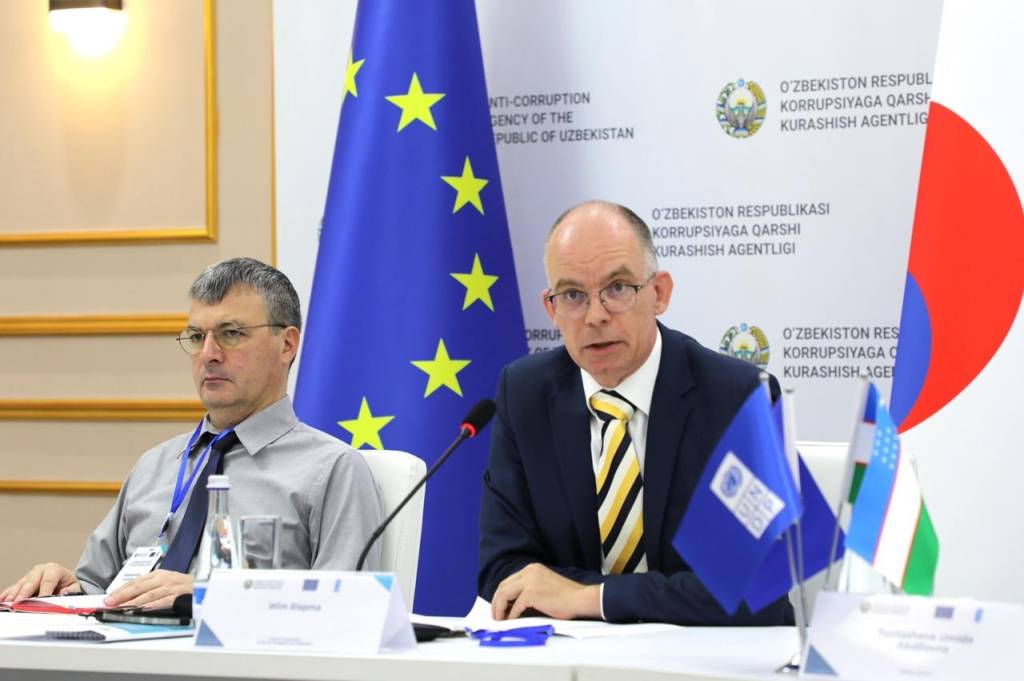
Mr. Wim Riepma, Head of Cooperation at the EU Delegation to Uzbekistan, highlighted Korea’s Comprehensive Integrity Assessment as one of the best examples.
“Strengthening the Integrity Systems promotes better governance across all aspects of a society”, stated Mr. Wim Riepma, adding that the EU proudly supports Uzbekistan in enhancing anti-corruption capacities and training state representatives and compliance officers.
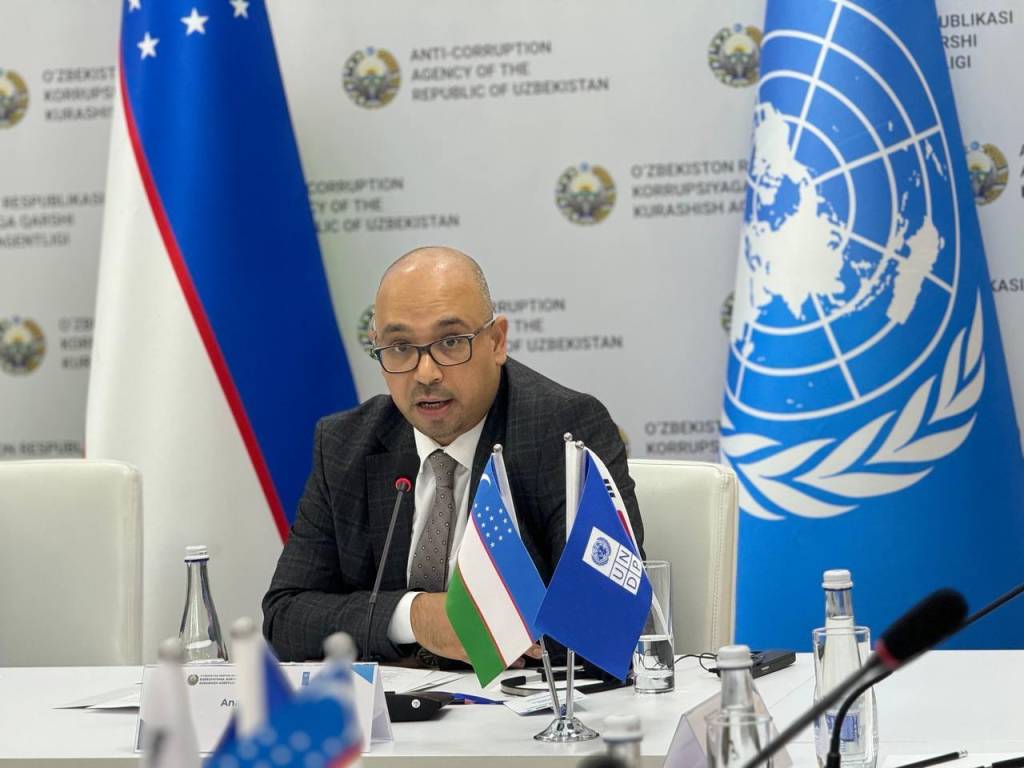
“In 2019, the UNDP collaborated with the Republic of Korea to introduce the Comprehensive Integrity Assessment System for Public Institutions to Uzbekistan. By learning from the best practices of Korean experts, we can develop more robust strategies tailored to the national context, including the National Integrity Assessment in Uzbekistan”, noted Mr. Anas Qarman, UNDP Resident Representative a.i. in Uzbekistan. He also emphasized the critical importance of collaborative work in establishing effective and successful anti-corruption mechanisms.
The event was organized within the framework of the joint project “Strengthening the National Anti-Corruption Ecosystem in Uzbekistan”, implemented by UNDP Uzbekistan and the Anti-Corruption Agency of the Republic of Uzbekistan and funded by the European Union. The project focuses on legal and institutional reforms, enhancing law enforcement response to corruption, and promoting social accountability through civic engagement.
O.Kharchenko, UzA