
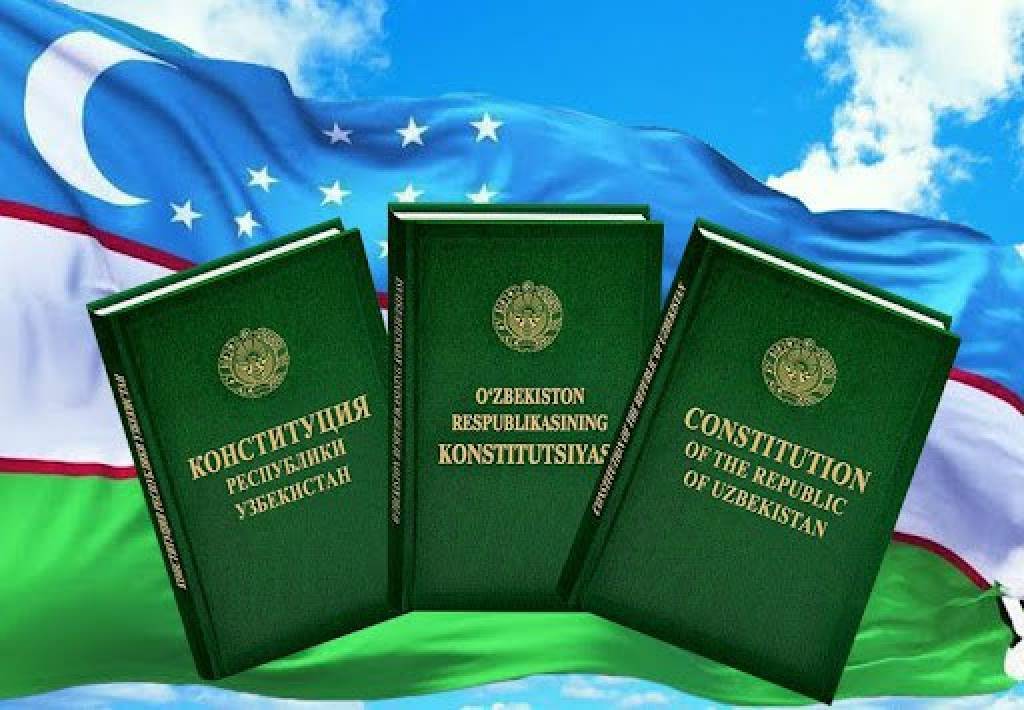
The updated Constitution contains norms that provide for the elimination of such negative vices as the selection of personnel based on nepotism or personal loyalty, and create the basis for resolving the personnel issue based on modern methods for assessing the knowledge and potential of applicants.
What norms related to entering the public service are established in the new version of the Constitution, which is planned to be approved?
– Article 37 of the draft Constitution includes a provision that citizens of the Republic of Uzbekistan have equal rights to access to public service, – said Botu Alimov, head of a Department at the Agency for Development of Public Service. – The reflection of this norm in the chapter “Political Rights” of the Constitution has an important practical, political and legal basis.
Article 21 of the Universal Declaration of Human Rights, adopted on December 10, 1948, states that everyone has the right of equal access to public service in his country. At the same time, Article 25 of the International Covenant on Civil and Political Rights notes that every citizen shall have the right and the opportunity, without any of the distinctions and without unreasonable restrictions to have access, on general terms of equality, to public service in his country.
Uzbekistan has ratified the above-mentioned international legal documents. The fact that this political right is reflected in the new version of the Constitution is assessed as the implementation of the norms of international law in national constitutional legislation.
As a result of the inclusion of this provision in the Constitution, the public service system receives a legal basis and constitutional status at the level of the Basic Law.
The range of political rights of citizens of the Republic of Uzbekistan, enshrined at the level of the Constitution, is expanding. This, in turn, indicates an increase in their political and legal activity.
Equality of rights of citizens when entering the public service, regardless of their gender, race, nationality, language, religion, social origin, beliefs, personal and social status, is guaranteed at the level of the Basic Law. This creates the basis for a wider implementation of the principle of meritocracy.
Conditions will be created to ensure the efficiency and stability of public administration by attracting potential personnel to the public service system.
Previously, the rights of citizens in this area were not clearly defined. There was no openness, equality, competition and transparency in entering the public service. In the context of modern globalization in a rapidly changing time, the importance of human resources is increasing, a system of selection for the public service of personnel with high potential is being introduced.
Today, the practice of attracting the most suitable candidates to public service through their selection based on meritocracy has been established. Currently, the selection system has been introduced in more than 400 state bodies and organizations, 1 million 382 thousand 718 citizens took part in the selection process. As a result, 46 thousand 598 of them were recognized as worthy in terms of knowledge and potential and occupied public positions.
The adoption of the new version of the Constitution creates equal conditions for all citizens when entering public service. Such negative vices as a selection of personnel based on nepotism, acquaintance or personal loyalty will be reduced to nothing. Evaluation of the knowledge and potential of candidates based on modern methods will allow for recruiting the most deserving employees.
Norgul Abduraimova, UzA