
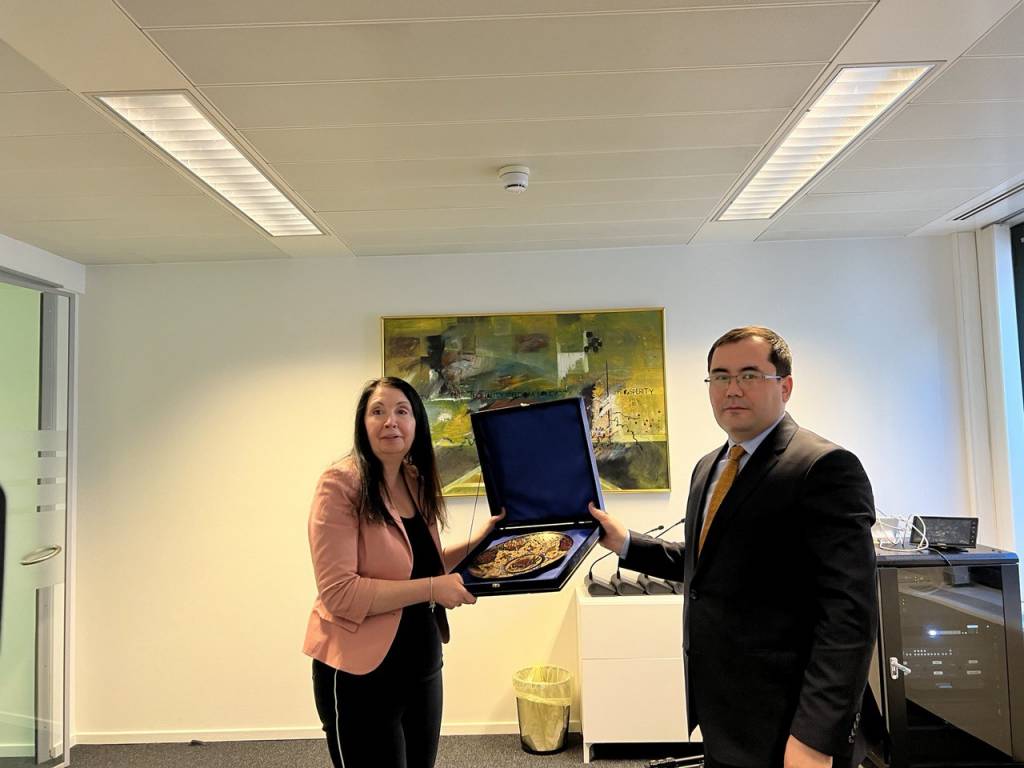
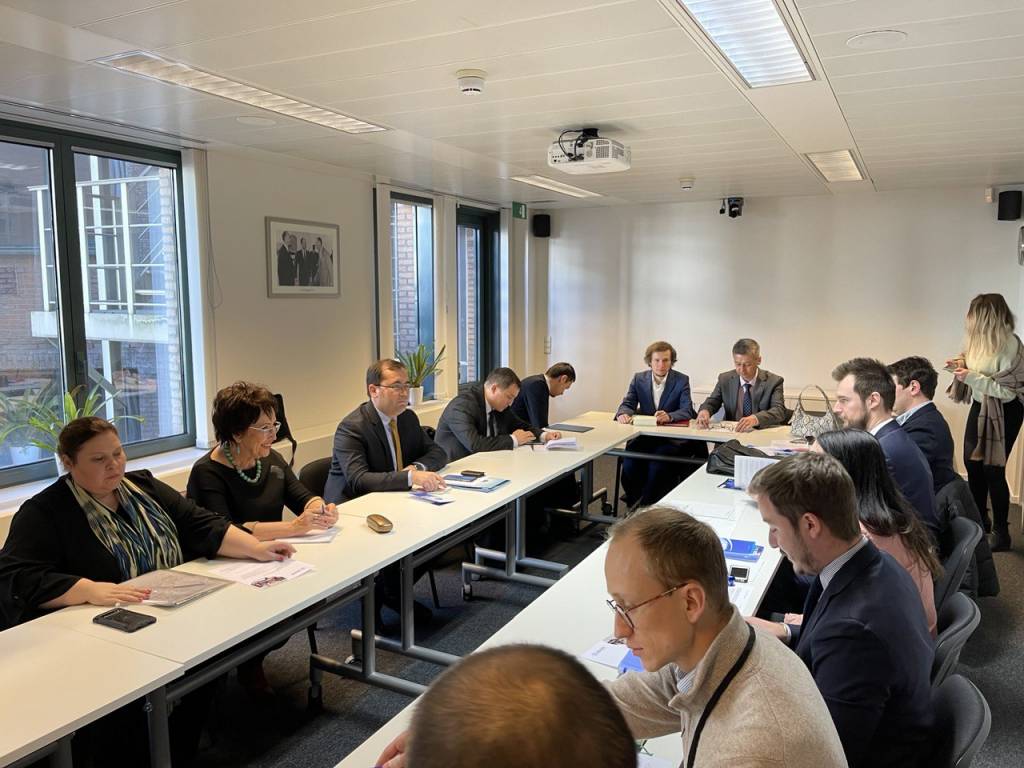
Members of Uzbekistan delegation led by the Executive Director of the Development Strategy Centre E. Tulyakov met with representatives of the European Policy Centre (EPC), in Brussels, Belgium).
As noted by Ms. Amanda Paul, Senior Policy Analyst, the EPC was established as a think tank in 1996 to work with political institutions in the EU Member States to exchange ideas and develop joint policy recommendations, helping to bridge the gap between decision-makers and civil society. At the same time, the EPC research team consists of more than 60 analysts in 23 countries.
The EPC publishes more than 100 brochures each year in a variety of research areas.
In addition, as noted by the EPC representative, the analytical centre is supported and cooperates with popular corporations and companies. At the same time, this support does not affect the independence and objectivity of the research results and publications of the analytical centre.
At the meeting, the Director of the Development Strategy Centre E. Tulyakov briefed the participants of the meeting about the main directions of the adopted Development Strategy of New Uzbekistan for 2022-2026, ongoing research and the scope of the Development Strategy Centre’s activities.
During the discussion, special attention was paid to the study of the processes of involving civil society in political decision-making, the methods of analysis and research being carried out. It was also noted about the large-scale reforms carried out in the country, which allow us to talk about a new stage in the development of civil society institutions in Uzbekistan.
The Uzbek side also informed about the purpose of the trip, which is to establish partnership and cooperation with European think tanks.
Following the meeting, the parties agreed to maintain regular contacts, expressed their readiness to share experience in involving civil society in political decision-making.
UzA