
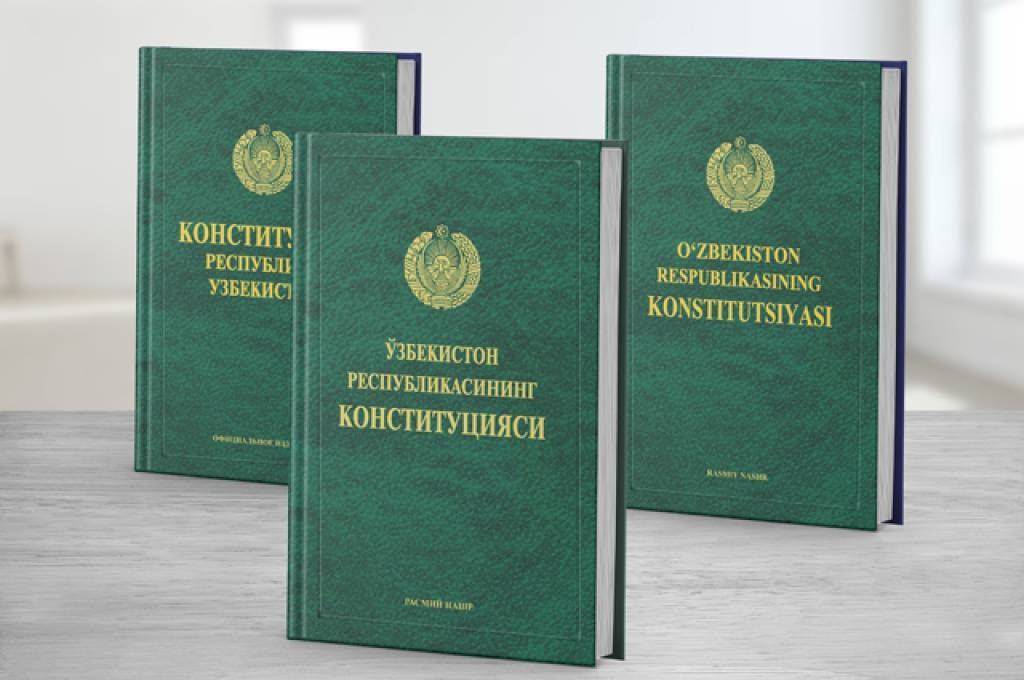
Article 95 of the renewed Constitution of the Republic of Uzbekistan clearly defines the control powers of the Senate of the Oliy Majlis over law enforcement agencies and special services.
The expansion of the absolute powers of the Senate of the Oliy Majlis from the current 14 to 18 directions should be emphasized. The renewed Constitution is aimed at creating a strong parliament, a compact and responsible government, an independent and fair judiciary to build a people-friendly state.
To strengthen the role of the Oliy Majlis in ensuring the rule of law and independence of the judiciary, as well as in exercising control in combating corruption and compliance with antimonopoly legislation, the Senate is authorized to elect the composition of the Supreme Council of Judges, heads of anti-corruption and anti-monopoly bodies.
In accordance with the new regulation, the composition of the Supreme Council of Judges, the candidates for the heads of anti-corruption and anti-monopoly bodies are elected by the Senate of the Oliy Majlis on the proposal of the President. Through this, first, some powers of the President of the Republic of Uzbekistan are transferred to the Senate. Second, the appointment of persons to the above-mentioned positions is carried out through an important form of democracy, that is, through elections. Third, the responsibility and accountability of these persons to the Senate are being strengthened.
According to Article 80 of the current Constitution, the Senate of the Oliy Majlis establishes the procedure for appointing the Chairman of the Supreme Council of Judges on the proposal of the President of the Republic of Uzbekistan. However, the procedure for appointing or electing the heads of anti-corruption and anti-monopoly bodies is not defined by the Constitution.
It should be noted that in the current Constitution, the Senate of the Oliy Majlis had the authority to approve presidential decrees on the appointment and dismissal of the Prosecutor General of the Republic of Uzbekistan and the Chairman of the Accounts Chamber, but now candidates for these positions are presented by the President, and the Senate considers and approves them.
According to the new regulation, the participation of the Senate in the appointment of the Prosecutor General and the Chairman of the Accounts Chamber is also ensured.
At the same time, the procedure for holding consultations with the Senate regarding the candidacy for the post of Chairman of the State Security Service of the Republic of Uzbekistan, proposed by the President of the Republic of Uzbekistan, is determined. Thanks to this, the Senate can express its opinion and comments on the candidate who will be nominated for this position.
In the current Constitution, the decrees of the President of the Republic of Uzbekistan on the appointment and dismissal of the Chairman of the State Security Service were approved by the Senate from an official point of view. This, of course, increases the responsibility of the Chairman of the State Security Service before the Senate.
Brazil, Israel, the United States, and Japan can be cited as examples of countries where the parliament or its lower house participates in the formation of government bodies of one form or another.
In a word, based on the goals and objectives of the administrative reform being carried out in New Uzbekistan, the upper house of parliament – the Senate – is being modernized, its powers are being expanded, including by transferring several powers of the President.
Sherzod ZULFIKOROV,
Professor at Public Security University of the Republic of Uzbekistan.
UzA