
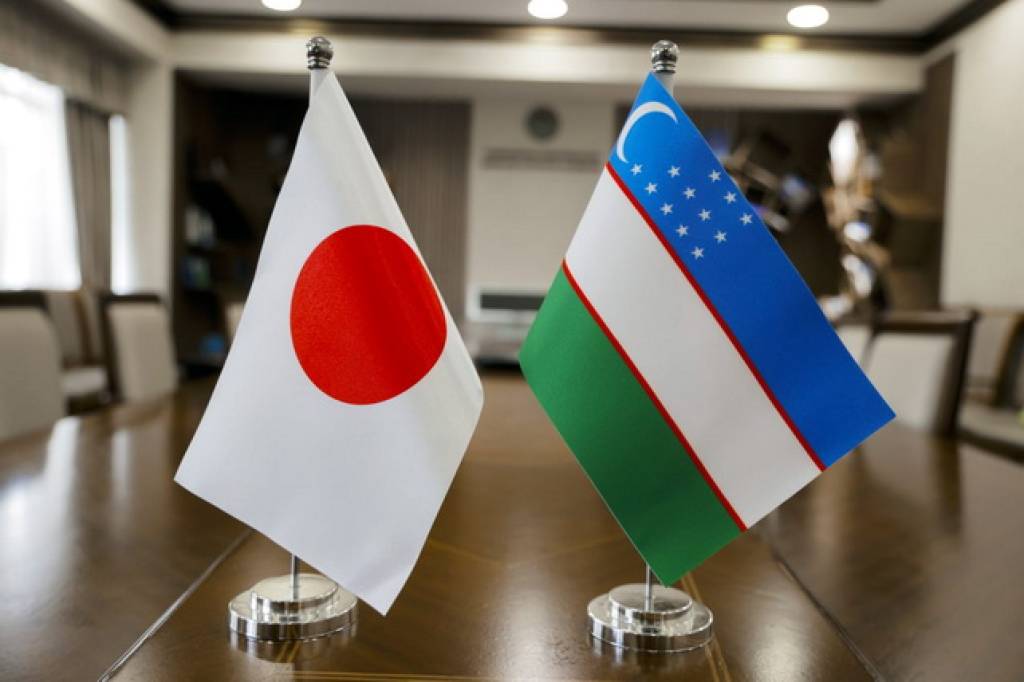
Japan is a nation of contrasts. Here, ancient temples stand alongside skyscrapers, where a technological revolution coexists with the samurai code of honor. It is a nation that rose from the ashes of World War II, becoming the world’s third-largest economy and a symbol of innovation, precision, and excellence. Japanese society represents a unique fusion of tradition and modernity, where every gesture is imbued with meaning and every action is the result of careful calculation and deep respect for history.
It is precisely this legendary nation, an island state seemingly detached from continental affairs, that repeatedly turns its attentive gaze toward the historic lands of Central Asia. This is no coincidence, for it was here, in the steppes and valleys of Uzbekistan, that eight centuries ago, the very ideas, culture, and values were born that later formed the foundation of Japanese civilization. Today, this partnership is experiencing a golden age – an era in which the ancient threads of the Great Silk Road are once again becoming living links of strategic cooperation.
Relations between Uzbekistan and Japan represent the revival of historical memory, the restoration of interrupted chains of civilizational heritage, and the creation of a shared future built on a common past.
The Legacy of the Great Silk Road
The history of Uzbekistan – Japan ties dates back to an era when the Great Silk Road was not merely a trade route, but a living artery of civilizational exchange. Historical records indicate that the city of Nara in Japan was the eastern terminus of this legendary route. To this day, the sacred Shōsōin Repository of Tōdai-ji Temple preserves authentic artifacts from our lands, including Sogdiana and Bactria. Among them are eighth-century ceramic vessels produced in Samarkand and Tashkent, as well as the musical instrument known as the oud.
Of particular note is a discovery made by the Japanese scholar Yutaka Yoshida. On one of the ancient vessels, he deciphered a Sogdian inscription indicating that the object’s owner was a resident of Shash – the ancient name of present-day Tashkent. A millennium later, these fragments of pottery continue to serve as silent witnesses to the unforgettable contacts between our peoples.
But the most profound influence of our lands on Japan was neither a commodity nor a craft – it was Buddhism. One of the greatest religions of the Kushan Empire, which spread across the territory of present-day Uzbekistan between the 1st and 6th centuries, Buddhism reached the Japanese islands in the 6th century via China and Korea. Since then, it has become an organic part of the spiritual life of the Japanese people, forming an integral element of their cultural identity. Even today, in the architecture of Japan’s Buddhist temples, in sculptural compositions and ornamental designs, one can recognize the same motifs that are revealed through archaeological excavations in Uzbekistan.
The Japanese scholar Kyūzō Katō, who was awarded the “Dustlik” (Friendship) Order for his contributions to the study of Buddhist monuments in our land, authored seminal works: “Antiquities of Southern Uzbekistan” and “Dalverzin-tepa Archaeological Site”. His books have been included in Uzbekistan’s school history textbooks, a rare distinction for a foreign researcher.
The world-renowned Japanese artist and Honorary Citizen of Tashkent, Ikuo Hirayama (1930-2009), once observed with poetic insight: “If Japan represents the eastern edge of Buddhist culture, then the land of ancient Uzbekistan constitutes its western edge”. He emphasized that the Great Silk Road was the sole means by which geographically isolated Japan could connect with world culture and come to perceive itself as part of human civilization.
In 2002, in Tashkent, as a tribute to this great cultural figure, the Ikuo Hirayama International Caravanserai was inaugurated – a unique center for cultural exchange dedicated to promoting the heritage not only of Uzbekistan and Japan, but of all the countries of the Silk Road.
A Revival of Interest in the Meiji Era
Following the Meiji reforms (1868-1912), Japan’s interest in Central Asia increased manyfold. In 1880, the Japanese diplomat Tokujirō Nishi, who later became Minister of Foreign Affairs, undertook a legendary 40-day journey through our region, visiting Tashkent, Samarkand, Bukhara, and the Fergana Valley. He was received by the Emir of Bukhara, Muzaffar, and discussed avenues for establishing trade relations between our countries. In 1886, Nishi published the book “Journey to Turkestan”, which remains a valuable historical source on our region to this day.
Other Japanese scholars followed in his footsteps: Yasumasa Fukushima (1894), Kazuo Otani (1903), Masaji Inoue (1903), and many others. Each of them left accounts attesting to the richness of our culture and the uniqueness of our peoples.
It is noteworthy that linguistic parallels between the Japanese and Uzbek languages point to deeper civilizational connections than previously assumed. Word order in Japanese and Turkic languages is essentially identical, and shared elements are found in both grammar and vocabulary. The first Ambassador of Japan to Uzbekistan, Professor Ukeru Magosaki (1993-1996), explained Japan’s enduring interest in our region precisely by noting that “the distinctive culture of Japan is, to some extent, rooted in the culture of the peoples of Central Asia”.
In the 1930s, Uzbekistan, recognizing the value of Japanese experience, actively introduced advanced methods for the development of sericulture. Dozens of productive silkworm species and broad-leaved mulberry varieties were brought to our country, where they successfully adapted to local climatic conditions. This practical exchange of knowledge bears witness to the depth of our historical ties.
The Contemporary Stage: From Diplomatic Recognition to Strategic Partnership
On December 28, 1991, Japan recognized the independence of Uzbekistan – one of the earliest acts of international recognition of our young state. On January 26, 1992, diplomatic relations were officially established. Yet this moment marked not a beginning, but a revival of long-standing ties on a fundamentally new basis.
The development of relations progressed rapidly. On July 29, 2002, one decade after Uzbekistan’s independence was recognized, Uzbekistan and Japan signed an agreement on strategic partnership. This represented a qualitative leap – an acknowledgment that our interests not only coincide, but also complement one another in strategic terms.
Since then, four official high-level visits to Japan have taken place (1994, 2002, 2011, and 2019). The most recent and significant visit occurred on December 17-20, 2019, when the President of the Republic of Uzbekistan, Shavkat Mirziyoyev, paid an official visit to Japan, underscoring both sides’ readiness to deepen cooperation.
Uzbekistan has also hosted the Prime Ministers of Japan: Junichiro Koizumi visited Uzbekistan in August 2006, and Shinzo Abe in October 2015. During his visit, the latter stood before the memorial to Japanese internees at Yakkasaray Cemetery and expressed profound respect for the Uzbek people.
Political Cooperation: Continuity of Engagement
At the political level, cooperation is characterized by consistency and intensity. Telephone conversations were held between the President of Uzbekistan and the Prime Ministers of Japan Yoshihide Suga (May 12, 2021) and Fumio Kishida (June 9, 2022, and August 9, 2024). On August 27, 2025, Tashkent hosted the first-ever Strategic Dialogue at the level of the two countries’ foreign ministers – an event underscoring the commitment to renew and intensify political interaction.
Since 2002, nineteen rounds of inter-ministerial political consultations have been conducted. The most recent round took place on July 10, 2024, in Tokyo. This regularity of contacts testifies to the stability and seriousness of our relations.
Friendship groups have been established in the parliaments of both countries. Four sessions of the inter-parliamentary forum have been held (2010, 2018, 2021, and 2025). In October 2019, the Chairperson of the Senate of Uzbekistan, Tanzila Narbayeva, participated in the enthronement ceremony of Emperor Naruhito – an honor reflecting international recognition of our country. In September 2022, the First Deputy Chairperson of the Senate, Sodiq Safoyev, attended the farewell ceremony for former Prime Minister Shinzo Abe as a sign of deep respect.
Uzbekistan as a Reliable Ally on the International Stage
On the global stage, Uzbekistan has emerged as a reliable partner of Japan. On more than 40 occasions, Uzbekistan has supported Japan’s candidacy for various United Nations bodies, including the Security Council (2022), ECOSOC (2020, 2023), the Human Rights Council (2019, 2023), the International Court of Justice (2018), and many others.
In turn, Japan has supported UN resolutions initiated by Uzbekistan on nuclear disarmament, the ecology of the Aral Sea region, human rights, and other global challenges. The Uzbek side also supported Japan’s joint statement at the 10th Review Conference of the Treaty on the Non-Proliferation of Nuclear Weapons (2022, New York), which called on countries to enhance awareness as a tool for advancing nuclear disarmament and non-proliferation.
Economic Interaction: From Symbol to Reality
Economic cooperation between our countries has demonstrated dynamic growth, particularly in recent years. Trade between Uzbekistan and Japan operates under a most-favored-nation regime, ensuring predictability and fairness in bilateral relations.
The year 2024 marked a turning point: trade turnover increased by 64.1 percent to $388.5 million. Imports rose by an impressive 70 percent to $371.9 million, reflecting the growing demand of Uzbekistan enterprises for Japanese equipment and technologies. The structure of imports indicates clear prioritization, with machinery and transport equipment accounting for 87.4 percent.
From January to October 2025, trade turnover amounted to $326.8 million. A significant achievement was the issuance of phytosanitary permits for the export of 70 types of fruit and vegetable products from Uzbekistan to Japan, thereby creating new opportunities to expand our agricultural exports.
In April 2024, the Uzbekistan – Japan Trade House was established in Nagoya, a specialized platform designed to facilitate business operations between the two countries.
Investment Climate: Trust Reflected in Figures
A total of 117 enterprises with Japanese participation operate in Uzbekistan, an increase of 32 over the past year. Among them are 29 joint ventures and 88 wholly Japanese-owned companies. Fourteen Japanese companies maintain permanent representative offices in our country.
The primary investment sectors include information and communication technologies, energy, healthcare, mechanical engineering, and tourism. From January to October 2025, Uzbekistan absorbed $102 million in Japanese investments, which serve as drivers of employment and technology transfer in strategically important sectors.
Japan International Cooperation Agency: Investing in the Future
The Japan International Cooperation Agency (JICA) has been operating in Uzbekistan since 1993. Over the past three decades, numerous socially significant and infrastructure projects have been implemented in healthcare, education, energy, transport, and telecommunications.
Scale of Assistance:
Concessional loans: $6.3 billion
Grants and technical assistance: $267 million
Educational scholarships: over 400 students studying at Japanese universities
Internships: 3,000 Uzbekistan specialists
Volunteers: 376 Japanese experts
In August 2024, the Cooperation Program for 2024-2026 was signed, which provided for the implementation of 20 projects totaling $2.4 billion.
Of particular significance was the signing in January 2025 of a Loan Agreement for the construction and equipping of the Republican Specialized Scientific and Practical Medical Center for Neurology and Stroke, valued at $150 million – a center set to become a regional leader in the fight against stroke and neurological diseases.
Japan Bank for International Cooperation: Infrastructure of Tomorrow
The Japan Bank for International Cooperation (JBIC) has implemented 12 projects worth $3.5 billion in the energy, petrochemical, textile, and telecommunications sectors. The current portfolio includes five projects totaling $1.6 billion. Fourteen projects worth $10 billion are at the development stage – clear evidence of ambitious plans to transform our infrastructure.
The continuation of our analysis of relations between Uzbekistan and Japan, with a separate focus on economic potential, humanitarian programs, and new initiatives ahead of the upcoming visit, will be presented in subsequent publications on the UzA website.
Abduaziz Khidirov,
Master’s student,
Academy of Public Policy and Administration under the President of the Republic of Uzbekistan,
UzA