
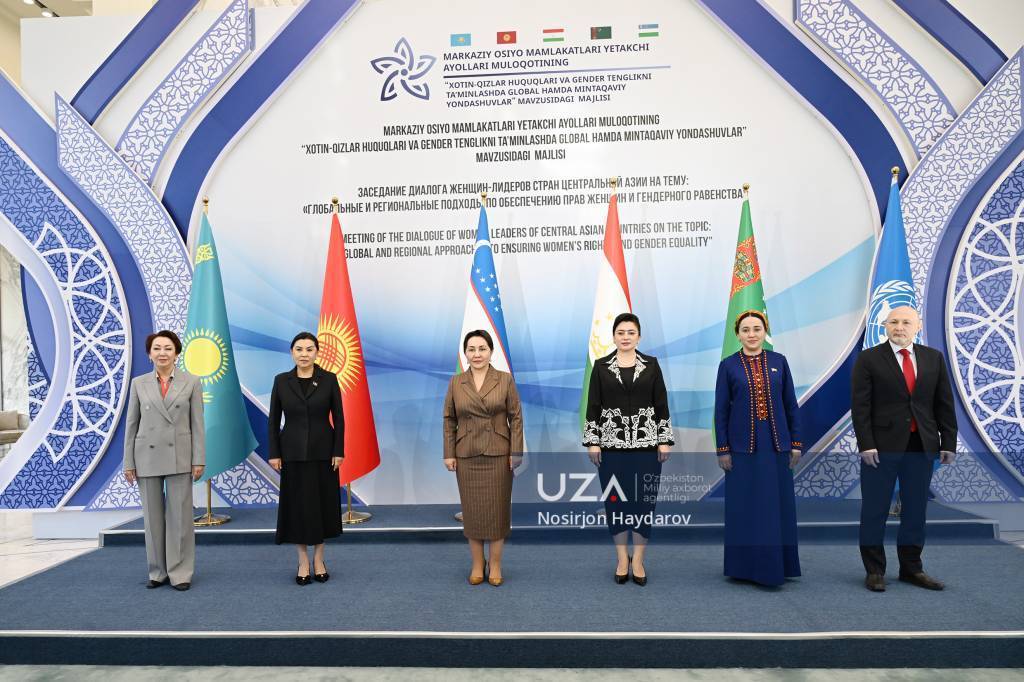
A meeting of the Dialogue of Women Leaders of Central Asian Countries was held in Tashkent, bringing together heads of parliaments and members of official delegations from Azerbaijan, Kazakhstan, Kyrgyzstan, Tajikistan, Turkmenistan, and Uzbekistan.
The prestigious event, chaired by Tanzila Narbayeva, Chairperson of the Senate of the Oliy Majlis of the Republic of Uzbekistan, underscored that the Dialogue of Women Leaders of Central Asian Countries, established in 2020, has become a truly valuable platform for exchanging experience, coordinating approaches, and developing joint initiatives on gender equality and the promotion of women’s rights.
“As President Shavkat Mirziyoyev has emphasized, it is impossible to build a just and prosperous society without the active participation of women”, Tanzila Narbayeva noted. “I am confident that the other presidents of the region will likewise attach great importance to the role of women in state development. This year marks the 30th anniversary of the Beijing Declaration and Platform for Action, as well as the 25th anniversary of the UN Security Council Resolution ‘Women, Peace, and Security’. These global documents are not merely declarations but guidance for action. Today, I can proudly say that the reforms in Uzbekistan embody the spirit of these important documents”.
Speakers highlighted the important role that the Central Asian region occupies on the global political stage. Consistent efforts are being made to promote peace and stability, safeguard public interests, and protect women’s rights through cooperation among women leaders.
The meeting aims to advance regional cooperation in achieving the priority goals of the Beijing Declaration and Platform for Action.
These international documents cover 12 key areas, including women’s participation in political life, their economic independence, equal access to education and healthcare, the elimination of gender-based violence, and the strengthening of women’s roles in environmental and climate policy.
Five sessions were held during the gathering. Following the meeting, a final document was adopted, which will serve as a basis for future actions and cooperation within inter-parliamentary initiatives.
[gallery-26212]
Norgul Abduraimova, UzA