
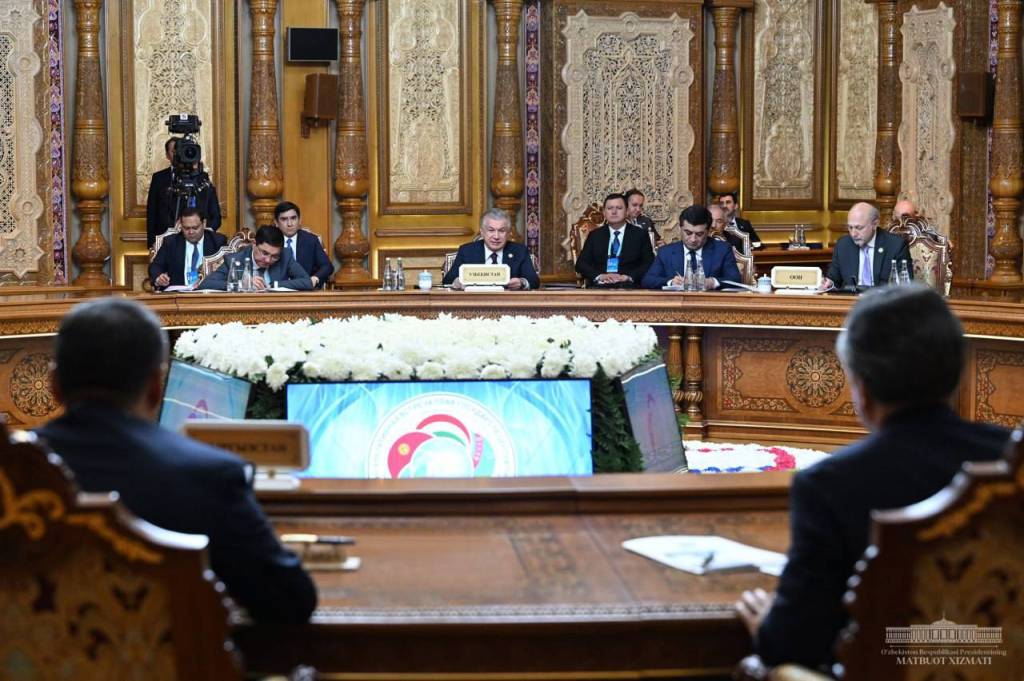
These days, the attention of media representatives and the expert community both inside and outside Central Asia is focused on the city of Dushanbe, where the Presidents of the Central Asian states successfully negotiated in the format of a Consultative Meeting.
The Fifth Consultative Meeting of the Leaders of the Countries of the Region, which has become a good tradition, was traditionally held in the spirit of good neighborliness and mutual understanding.
The heads of state, frankly and in a friendly atmosphere, exchanged views on the most pressing issues of the current regional agenda and discussed further prospects for fruitful cooperation in Central Asia.
At the same time, an analysis of the speeches and initiatives the countries’ leaders put forward indicates intentions to deepen further regional cooperation to ensure stable economic growth and favorable living conditions for our people.
In this regard, I would like to draw attention to the proposal of the President of the Republic of Uzbekistan Shavkat Mirziyoyev to develop a Regional Climate Change Adaptation Strategy.
This initiative is very relevant considering the fact that warming in Central Asia is happening faster than in other parts of the world. If since 1900, the average global temperature has increased by 1.1°C, then in our region, the average annual temperature has increased by 1.6°C, that is, on average it has increased from 13.2°C to 14.8°C. At the same time, according to forecasts, by 2050, the air temperature may increase by another 1.5°-3°C.
Over the past 50-60 years, the area of glaciers in Central Asia has decreased by 30%. As the World Bank notes, water shortages could lead to a drop in GDP by 11%.
According to ADB estimates, by 2050, the area of irrigated land in the region will decrease by 25% due to land degradation, and annual losses amount to about $4.5 billion.
Adapting to current climate change becomes a guarantee and an essential condition for further socio-economic development in these conditions.
Considering that all countries in the region are located in the same geographical space and have similar problems associated with climate change, adopting a regional strategy is a logical and practical step.
The development and adoption of the strategy will allow us to establish a regional dialogue between countries, deeply analyze current challenges, and develop comprehensive solutions to mitigate the effects of climate change.
It is also worth noting that climate issues are firmly entrenched in the annual agendas of the Consultative Meetings of the Heads of State of Central Asia.
Active work is underway within the framework of the “Green Agenda” regional program for Central Asia approved last year at the 4th meeting of Presidents.
I am confident that implementing the initiative of the Leader of Uzbekistan to develop and adopt a Regional Climate Change Adaptation Strategy will be the next important step in strengthening cooperation in this urgent and relevant area and will allow us all to effectively adapt to changing climatic conditions.
Jasur Qodirov,
IICA Leading Researcher