
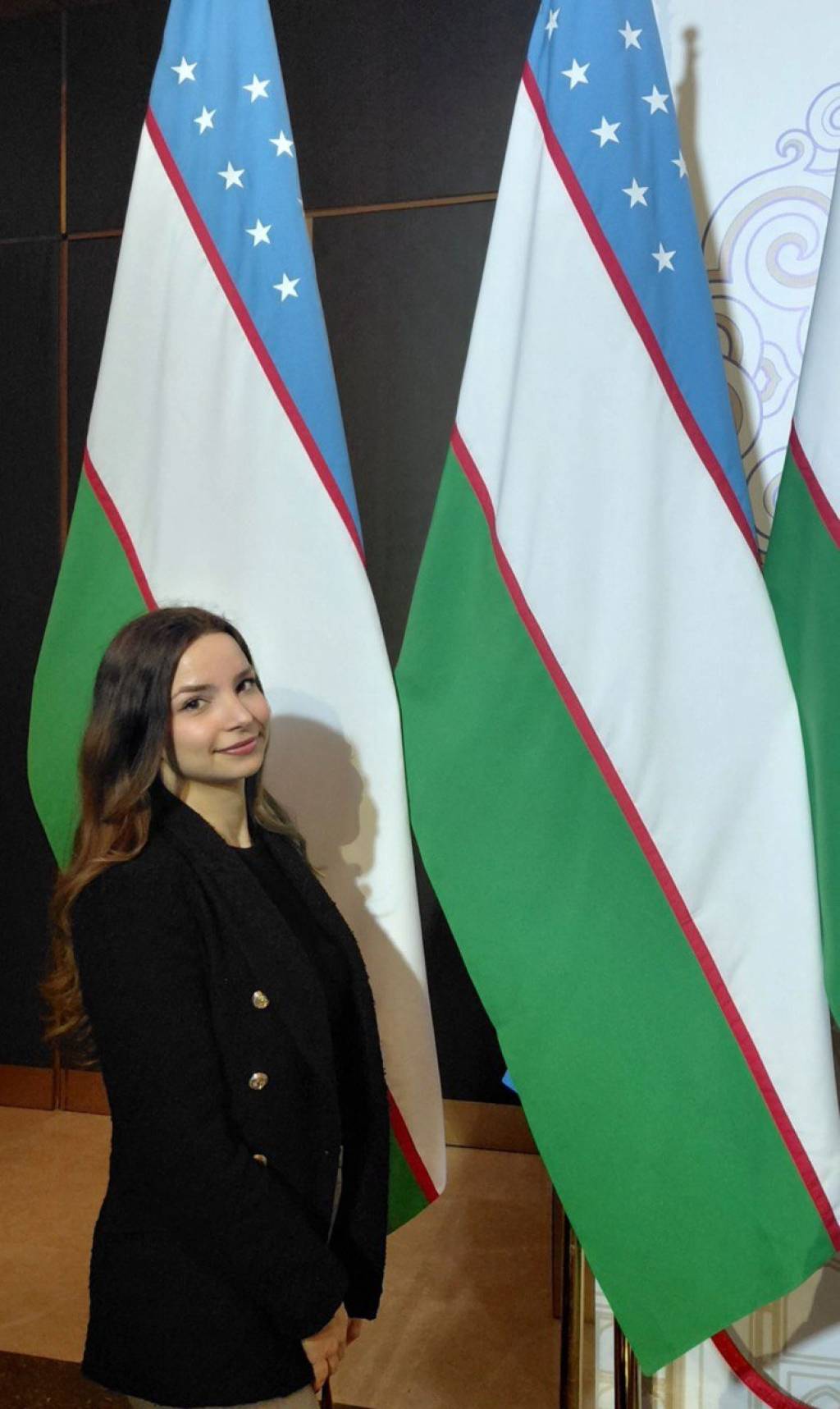
As is known, the past year was marked by major changes and significant historical events in Uzbekistan’s foreign policy. High-level visits, major international forums, meetings, and dialogues further strengthened the country’s position on the global stage. Most importantly, our substantial achievements are also being recognized internationally. Derya Soysal, an expert on Central Asia and the South Caucasus, gave an interview to UzA on this theme.
– The year 2025 marked a stage of qualitative renewal and consolidation of Uzbekistan’s foreign policy positions. Uzbekistan consistently pursued an open, pragmatic, active, and proactive foreign policy.
We witnessed major transformations in Central Asia, notably the peace agreement signed between Kyrgyzstan and Tajikistan. Uzbekistan was the key mediator in this conflict.
The country has begun to develop a highly successful foreign policy, building partnerships worldwide. Against this backdrop, several events of strategic significance had a profound impact on Uzbekistan’s foreign policy positioning in 2025. Uzbekistan is now at the center of attention of the United States, China, the European Union, Türkiye, the Middle East, and many other countries and regions worldwide. Each of these actors seeks to deepen partnerships with Uzbekistan, which projects an image of reliability in a world marked by increasing crises.
The year of rapprochement between the EU and Uzbekistan
Since April 2021, Uzbekistan has benefited from unilateral preferential access to the EU market via the Special Incentive Arrangement for Sustainable Development (GSP+) under the EU Generalised Scheme of Preferences. Indeed, President Mirziyoyev opened the country to the global market, and one way to achieve this was to bring Central Asia closer to the European Union.
The signing of the Enhanced Partnership and Cooperation Agreement with the European Union and President Shavkat Mirziyoyev’s visit to Brussels marked a qualitative shift in relations with the EU. President Shavkat Mirziyoyev of Uzbekistan paid an official visit to Brussels on October 23-24 at the invitation of European Council President António Costa and European Commission President Ursula von der Leyen, during which a landmark agreement was signed to deepen Uzbekistan – EU cooperation across multiple sectors.
Europe needs Central Asia. As the demographic powerhouse of Central Asia, it is impossible to discuss the region without addressing Uzbekistan. The agreement established a solid legal framework to deepen political dialogue, expand trade and economic ties, attract investment, and strengthen cooperation in sustainable development, the green economy, and digitalization, while reflecting European partners’ high assessment of Uzbekistan’s ongoing reforms.
Trade between Uzbekistan and the EU more than doubled over the past five years, reaching approximately €6.4 billion in 2024. European companies from France, Germany, Belgium, and Italy have expanded operations in sectors such as textiles, renewable energy, and logistics. Over 1,000 joint ventures are currently active in Uzbekistan, supported by a European investment portfolio estimated at €40 billion.
The United States and Uzbekistan
Uzbekistan and the United States have taken an essential step toward deepening their partnership. The recent Central Asia – U.S. Summit (C5+1) in Washington, along with high-level bilateral talks, culminated in what both sides described as a new era of cooperation.
The United States and Uzbekistan are deepening their economic and technological partnership. Following President Shavkat Mirziyoyev’s meeting with U.S. President Donald Trump in Washington in November 2025, the U.S. State Department announced a sweeping package of agreements, described as among the most significant in the history of bilateral relations, both in investment scale and strategic scope.
Trade between Uzbekistan and the United States has quadrupled over the past eight years, and more than 300 American companies are now operating in the country.
Uzbekistan: The bridge between Asia and Europe
Uzbekistan pursues a multidimensional foreign policy under the concept of “New Uzbekistan”. The country serves as a bridge between Asia and Europe. In 2025, rapprochement between China and Uzbekistan also became evident. China remains Uzbekistan’s principal economic partner. Uzbekistan’s trade with China continued to expand strongly in 2025, reinforcing Beijing’s position as Tashkent’s largest trading partner.
Over the first eleven months of 2025, Uzbekistan’s foreign trade turnover reached USD 72.7 billion, with exports amounting to USD 30.8 billion – an increase of USD 6.6 billion compared to the same period of the previous year.
Uzbekistan: One of the centers of world diplomacy
Uzbekistan hosted forums, assemblies, and conferences of the Inter-Parliamentary Union, the United Nations Civil Service, the UNESCO General Conference, the International Climate Conference, the EU – Central Asia Summit in Samarkand, the Global Gateway with the EU, the Tashkent Investment Forum, the Tashkent Summit of regional countries, and many other significant events. Uzbekistan hosted UNESCO’s 43rd General Conference in Samarkand, marking the first time the event had been held outside Paris in 40 years and underscoring Uzbekistan’s cultural heritage and reforms in education and heritage preservation.
The country hosted over 120 high-level foreign delegations and approximately 300 delegations from foreign states’ regional authorities. These contacts contributed to interregional cooperation, the establishment of direct links between business communities, and the expansion of the legal framework for collaboration.
Tourism is shaping Uzbekistan’s international image
Uzbekistan ranked among the world’s seven fastest-growing inbound tourism destinations between January and September 2025, according to UN Tourism. Over eleven months, 10.7 million foreign tourists visited the country. Participation in international exhibitions and the hosting of the first “Central Asia – European Union” Tourism Forum reinforced Uzbekistan’s appeal.
In conclusion, 2025 has been a memorable, substantial, and productive year for Uzbekistan. The rapidly ongoing reforms are strengthening the country’s position in the international community and enhancing the state’s global standing.
Interviewed by Guzal Sattorova, UzA