
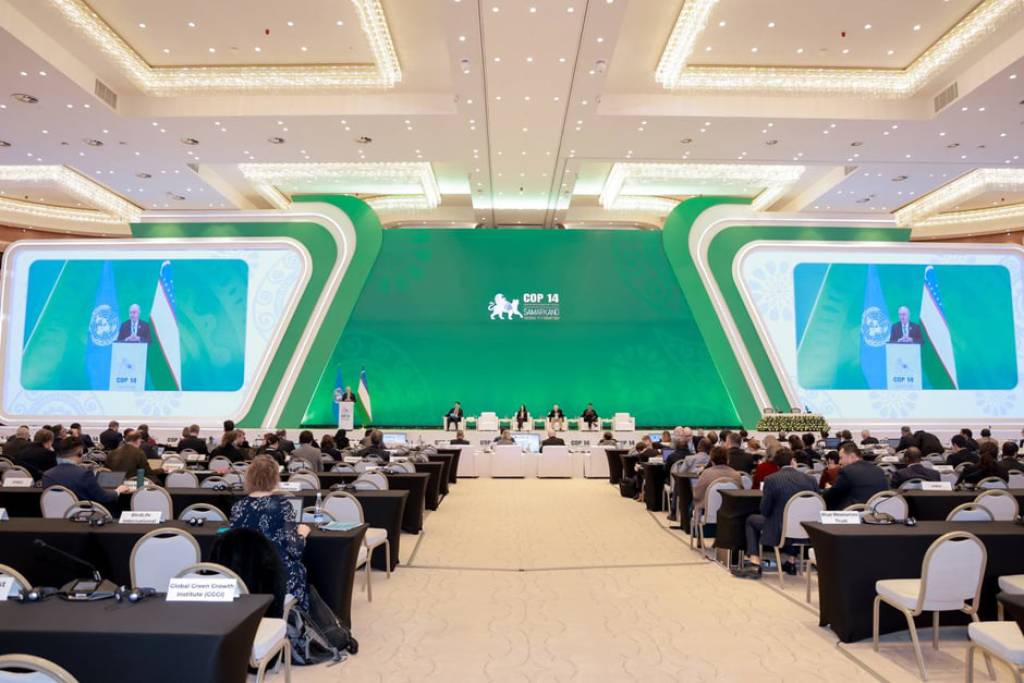
Central Asian countries are joining forces to save migratory species of wild animals.
The regular Meeting of the Conference of the Parties to the Convention on the Conservation of Migratory Species of Wild Animals is the first UN wildlife conservation event in Central Asia.
Samarkand gathered over 1,500 participants from 130 countries. At the high-level conference on “Nature knows no borders: migratory species and cooperation towards sustainable development in Central Asia”, Special Representative of the Director-General at FAO Daniel Gustafson made a report on the experience of other regions and multilateral organizations on cross-border and international cooperation for the conservation of migratory species of wild animals.

“The richness and diversity of cooperation between the countries of the Central Asian region on the way to the conservation of migratory animal species are encouraging”, says D. Gustafson. “It is necessary to expand work in this direction further. Central Asia is at the forefront of innovations that allow us to work together and move forward to overcome challenges such as climate change and the irrational use of natural resources, which hinder the conservation and restoration of the habitat of migratory species of wild animals. It is possible to solve these problems only together.
The conference in Samarkand has become a vivid example of measures taken at the regional and global levels. Most of the FAO’s work on the conservation of migratory animal species is related to marine fisheries, where significant progress has been made, but much remains to be done.
Another important area for us is the interaction of wildlife and humans. We are implementing an exciting project in India regarding wild tigers. The Global Environment Facility funds the project. We have been working for a long time to preserve wild elephant populations in Africa. Do not forget that environmental health and human health are inextricably linked”.
Bekhruz Khudoyberdiyev, UzA